WASHINGTON, D.C. / ACCESS Newswire / November 2, 2026 / When University of Miami scientists Jerald Ault and Jiangang Luo published Investigation of Atlantic Menhaden Mortality Rates in the peer-reviewed journal Fisheries Research in September 2026, the Forage Fish Campaign presented it as "new research" requiring immediate action by fisheries managers.
But what was new was the journal publication - not the underlying scientific work.
Ault had presented the analysis to the Atlantic States Marine Fisheries Commission's Stock Assessment Subcommittee on September 25, 2024. The Commission's scientists subsequently examined the competing natural mortality analyses, revised the mortality assumption used in the 2025 stock assessment, and subjected that assessment to independent peer review.
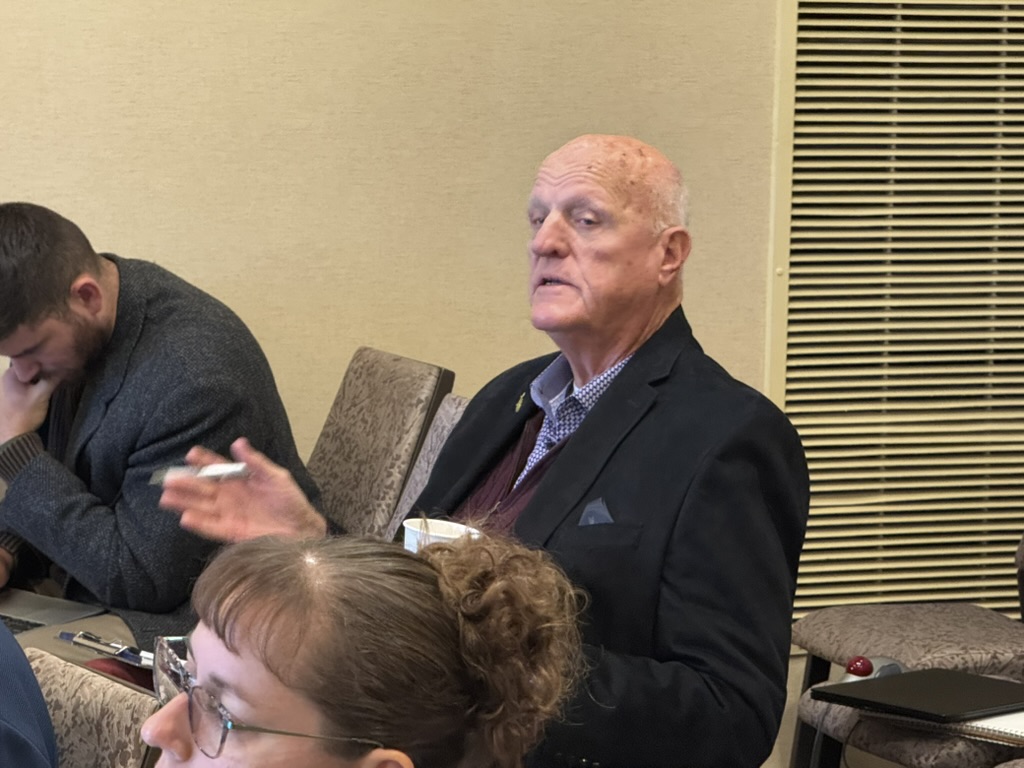
Dr. Ault makes a point to the Atlantic Menhaden Stock Assessment Subcommittee (SAS) and Ecological Reference Point Workgroup (ERP) during his presentation on November 4, 2024
The Forage Fish Campaign's October 23 article acknowledges that scientists revised the natural mortality estimate in 2025. But it presents the 2025 revision and the 2026 Ault-Luo publication as separate developments - first a correction by the ASMFC, then "new" research identifying additional problems. What it does not explain is that Ault and Luo's underlying analysis had already been reviewed as part of the 2025 assessment and had raised significant methodological concerns among the ASMFC's technical advisers.
What the ASMFC Actually Did
Ault presented the paper to the Stock Assessment Subcommittee on September 25, 2024. The analysis was publicly posted as a preprint the following month. Dr. Ault appeared again at the Methods Workshop for Atlantic Menhaden Single-Species and Ecological Reference Point (ERP) Stock Assessments in November 2024. The Workshop Summary documents a detailed review of Ault's reanalysis of historical menhaden tagging data and its comparison with earlier research by Liljestrand and colleagues.
Scientists examined differences in datasets, fishing effort information, tag recovery efficiency, and modeling assumptions, and assigned specific tasks to investigate the competing estimates and determine which natural mortality assumption should be used in the assessment.
That review continued into 2025. As the ASMFC subsequently explained, the subcommittee consulted researchers involved in both analyses, corrected an error identified during the review, and developed a revised natural mortality estimate.
The subcommittee adopted a revised natural mortality rate of approximately 0.92, down from the 1.17 used in the previous assessment, but did not adopt Ault and Luo's substantially lower estimate of approximately 0.50. The revised natural mortality rate was incorporated into the 2025 assessment and underwent independent scientific peer review.
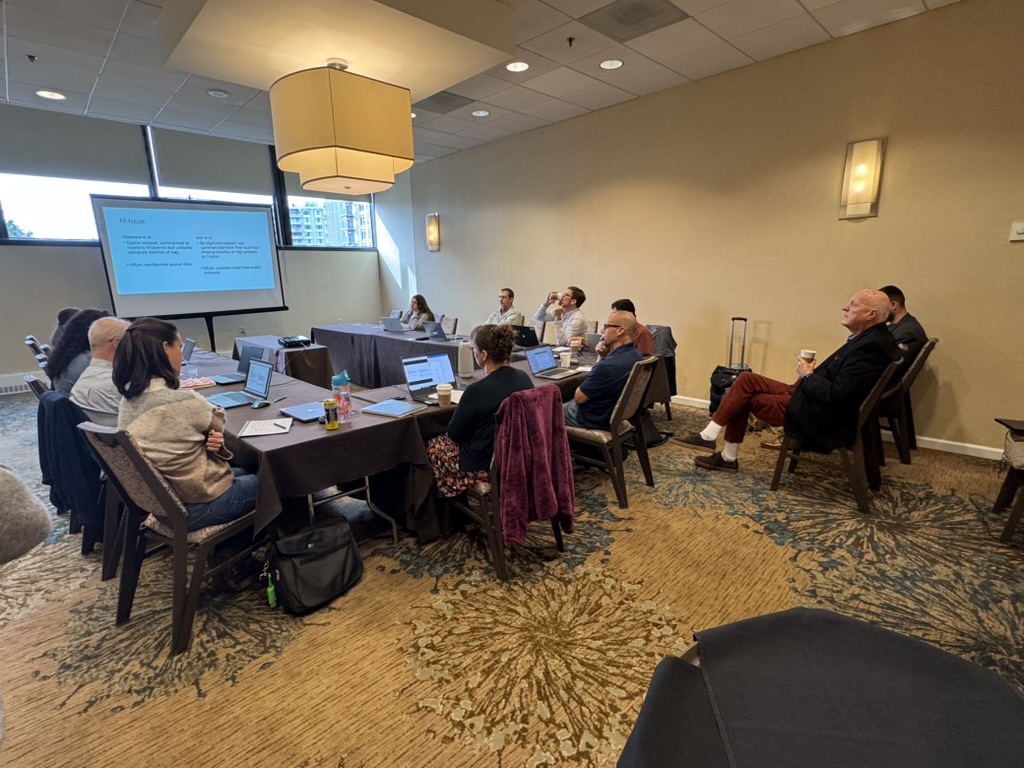
Dr. Ault presents his research to the Atlantic Menhaden Stock Assessment Subcommittee (SAS) and Ecological Reference Point Workgroup (ERP) on November 4, 2024
Because natural mortality affects the estimated scale of the stock, the lower rate produced substantially lower estimates of historical menhaden biomass. The ASMFC has emphasized that the approximately 37% difference between the 2022 and 2025 assessment estimates was not an actual population decline. Rather, it reflected a change in how the model estimated the size of the stock; the 2025 assessment estimated that total menhaden biomass had actually increased slightly since 2021.
In an October 21, 2026 memorandum to the Atlantic Menhaden Management Board, the Atlantic Menhaden Technical Committee stated: "The TC and the SEDAR 102 Review Panel reviewed an unpublished draft of that paper as part of the 2025 assessment." The committee said that review contributed to the revised natural mortality estimate used in the 2025 update. It also said the TC had "significant concerns about the methods and assumptions" Ault and Luo used to produce their still-lower estimate.
Professor Michael Wilberg of the Chesapeake Biological Laboratory at the University of Maryland Center for Environmental Science, a co-author of the Liljestrand analysis, subsequently described concerns in comments to the Board. Wilberg said the models used by Ault and Luo do not produce statistically valid estimates; that they ignore empirical tag-recovery-efficiency data from experiments in which tagged menhaden were introduced directly into reduction plants and researchers measured whether the tags were recovered; and that they mischaracterize the scientific literature on the maximum age of Atlantic menhaden. He concluded that the paper contained what he called "several fatal flaws" and that "the information in that paper should not be considered best available science."
Wilberg recommended that the 2025 stock assessment continue to be used as the best available science and said he and his co-authors intend to submit a formal rebuttal to the Ault and Luo paper.
A New Publication Is Not the Same as New Research
If Fosburgh and the Forage Fish Campaign believe the final publication contains new evidence that warrants another change to the stock assessment, they should identify what that evidence is, why the earlier review was insufficient, and how the published paper addresses the methodological objections already raised. Instead, they repeatedly describe the work as "new science" requiring immediate incorporation.
This scientific dispute is not merely academic when demands for additional fishing restrictions affect the livelihoods of hundreds of working families. UFCW Local 400 has urged lawmakers and the ASMFC to refrain from imposing further Chesapeake Bay restrictions until ongoing research establishes their necessity, while the Southern Christian Leadership Conference and the NAACP have also raised concerns about the impact additional restrictions could have on the predominantly African American workforce and their families.
The journal publication was new. The underlying analysis was not.
Sources and Documentation
1. Forage Fish Campaign. (September 23, 2026). New Study Indicates That a Key Assumption Underlying Atlantic Menhaden Science May Have Led to Inflated Population Estimates and Allowable Catches. Includes statements attributed to Whit Fosburgh.
2. Forage Fish Campaign. (October 23, 2026). The Bait Line: Industry Attacks Won't Change the Facts About Industrial Menhaden Fishing. See section 5, "Scientific assumptions."
3. Fosburgh, Whit. (October 26, 2026). The Bait Line: Menhaden, Ecosystem Overfishing, and Ecosystem Management.
4. Ault, J. S., and Luo, J. (2026). Investigation of Atlantic menhaden mortality rates. Fisheries Research, 303, 107865. Published online September 16, 2026.
5. Atlantic States Marine Fisheries Commission. (November 5-8, 2024). Atlantic Menhaden Stock Assessment Subcommittee and Ecological Reference Point Workgroup, Methods Workshop II Summary. Pages 1-2 document the review of Ault's analysis and list Ault and Chiles among the public attendees.
6. Ault, J. S., and Luo, J. (October 18, 2024). Investigation of Atlantic Menhaden Mortality Rates. SSRN preprint.
7. Atlantic States Marine Fisheries Commission. (October 28, 2025). Atlantic Menhaden Management Board Presentations. Review of the natural mortality analyses and revised estimate.
8. Atlantic States Marine Fisheries Commission. (November 2025). Atlantic Menhaden FAQs. Explains the revision of natural mortality assumptions, the historical biomass estimates, and the recent population trend.
9. Atlantic States Marine Fisheries Commission. (October 21, 2026). Atlantic Menhaden Technical Committee and Stock Assessment Subcommittee memorandum to the Atlantic Menhaden Management Board. In Atlantic Menhaden Board Materials, November 2026, Part 1. Describes the prior review of an unpublished Ault and Luo draft and significant concerns about its methods and assumptions.
10. Wilberg, Michael. (2026). Comments to the Atlantic Menhaden Management Board regarding Ault and Luo (2026). In Atlantic Menhaden Board Materials, November 2026, Part 3.
11. United Food and Commercial Workers Local 400. (October 27, 2026). Statement on Proposed Chesapeake Bay Menhaden Cuts.
About the American Small Pelagics Network
The American Small Pelagics Network represents fishermen, processors, suppliers, and coastal communities connected to fisheries such as menhaden, mackerel, herring, squid, and butterfish. ASPN advocates for sustainable fisheries management that supports critical fish species, while maintaining economic opportunities for fishermen and fishing communities.
PRESS CONTACT
Stove Boat Communications
202-595-1212
contact@smallpelagics.com
SOURCE: American Small Pelagics Network
View the original press release on ACCESS Newswire