After selling 15,000 units, Otto's screenless computer gives autonomous AI agents a machine of their own
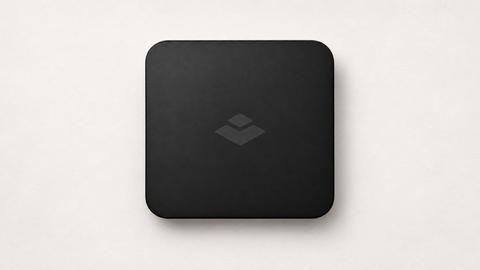
Otto, the company building the operating system for the agentic era, today introduces Otto One, the first purpose-built agent computer: a compact, screenless computer designed for an AI agent to live and work on. Running on Otto OS, its proprietary software layer, Otto One lets people deploy, direct and monitor autonomous agents from a phone or desktop while the device works continuously in the background, even when the user closes their laptop or walks away.
This press release features multimedia. View the full release here: https://www.businesswire.com/news/home/20261110598761/en/
AI agents are finally capable of taking on a persistent role in people's lives. The real opportunity is not a better inbox assistant; it is an agent that can keep a household organized, manage a budget and taxes, coordinate care and appointments, and keep a business moving. To do that well, it needs usable context and the authority to act across the financial, personal and work systems that make up a life.
Today, that leaves people with a difficult choice. They can place an agent inside a cloud service they do not control or try to assemble one themselves on a phone, laptop or repurposed mini PC. The local route is still a project, involving a server to configure, models and integrations to wire together, credentials to manage and a system to keep running. That complexity is the symptom of software built for a human at a keyboard, not an agent working continuously on someone else's behalf.
Otto offers an alternative. Your agent lives on a dedicated, always-on computer that sits under your control. It can keep working after you close your laptop or put down your phone, while its memory, credentials and context have a home on hardware you own. This matters when the agent is trusted with intimate access, because everything it learns about the user stays there.
For fifty years, computers have been designed around a human sitting in front of a screen. Otto One has no keyboard, mouse or monitor. Plug it in, pair it with the Otto app and talk to your agent from anywhere. Otto flips that relationship: the agent operates the computer; the person tells it what to do, sets its boundaries and decides when it needs their approval. Otto OS provides the persistent environment and controls that make that relationship practical.
Otto is preconfigured and secure, but not locked down. The platform is designed to support major AI models and open-source agent frameworks as they evolve, giving users flexibility across providers rather than tying them to a single AI lab. Otto’s gateway manages model access, token usage and per-agent limits while the core agent environment remains under the user’s control.
Otto gives agents a full working environment: a browser, file system, applications, APIs and system tools, alongside preconfigured connections to more than 2,000 services. Those include Gmail, Google Calendar and Drive, Slack, Discord, WhatsApp, Telegram, Notion, Microsoft 365, GitHub and more. From there, agents can conduct research, keep work organized, prepare outreach, monitor competitor pricing and carry out work across the tools people already use, without asking users to wire together integrations themselves.
Otto is the control plane for your agents. From any authorized phone or desktop, users can connect to services, grant permissions, observe their work and pause, stop or delete tasks. They can also set approval requirements, ongoing application permissions, token and usage limits, spending controls and alerts.
"The computer was designed for a person to sit in front of it. Otto is the first computer designed so nobody has to," said Jake Trefethen, co-founder and CEO of Otto. "This is the most intimate computer ever built. It holds your credentials, your correspondence, your files, everything you'd hand a chief of staff. Something so personal shouldn't be rented from someone else's data center."
“Everyone is building agents that can act, what people aren’t thinking about is building the part that decides what they're allowed to do, what they're allowed to spend and what needs your sign-off first,” said Quinn Finney, co-founder and CTO of Otto. "That's why we've built Otto OS. The agent is the worker. Otto OS is everything a worker needs to be trusted with the job, and Otto One is the first machine it runs on.”
The agent's home is Otto One, not Otto's servers. The agent, its memory, chat history, automations and actions run on the device. Conversations between your phone and your Otto are end-to-end encrypted with the same protocol family behind the messaging app Signal (X3DH + Double Ratchet); Otto's servers relay ciphertext they cannot read. Keys you add yourself never leave the device, and unpairing erases the owner's data in one stroke. Some functions still require the cloud: model processing, notifications (delivered as sealed previews), signed software updates, billing and certain third-party integrations, where credentials are held by the integration provider. Users who bring their own API keys send requests straight from Otto to their chosen model provider.
Otto sold 15,000 branded units directly to consumers in its first six months, generating $9 million in booked revenue, with more than 1,000 units already shipped. Otto has reached approximately $750,000 in weekly booked volume, equivalent to a $39 million annualized revenue run rate, without institutional venture funding. The company is in active conversations with more than 25 distributors about retail distribution across Europe, Asia-Pacific, Australia, New Zealand and Mexico, alongside early discussions with enterprise customers.
Otto is launching Otto Pro, a line designed to run supported AI models directly on the device, with optional access to cloud models through the same Otto apps. Introduced to its early customer community in response to growing demand for local inference, Pro gives users dedicated compute for their agents without requiring them to assemble and configure a local AI setup.
Powered by an AMD Ryzen AI 9 HX 370 processor, Otto Pro comes in three configurations: 32GB of DDR5 memory with a 512GB SSD; 64GB with a 1TB SSD; and 96GB with a 2TB SSD. Presales open November 10, with the first units expected to ship in Q1 2027.
Otto One is designed as an accessible entry point to local agents, purpose-built for always-on agent work and priced to make ownership practical. It is fanless and silent, 4.4 by 4.4 by 1.5 inches (112 by 112 by 38 mm), and available in two configurations: 8GB of memory with 256GB of storage, and 16GB of memory with 512GB of storage. The hardware is owned outright with no hardware subscription. Customers can reserve a unit with a $20 fully refundable deposit, with the balance charged before shipment; customers who pay in full at the time of reservation receive a 20% discount. Model usage is available on a pay-as-you-go basis through the Otto app, or users can bring their own API keys to use supported AI models for a flat monthly fee.
To learn more or reserve Otto One, visit myotto.ai.
About Otto
Otto is building the operating system for personal AI agents, utilizing its own hardware as the first entry point into a broader software and infrastructure ecosystem. Otto OS allows anyone to securely deploy and manage autonomous agents from their desk in under a minute. Founded in May 2026 and headquartered in New York City, Otto is led by co-founders Jake Trefethen, Quinn Finney and Jaan “AJ” Bhatia, three friends who previously co-founded development and marketing agency Cord Digital. The founders bring together experience spanning consumer AI, AI infrastructure, and global distribution. Trefethen was formerly Director of AI at Public.com, Finney was CTO of Acquisition.com, and Bhatia has built and scaled numerous consumer brands, responsible for over $250 million in global retail sales.
Learn more at myotto.ai and @myotto.ai on Instagram.
View source version on businesswire.com: https://www.businesswire.com/news/home/20261110598761/en/
Otto sold 15,000 branded units directly to consumers in its first six months, generating $9 million in booked revenue, with more than 1,000 units already shipped. Otto has reached approximately $750,000 in weekly booked volume, equivalent to a $39 million
Contacts
PRESS CONTACT
otto@astrskpr.com