Unpaid invoices can create serious problems for a small business long before the amount becomes large enough to attract legal attention. One delayed payment may affect payroll, supplier bills, software subscriptions, or the owner’s ability to accept another project.
Many businesses begin with informal reminders. A polite email, a new copy of the invoice, or a phone call may resolve an honest oversight. The situation becomes more difficult when a customer repeatedly promises to pay, disputes work that was previously accepted, or stops responding altogether.
At that point, the business needs a more structured approach. The goal is to document the obligation, make a clear request, and preserve an organized record in case further action becomes necessary.
Review Payment Agreements and Invoice Terms Before Sending a Demand Letter
Before sending another message, review the documents that created the payment obligation.
These may include:
- A signed contract or service agreement
- The original proposal or estimate
- Purchase orders
- The final invoice
- Payment terms and due dates
- Emails or messages approving the work
- Records showing that products or services were delivered
- Earlier payment reminders and responses
The documents should answer several basic questions. Who agreed to pay? What goods or services were provided? How much is outstanding? When did the payment become due? Did the customer raise any concerns before or after delivery?
A business should also confirm that the correct legal name appears on the invoice and agreement. A client may operate under a brand name while the contract identifies an individual or registered company. Using inconsistent names can create confusion when the business later sends a formal request.
Separate Facts, Timeline, and Emotions in Payment Dispute Documentation
Payment disputes are stressful, especially when the business owner has already spent weeks asking for an answer. However, an effective written demand should rely on verifiable facts.
Create a short chronological summary covering:
- When the agreement was made
- What the business agreed to provide
- When the work or product was delivered
- The amount invoiced and its due date
- Previous attempts to request payment
- Any explanations or objections received
- The amount that remains unpaid
This timeline helps identify missing information before a formal letter is prepared. It also reduces the risk of including emotional accusations that distract from the payment issue.
If the customer disputes the quality or scope of the work, record the objection accurately. Then gather the messages, approvals, revisions, delivery confirmations, or other records that address it. A clear factual record is more effective than emotional statements.
Recognize When Informal Payment Reminders Are No Longer Effective
A formal demand is usually unnecessary immediately after an invoice becomes overdue. Processing delays, administrative mistakes, and missed emails happen.
Escalation may be reasonable when:
- Several payment reminders have received no response
- The customer has repeatedly missed promised payment dates
- The customer acknowledges the debt but refuses to provide a payment plan
- The business relationship has ended
- The applicable filing deadline is approaching
- The business is considering collection or small claims procedures
Before escalating, send one final concise reminder. State the invoice number, outstanding amount, original due date, and a specific date by which the customer should respond. This gives the customer a final opportunity to resolve the issue informally.
Create a Professional Demand Letter Using a Demand Letter Generator Tool
A demand letter communicates that the business has moved beyond casual follow-up. It should explain the issue in an organized way and give the recipient a reasonable opportunity to respond.
A typical letter may include:
- The sender’s and recipient’s correct names and addresses
- A brief description of the agreement
- The invoice number and unpaid amount
- The original payment deadline
- Relevant dates and prior communication
- The exact resolution being requested
- A reasonable response or payment deadline
- The next step the sender is considering
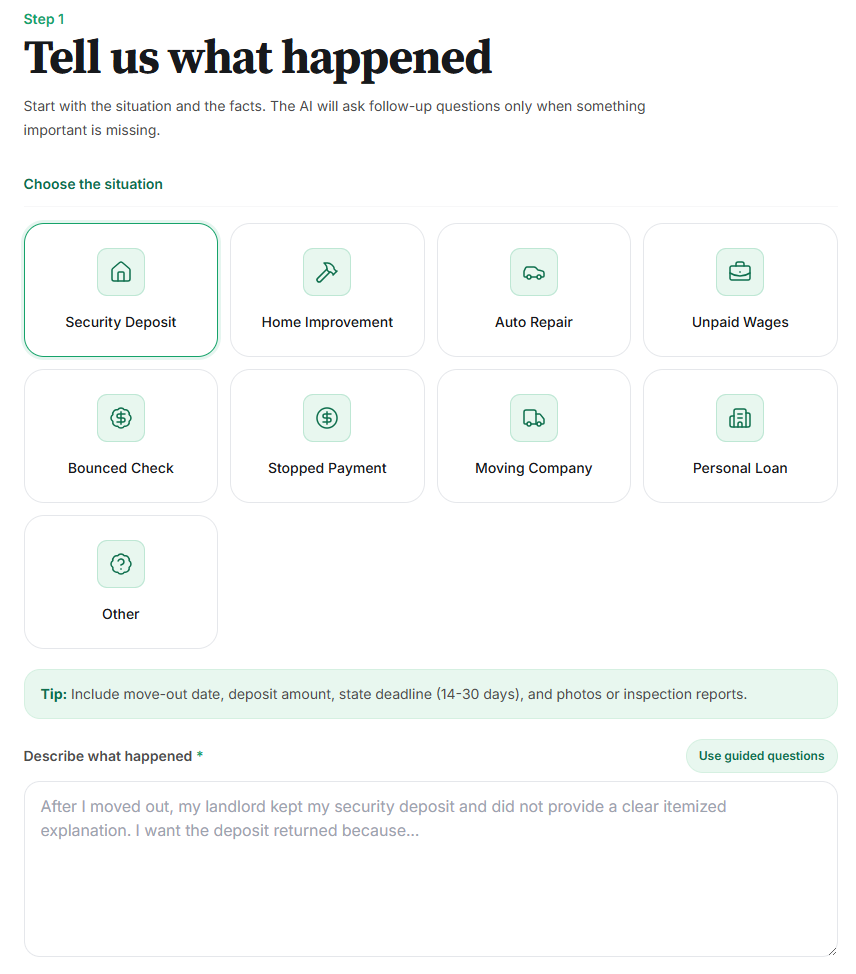
Business owners who are uncertain how to structure the document can use a demand letter generator to answer guided questions and produce a draft based on the facts they provide. The draft should still be reviewed carefully. Names, dates, amounts, legal references, deadlines, and descriptions of the agreement all need to match the underlying records.
The tone should remain firm and professional. Threats, insults, exaggerated consequences, and unsupported claims can weaken the message. The letter should clearly state what happened, what is owed, and what action is required.
Set Clear Deadlines and Define Payment Expectations in the Demand Letter
A demand letter should provide a clear response date. “Pay as soon as possible” leaves room for further delay and makes follow-up difficult.
The appropriate deadline depends on the agreement, the nature of the dispute, applicable law, and the practical time needed for the recipient to act. The sender should check whether a contract or local rule requires a specific notice period.
The requested outcome should also be specific. The business may request:
- Full payment
- A written response
- A proposed installment plan
- Return of business property
- Correction of a billing issue
- Another clearly defined action
If the business is willing to accept installments or discuss a settlement, it can say so without weakening the demand. Any revised arrangement should be recorded in writing.
Preserve Proof of Delivery, Communication Records, and Demand Letter Documentation
Keep the final version of the letter that was actually sent. A draft stored on a computer may differ from the signed or delivered version.
The business should retain:
- The dated final letter
- Any attachments
- The delivery address
- Mailing or delivery receipts
- Tracking information
- Email transmission records
- Responses from the recipient
- Notes from subsequent calls
Delivery requirements vary. Some contracts specify where notices must be sent and which delivery methods are valid. Local small claims procedures may also have notice requirements. Businesses should check the relevant rules rather than assume that an ordinary email is sufficient.
Good recordkeeping also helps the business manage follow-up decisions. The owner can see when the deadline expires and decide what to do next without reconstructing the history from scattered messages.
Organize Evidence and Case Files Before Small Claims Court or Legal Action
A demand letter may lead to payment, negotiation, or a written explanation of the dispute. It may also receive no response.
If the business is considering small claims court, the next step is to organize the material that supports each part of the claim. Useful records may include contracts, invoices, payment records, communications, delivery confirmations, photographs, repair estimates, and witness information.
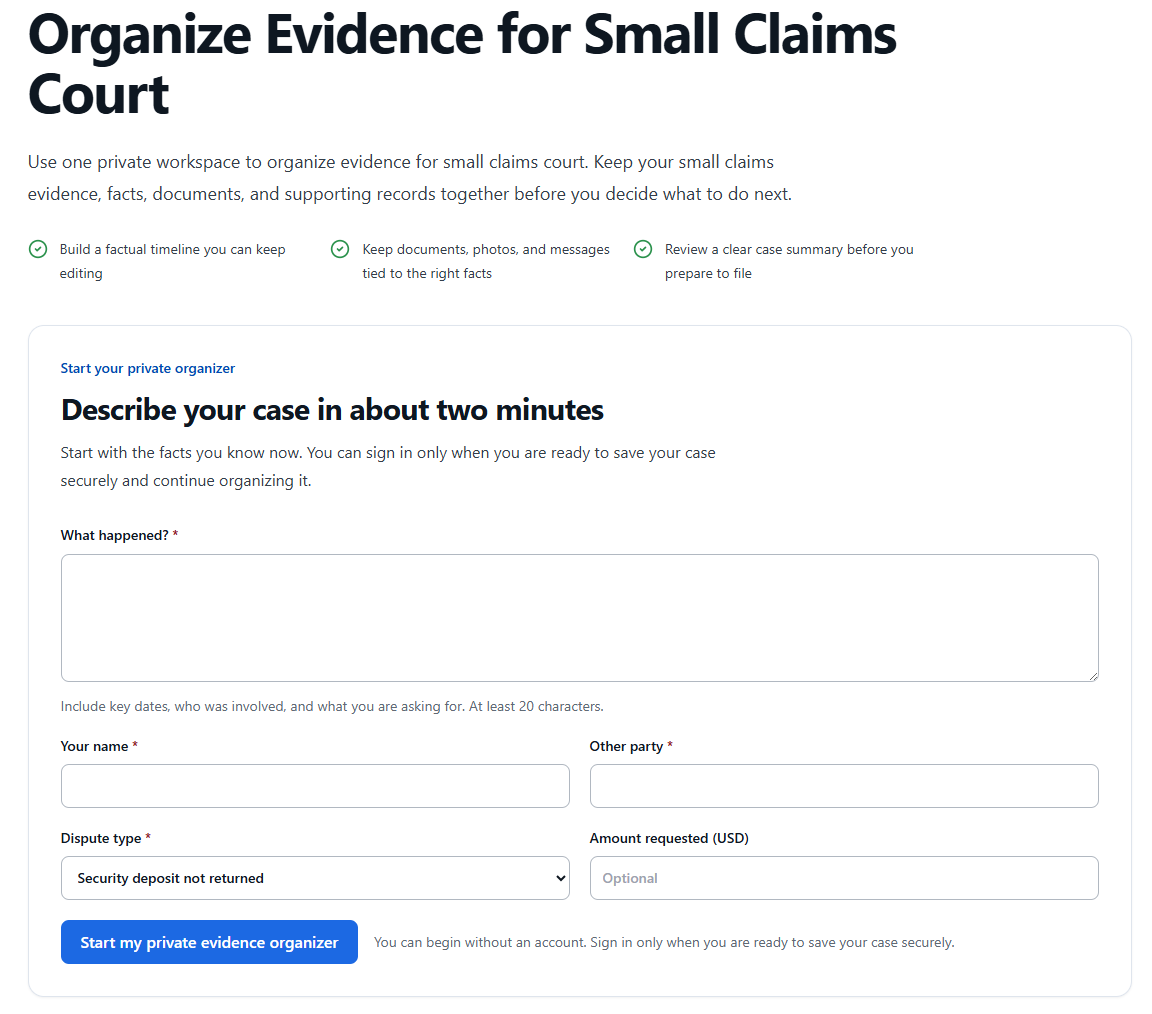
A dedicated small claims evidence workspace can help connect documents and messages to a factual timeline. This makes it easier to review which records support the agreement, performance, amount requested, and attempts to resolve the matter.
Files should be named clearly and arranged by date. Original records should be preserved whenever possible. Screenshots should show relevant dates, participants, and surrounding context rather than isolated sentences.
Court rules differ by jurisdiction. A business must confirm filing limits, deadlines, service procedures, required copies, and evidence rules with the appropriate court. Self-help tools can support organization and document preparation, while the business remains responsible for checking requirements and deciding whether professional legal advice is needed.
Improve Invoicing Systems and Payment Policies After Disputes
Every unpaid invoice can reveal a weakness in the company’s payment system.
After the dispute is addressed, review whether future contracts should include:
- Deposits or milestone payments
- Shorter payment terms
- Late-payment provisions
- Clear acceptance criteria
- A written change-order process
- Defined dispute procedures
- Accurate legal names and billing contacts
- Automatic reminder schedules
Businesses may also decide to pause work when an account becomes overdue or require full payment before delivering final files, products, or access credentials.
These measures cannot prevent every dispute, but they can reduce uncertainty. They also create better documentation if a customer later challenges the amount or scope of the agreement.
Structured Invoice Collection Processes Protect Cash Flow and Reduce Risk
Chasing an unpaid invoice can consume hours of administrative work while leaving the business unsure about its next move. A structured process creates clearer decision points.
Start with the agreement, organize the timeline, send a final reminder, and prepare a factual demand when informal communication stops working. Preserve the letter and delivery record, then organize the supporting documents before considering further action.
The value of this process extends beyond a single payment. It helps a small business protect its cash flow, communicate professionally, and make informed decisions based on a record it can actually use.
This article provides general information and does not constitute legal advice. Requirements and procedures vary by contract and jurisdiction.