Swimming pool distributor Pool (NASDAQ: POOL) reported Q3 2026 results beating Wall Street’s revenue expectations, with sales up 3.7% year on year to $1.50 billion. Its non-GAAP profit of $3.40 per share was 1.2% above analysts’ consensus estimates.
Is now the time to buy Pool? Find out by accessing our full research report, it’s free.
Pool (POOL) Q3 2026 highlights:
- Revenue: $1.50 billion vs analyst estimates of $1.48 billion (3.7% year-on-year growth, 2% beat)
- Adjusted EPS: $3.40 vs analyst estimates of $3.36 (1.2% beat)
- Adjusted EBITDA: $190.5 million vs analyst estimates of $192.2 million (12.7% margin, 0.9% miss)
- Adjusted EPS guidance for the full year is $11.02 at the midpoint, roughly in line with what analysts were expecting
- Operating Margin: 11.4%, in line with the same quarter last year
- Free Cash Flow Margin: 27.1%, up from 18.4% in the same quarter last year
- Market Capitalization: $6.27 billion
“Building on our performance through the first half of the year, we delivered solid results in the third quarter of 2026 as we moved through the end of the peak selling season. Our dedicated teams produced top-line growth by delivering to our customers when they needed it the most. At the same time, we remained committed to disciplined capital allocation, reducing inventory by 3% while growing sales. Through the first nine months of the year, we generated $419.8 million in operating cash flows, and in the third quarter alone we returned $158.7 million to shareholders through share repurchases and dividends. As the industry leader, we are focused on supporting our partners to collectively grow the outdoor living industry, efficiently bringing new products to market and offering the best value proposition to our customers,” said John B. Watwood, president and CEO.
Company overview
Founded in 1993 and headquartered in Louisiana, Pool (NASDAQ: POOL) is one of the largest wholesale distributors of swimming pool supplies, equipment, and related leisure products.
Revenue growth
A company’s long-term sales performance is one signal of its overall quality. Any business can put up a good quarter or two, but the best consistently grow over the long haul. Over the last five years, Pool grew its sales at a weak 1.3% compounded annual growth rate. This was below our standards and is a rough starting point for our analysis.
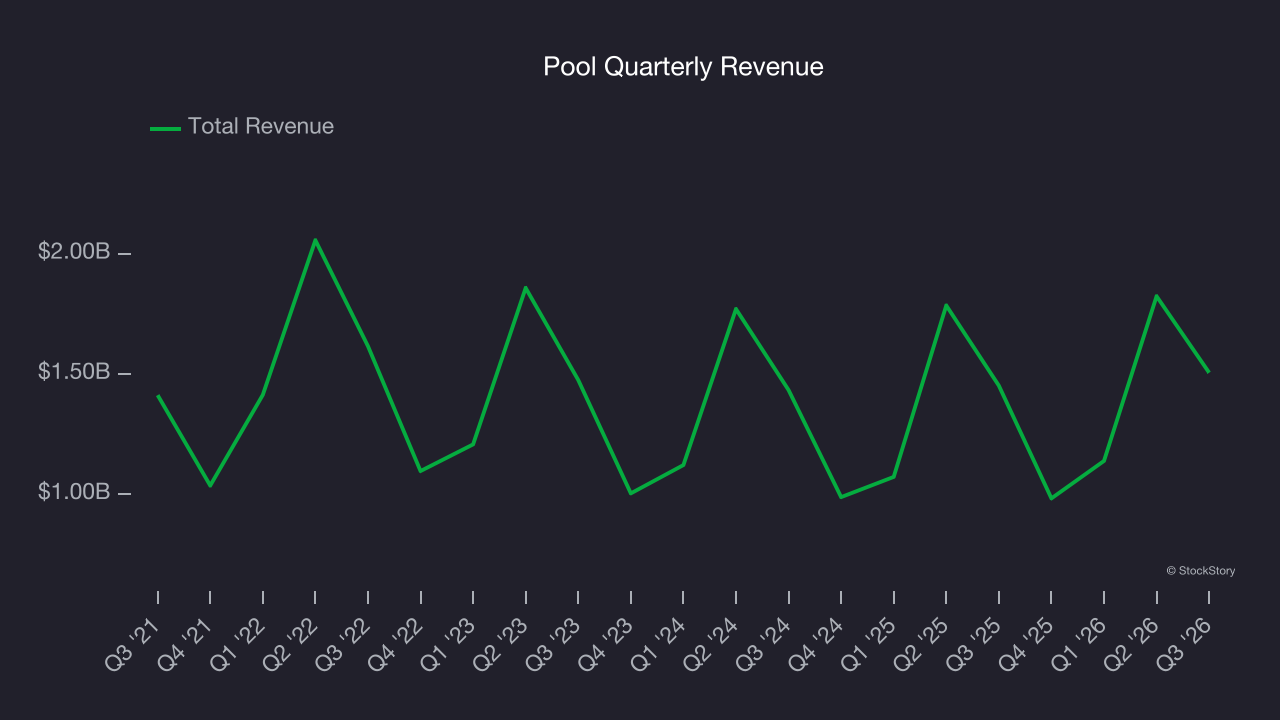
Long-term growth is the most important, but within consumer discretionary, product cycles are short and revenue can be hit-driven due to rapidly changing trends and consumer preferences. Pool’s annualized revenue growth of 1.1% over the last two years aligns with its five-year trend, suggesting its demand was consistently weak. 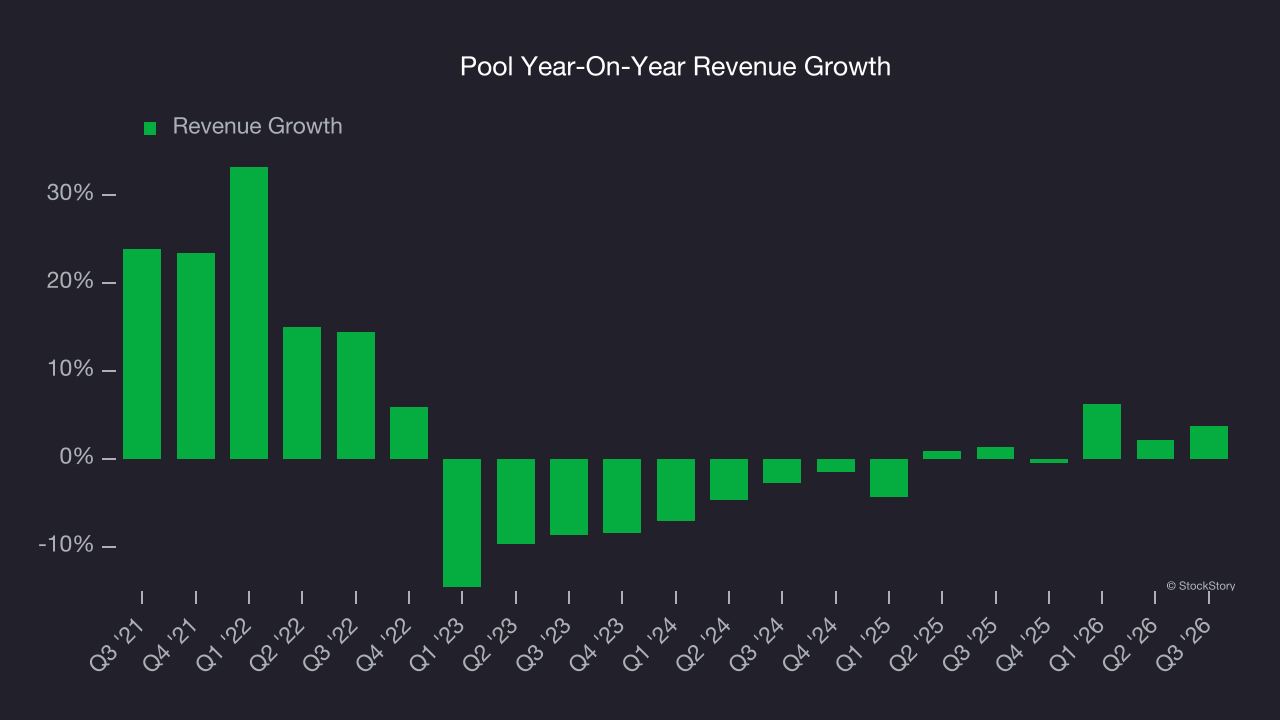
This quarter, Pool reported modest year-on-year revenue growth of 3.7% but beat Wall Street’s estimates by 2%.
Looking ahead, sell-side analysts expect revenue to grow 2.4% over the next 12 months, similar to its two-year rate. While this projection implies its newer products and services will fuel better top-line performance, it is still below the sector average.
ALSO WORTH WATCHING: Nvidia’s Quiet Partner. Nvidia’s chips cost a hundred grand. The connectors that make them work cost even more. One company makes them all.
Every AI server needs specialized infrastructure the chip companies don’t make. High-speed cables. Power connectors. Thermal sensors. This 90-year-old company built a monopoly on it. The AI boom just started. This stock is still flying under the radar. Claim The Stock Ticker Here for FREE.
Operating margin
Operating margin is a key measure of profitability. Think of it as net income - the bottom line - excluding the impact of taxes and interest on debt, which are less connected to business fundamentals.
Pool’s operating margin has more or less stayed the same over the last 12 months , and we generally like to see margin increases due to economies of scale and cost efficiency over time.
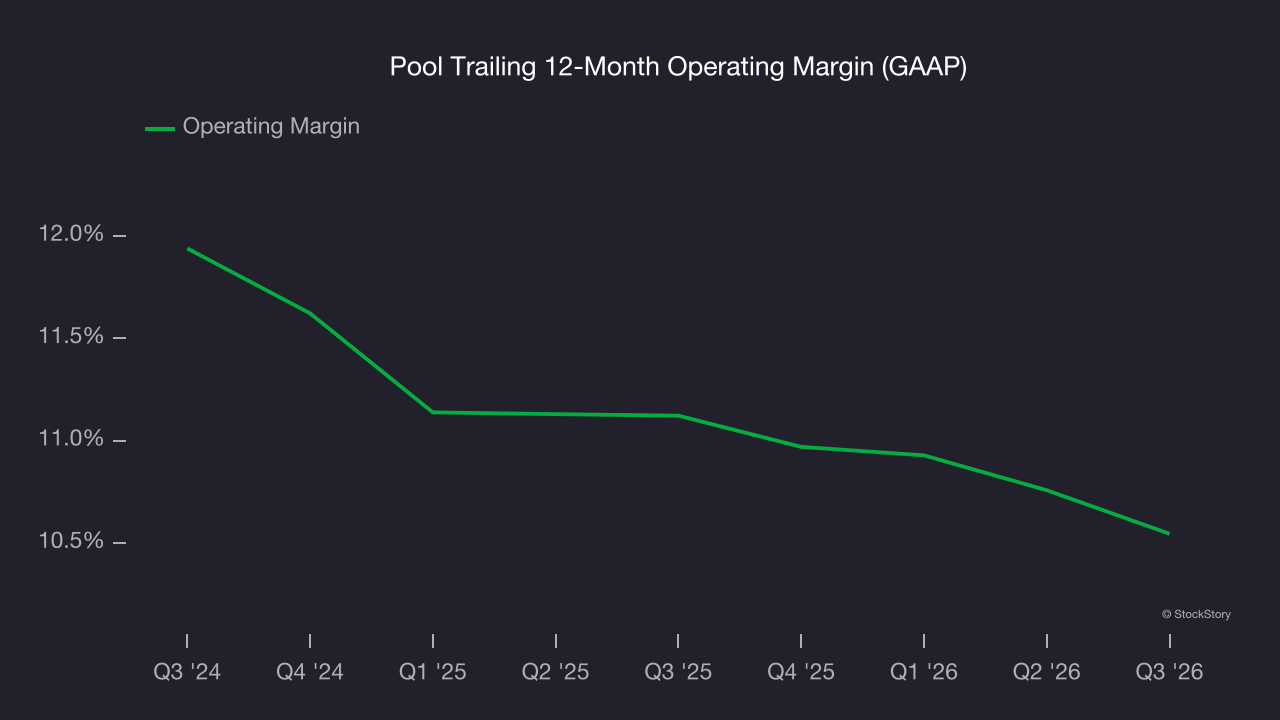
In Q3, Pool generated an operating margin profit margin of 11.4%, in line with the same quarter last year. This indicates the company’s overall cost structure has been relatively stable.
Earnings per share
Revenue trends explain a company’s historical growth, but the long-term change in earnings per share (EPS) points to the profitability of that growth — for example, a company could inflate its sales through excessive spending on advertising and promotions.
Sadly for Pool, its EPS declined by 5.1% annually over the last five years while its revenue grew by 1.3%. This tells us the company became less profitable on a per-share basis as it expanded due to non-fundamental factors such as interest expenses and taxes.
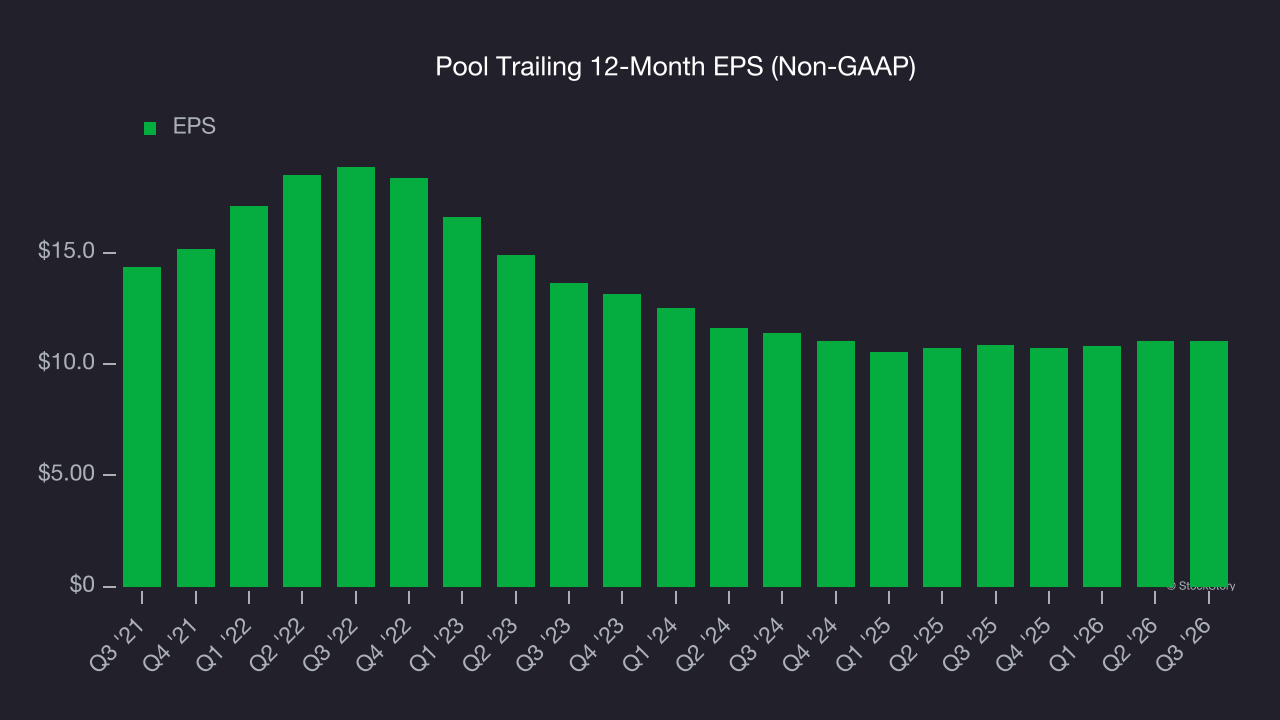
In Q3, Pool reported adjusted EPS of $3.40, up from $3.39 in the same quarter last year. This print beat analysts’ estimates by 1.2%. Over the next 12 months, Wall Street expects Pool’s full-year EPS to grow 4.6% from $11.05 to $11.55.
Key takeaways from Pool’s Q3 results
It was encouraging to see Pool beat analysts’ revenue expectations this quarter. Zooming out, we think this was a decent quarter. Investors were likely hoping for more, and shares traded down 1.4% to $170.04 immediately after reporting.
Is Pool an attractive investment opportunity right now? When making that decision, it’s important to consider its valuation, business qualities, as well as what has happened in the latest quarter. We cover that in our actionable full research report which you can read here (it’s free).