Outerwear manufacturer Columbia Sportswear (NASDAQ: COLM) reported Q3 2026 results beating Wall Street’s revenue expectations, with revenue up 2% year on year to $962.6 million. Guidance for next quarter’s revenue was better than expected at $1.13 billion at the midpoint, 0.7% above analysts’ consensus estimates. Its GAAP profit of $1.66 per share was 29.9% above analysts’ consensus estimates.
For more on Columbia Sportswear, read our full research report, available free.
Columbia Sportswear (COLM) Q3 2026 highlights:
- Revenue $962.6 million vs S&P analysts’ consensus estimates of $938.4 million (2% year-on-year growth, 2.6% beat)
- EPS (GAAP) $1.66 vs analysts’ consensus estimates of $1.28 (29.9% beat)
- Revenue guidance $1.13 billion at the midpoint for Q4 2026, roughly in line with what analysts were expecting
- GAAP EPS guidance $4.78 at the midpoint for the full year, beating analysts’ consensus estimates by 1.9%
- Operating margin 11.4%, up from 7.1% in the same quarter last year
- Free cash flow -$333 million compared to -$287.2 million in the same quarter last year
- Constant currency revenue up 2% year on year
- Market capitalization $3.12 billion
PORTLAND, Ore.--(BUSINESS WIRE)--Columbia Sportswear Company (NASDAQ: COLM, the “Company”), a global, multi-brand provider of outdoor, active and lifestyle products including apparel, footwear, accessories and equipment, today announced third quarter 2026 financial results for the period ended September 30, 2026.
Revenue growth
Reviewing a company’s long-term revenue performance reveals insights into its quality. Any business can experience short-term success, but top-performing ones sustain growth for years. Over the last five years, Columbia Sportswear grew its revenue at a weak 3.3% compounded annual growth rate, falling short of the consumer discretionary sector benchmark.
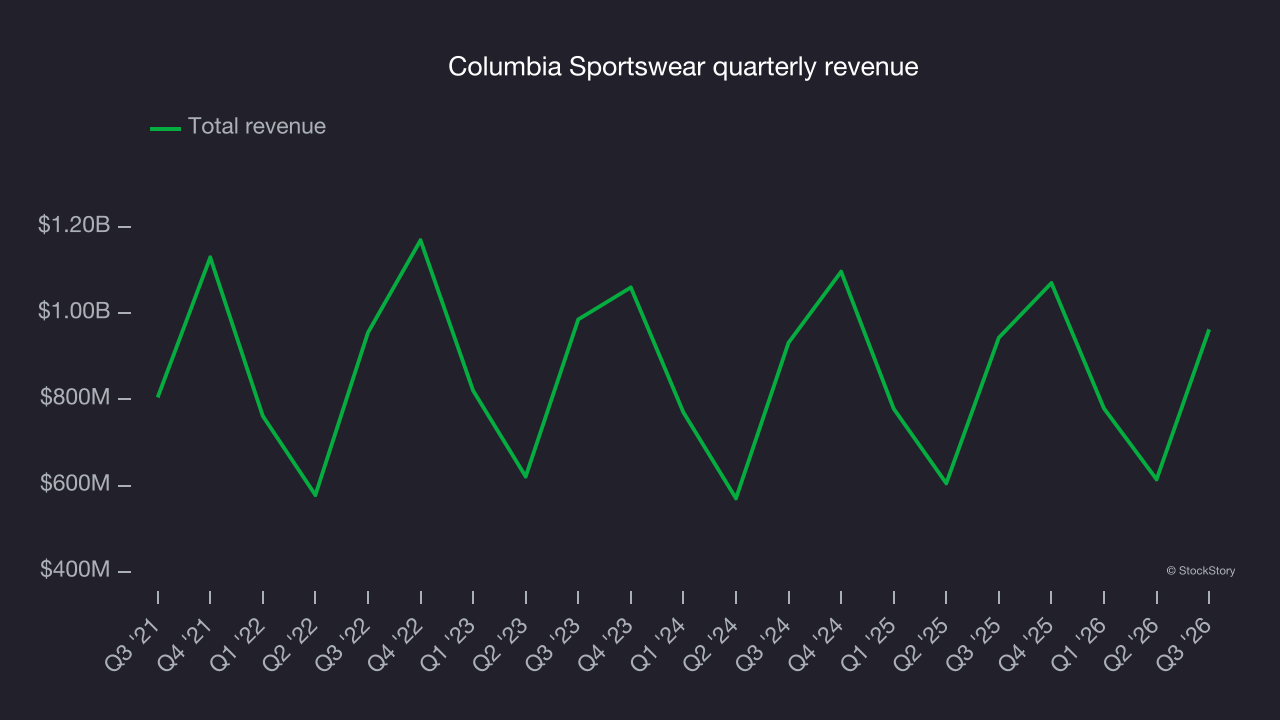
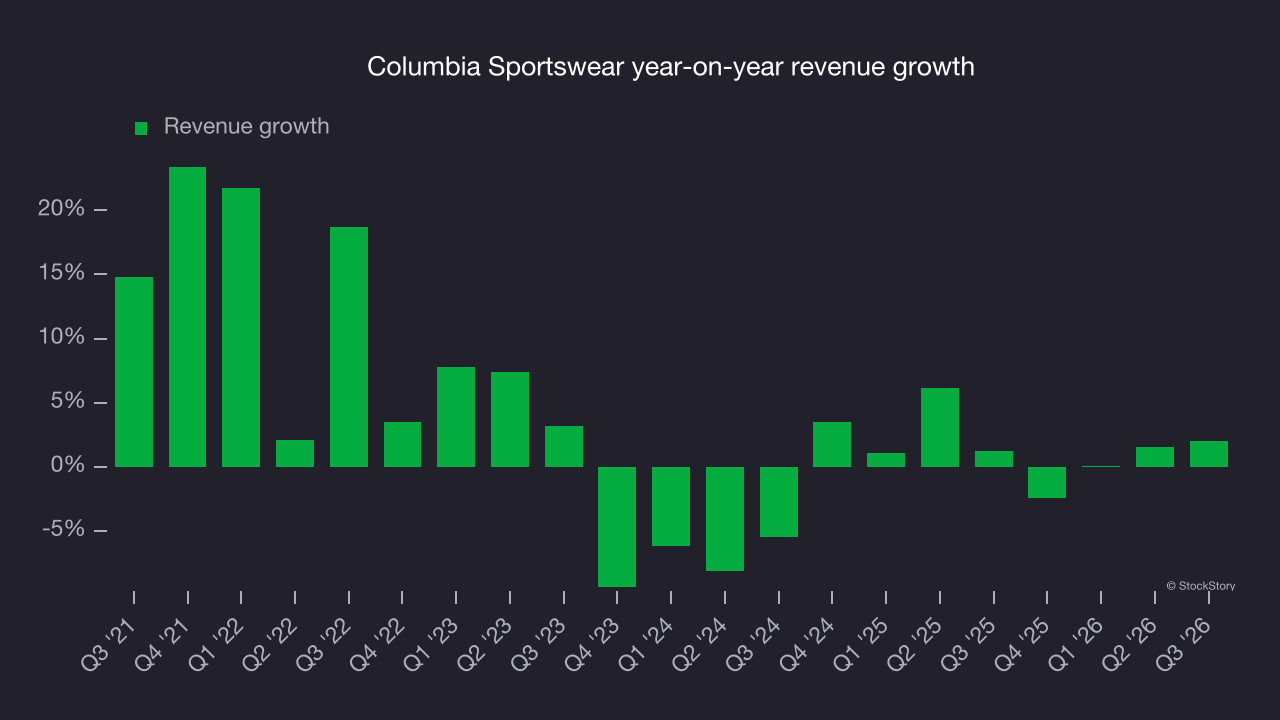
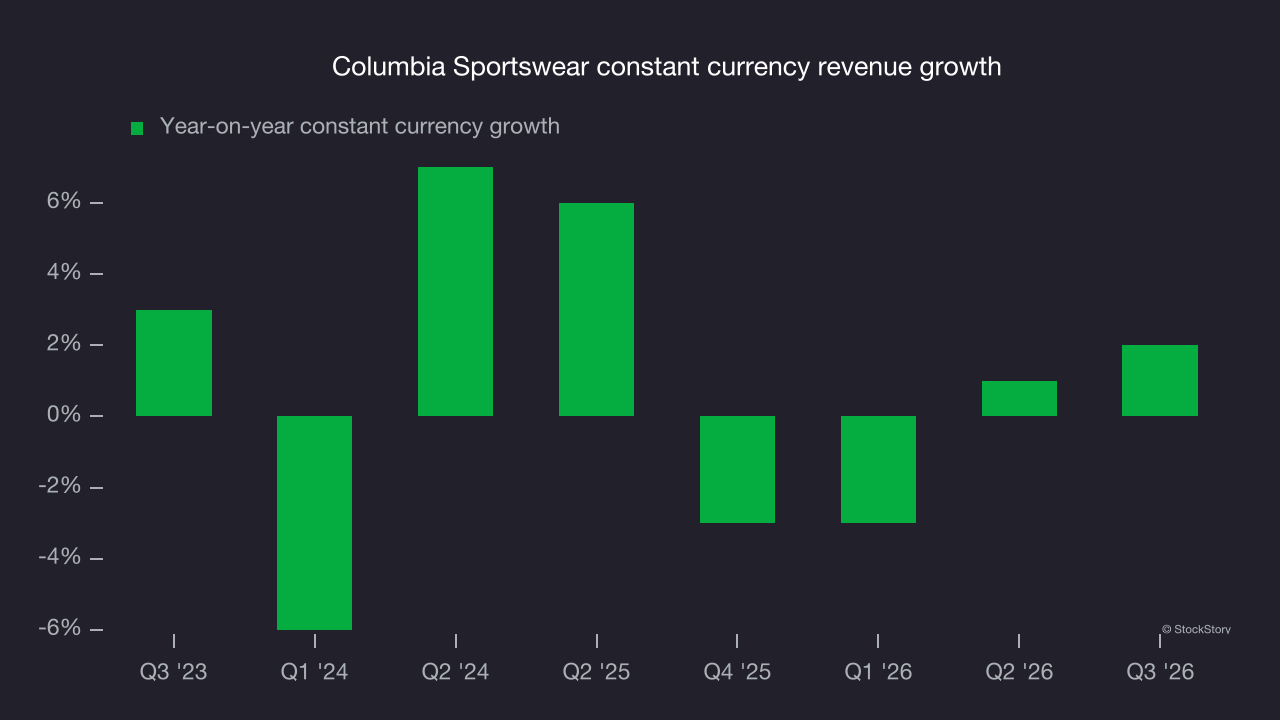
This quarter, Columbia Sportswear reported modest year-on-year revenue growth of 2% but beat Wall Street’s consensus estimates by 2.6%. Company management is currently guiding for a 5.3% year-on-year increase in revenue next quarter.
Looking further ahead, sell-side analysts expect revenue to grow 3.3% over the next 12 months, according to S&P. Although this projection indicates its newer products and services will drive better revenue growth, it is still below average for the sector.
Operating margin
Columbia Sportswear’s operating margin has risen over the last 12 months and averaged 7.7% over the last two years. The company’s improved efficiency is a positive, but its suboptimal cost structure means profitability remains inadequate for a consumer discretionary business.
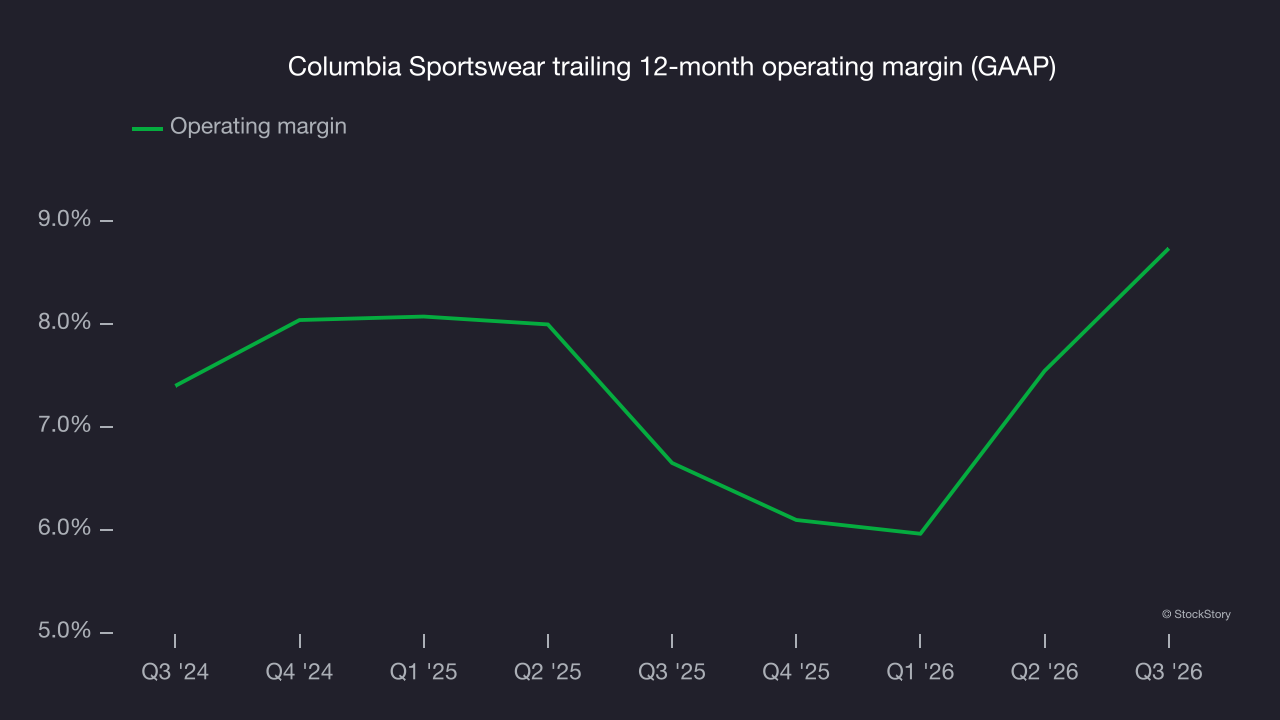
In Q3, Columbia Sportswear generated an operating margin of 11.4%, up 4.2 percentage points year on year. This increase was a positive development and shows it was more efficient.
Earnings per share
We track the long-term change in earnings per share (EPS) for the same reason as long-term revenue growth. Compared to revenue, however, EPS highlights whether a company’s growth is profitable.
Columbia Sportswear’s flat EPS over the last five years was below its 3.3% annualized revenue growth. This tells us the company became less profitable on a per-share basis as it expanded due to non-fundamental factors such as interest expenses and taxes.
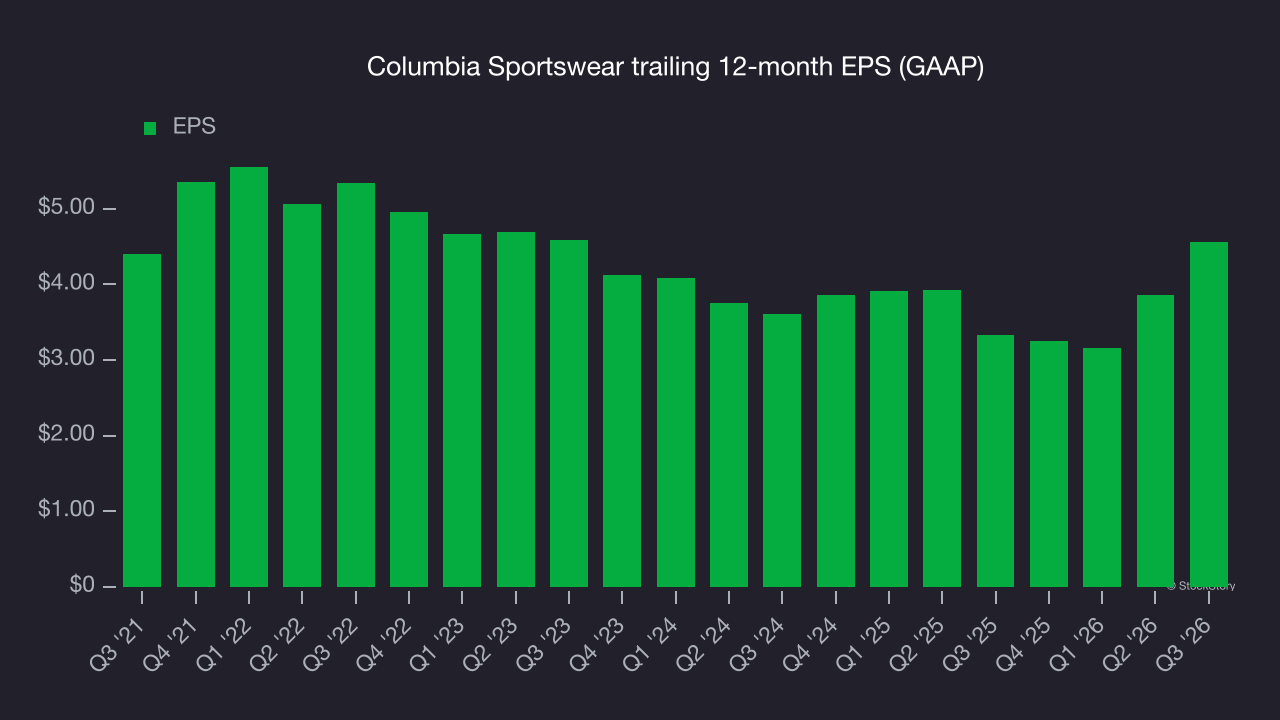
In Q3, Columbia Sportswear reported EPS of $1.66, up from $0.95 in the same quarter last year. EPS came in well above analysts’ consensus estimates, a positive result for shareholders. Over the next 12 months, Wall Street expects Columbia Sportswear’s full-year EPS to shrink by 8.1% from $4.56 to $4.20, according to S&P.
Key takeaways from Columbia Sportswear’s Q3 results
Columbia Sportswear’s revenue and EPS topped analysts’ consensus estimates, but its EPS guidance for next quarter fell short. The quarter still had some key positives, and shares edged higher 1.9% to $64.92 immediately after the results.
When deciding whether to buy the stock, it’s important to consider its valuation, business quality and what happened in the latest quarter. We cover that in our full research report, which you can read here (it’s free).