Restaurant company Texas Roadhouse (NASDAQ: TXRH) met Wall Street’s revenue expectations in Q3 2026, with revenue up 9.5% year on year to $1.57 billion. Its GAAP profit of $1.36 per share was 8% below analysts’ consensus estimates.
For more on Texas Roadhouse, read our free full research report.
Texas Roadhouse (TXRH) Q3 2026 highlights:
- Revenue $1.57 billion vs S&P analysts’ consensus estimates of $1.58 billion (9.5% year-on-year growth, in line)
- EPS (GAAP) $1.36 vs analysts’ consensus estimates of $1.48 (8% miss)
- Operating margin 6.5%, in line with the same quarter last year
- Free cash flow margin 0.7%, similar to the same quarter last year
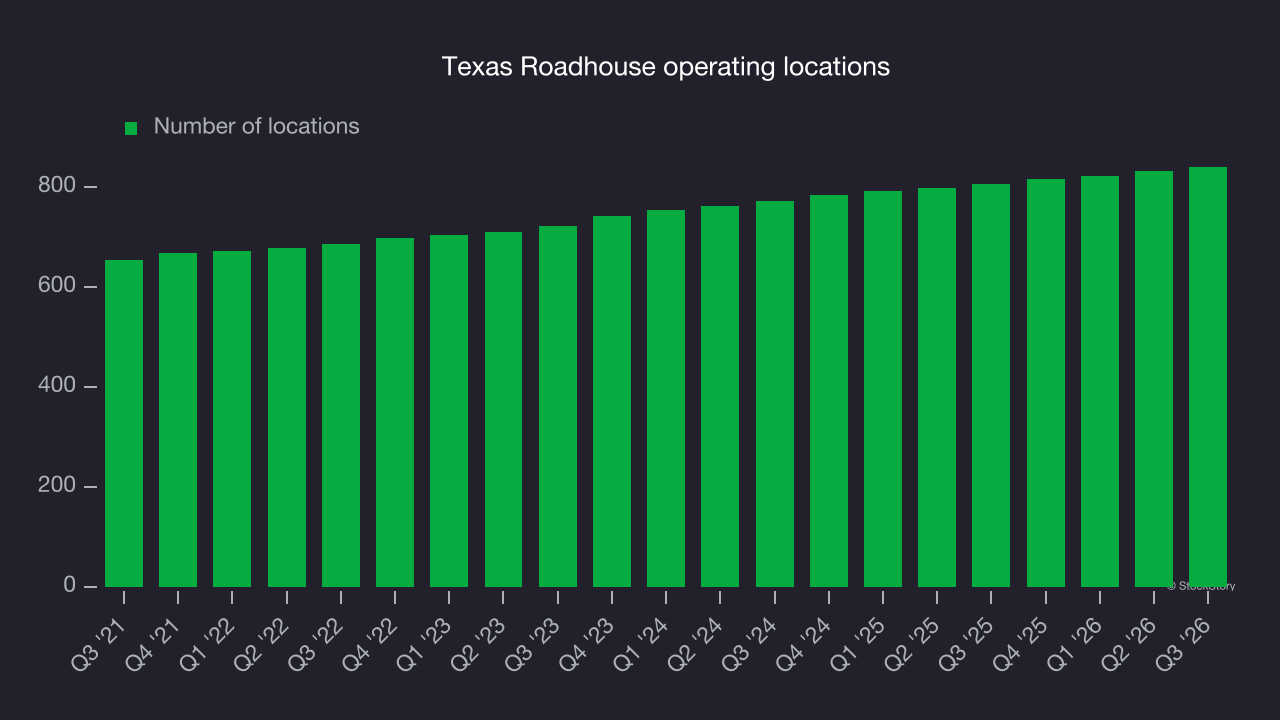
- Locations 840 at quarter end, up from 806 in the same quarter last year
- Same-store sales rose 4.3% year on year (6.3% in the same quarter last year)
- Market capitalization $12.9 billion
Jerry Morgan, Chief Executive Officer of Texas Roadhouse, Inc., commented, “While we entered the quarter with strong momentum, traffic softened late in the quarter. Despite this, our strategic priorities are unchanged. Our operators remain focused on delivering legendary food and legendary service to each and every guest while bringing our purpose of Serving Communities Across America and the World to life. We are confident that their commitment to the overall guest experience will continue to differentiate us, particularly as consumers navigate rising costs.”
Revenue growth
A company’s long-term revenue performance can indicate its overall quality. Any business can deliver a good quarter or two, but the best consistently grow over the long term.
With $6.37 billion in revenue over the past 12 months, Texas Roadhouse is one of the larger restaurant chains in the industry and benefits from a well-known brand that influences consumer purchasing decisions.
Texas Roadhouse’s 13.4% annualized revenue growth over the last seven years was impressive as it opened new restaurants and increased revenue at existing, established dining locations.
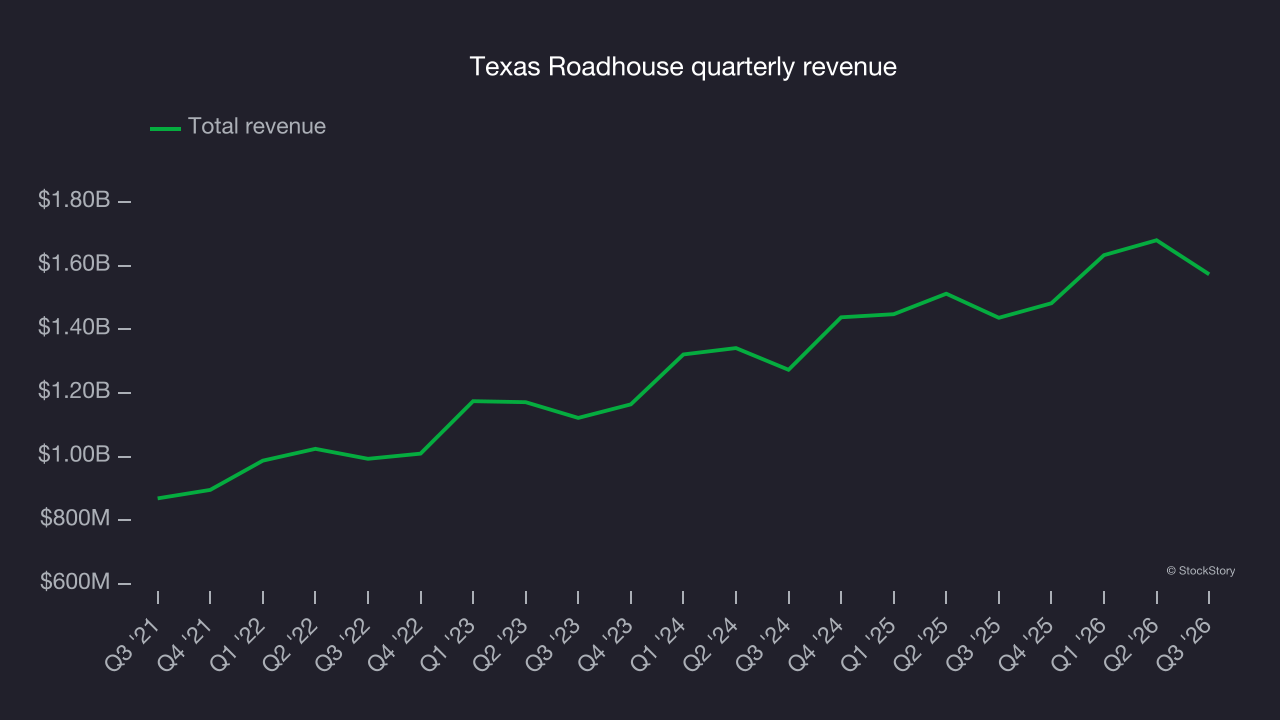
This quarter, Texas Roadhouse grew its revenue by 9.5% year on year, and its $1.57 billion in revenue was in line with Wall Street’s consensus estimates.
Looking ahead, sell-side analysts expect revenue to grow 9.4% over the next 12 months, according to S&P, a deceleration versus the last seven years. Still, this projection is above the sector average and suggests the market expects some success for its newer menu offerings.
Restaurant performance
Number of restaurants
Texas Roadhouse operated 840 locations in the latest quarter. It has opened new restaurants at a rapid pace over the last two years, averaging 4.6% annual growth, much faster than the broader restaurant sector.
When a chain opens new restaurants, it usually means it’s investing for growth because there’s healthy demand for its meals and there are markets where its concepts have few or no locations.
Same-store sales
The change in a company’s restaurant base only tells one side of the story. The other is the performance of its existing locations, which informs management teams whether they should expand or downsize their physical footprints. Same-store sales is an industry measure of whether revenue is growing at those existing restaurants and is driven by customer visits (often called traffic) and the average spending per customer (ticket).
Texas Roadhouse has been one of the most successful restaurant chains over the last two years thanks to strong demand at its existing locations. On average, the company has posted year-on-year same-store sales growth of 5.6%. This performance suggests its rollout of new restaurants is beneficial for shareholders. That gives Texas Roadhouse multiple paths to revenue growth: new restaurants, increased foot traffic and higher revenue per customer at existing locations.
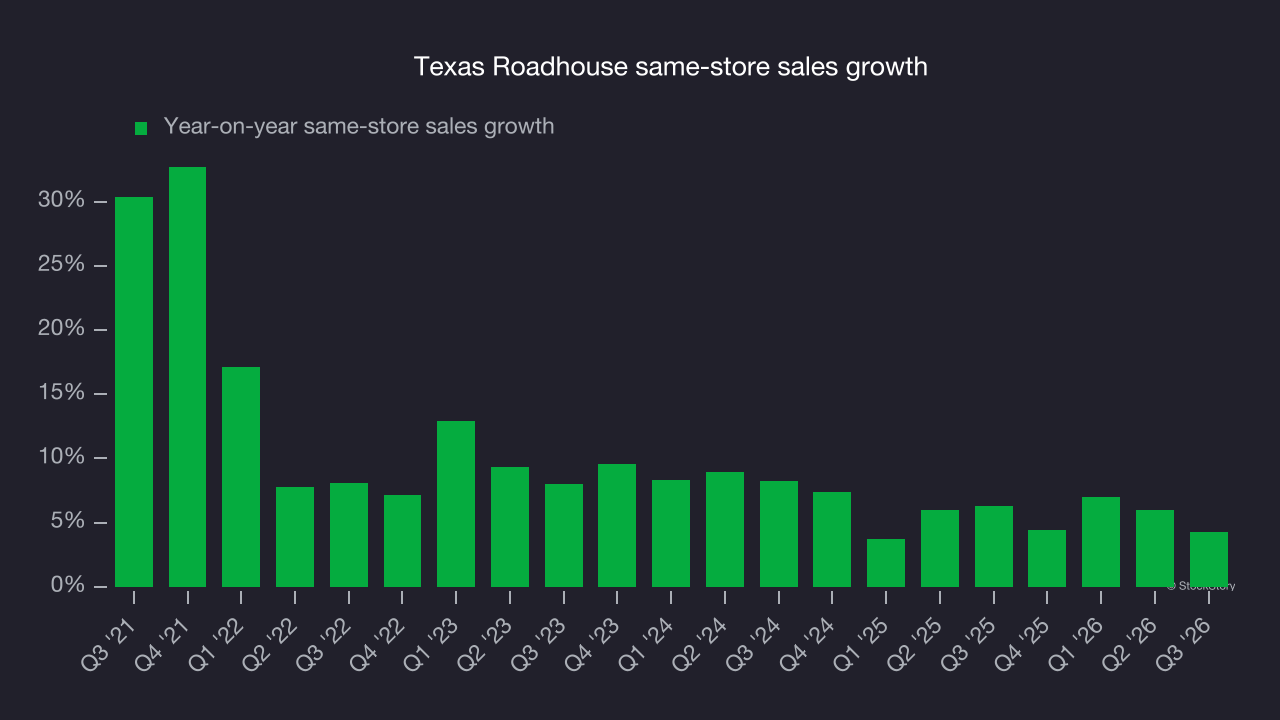
In the latest quarter, Texas Roadhouse’s same-store sales rose 4.3% year on year. This growth was a deceleration from its historical levels, showing the business is still performing well but slowing somewhat.
Key takeaways from Texas Roadhouse’s Q3 results
Texas Roadhouse delivered a softer quarter with few positives: EPS missed expectations, and same-store sales came in slightly below Wall Street’s consensus estimates. Shares edged lower 1.9% to $188.00 immediately after the results.
Texas Roadhouse’s earnings report left more to be desired. To assess whether the stock is a buy, look beyond this quarter. The latest quarter matters, but not nearly as much as longer-term fundamentals and valuation. For more on Texas Roadhouse, read our full research report here (it’s free).