Most homeowners have no idea their deck could be dangerous. Here’s how to change that.
Every May, the North American Deck and Railing Association (NADRA) officially designates the month as Deck Safety Month®. As a proud NADRA member, Decksforlife marks the occasion by doing what we do all year long - getting under decks, probing wood, testing railings, and telling homeowners the truth about what we find.
This year, we want to be direct: a lot of decks in the Greater Toronto Area are not as safe as they look. This is not to scare you‚ but we've seen it too many times: a deck that feels perfectly solid underfoot can have some rot in the ledger board‚ corroded hardware in its frame‚ or posts that have been slowly sloughing and rotting at ground level for years․The surface tells you almost nothing.
So this May, we’re asking homeowners to take ten minutes with the NADRA checklist - and to call a professional if anything raises a flag. It’s the most practical thing you can do before patio season gets into full swing.
The Numbers Are Not Reassuring
NADRA estimates that roughly 30 million decks across North America have outlived their practical service life. A lot of those were built before today’s building codes came into effect - before bolted ledger connections became the standard, before corrosion-resistant hardware was widely required, and before the industry really understood how pressure-treated lumber reacts with metal fasteners over time.
When a deck collapses, it happens fast and the injuries are serious. Over 75% of people involved in a deck collapse sustain significant harm. In the enormous majority of cases‚ it is something you could have spotted and fixed long before it went wrong․
Canadian winters are cold and snowmelt cycles can force moisture into the wood‚ undo fasteners and move footings that are too near the surface․ A deck which seemed okay in September may have absorbed almost an entire seasons worth of hidden stresses and warping that become visible only after the thaw․ Spring is exactly the right time to look.
What We Actually Check - And Why Each Part Matters
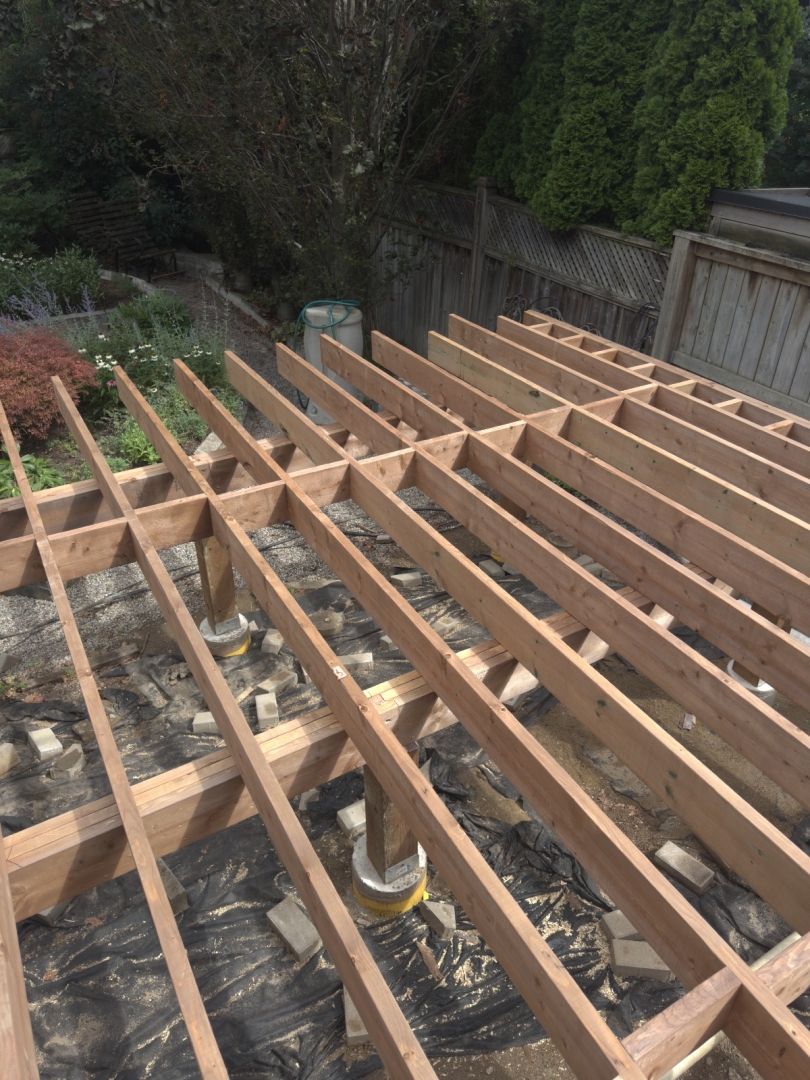
Here’s something most homeowners don’t realize: the part of your deck you can see - the boards, the railings, the stairs - is not where most failures start. The real story is in the frame under the surface‚ though‚ and that's where we spend most of our time․
The Ledger Board: Where Most Decks Actually Fail
The ledger board is the horizontal member that ties your deck to the house. It might be the most important connection in the whole structure, which is why it’s also the most common source of catastrophic failure. Industry data consistently shows that ledger separation from the house is behind the vast majority of deck collapses.
The ledger board should be fastened with lag screws or through-bolts - not nails. That’s not optional; the building code is explicit about it. We've seen older decks where the only thing that held the ledger to the house was a row of nails‚ and it was one heavy gathering away from pulling away from the wall․
Beyond the fasteners‚ we look at the flashing․ Flashing‚ either metal or tape‚ directs water away from the joint between the ledger and the house․ When missing‚ poorly installed‚ or failed after many years‚ the water collects in exactly the place you least want it: the wood rots from behind‚ under the siding․ By the time you start to see anything‚ the damage is often wide-ranging․
Even the slightest gap between the ledger and the house wall is a cause for concern‚ because if the ledger has moved‚ moisture damage is probably not far behind․
Beams: The Quiet Load Carrier
Beams hold the joists‚ and in turn‚ transfer the weight to the posts beneath․ If one beam begins to sag‚ it causes the weight to shift throughout the structure‚ straining other joints․ You won't walk across the deck and have it sag‚ but we look at the bottom edge of every beam to see if there is any bow or sag․ We probe the wood and look for soft spots․We also check where beams are joined. A beam splice that sits out in the middle of a span, rather than over a post, is a red flag. And we confirm that beams are properly secured to posts with metal hardware, not just toenailed into place. Toenailing might look fine, but it provides almost no resistance against the kind of lateral movement that can happen when a deck carries a full load of people.
Support Posts: Rot at the Bottom Is the Problem
Posts carry everything from the beams down to the footings in the ground. The tricky part is that the most dangerous rot usually starts at the very bottom, right at or below grade, where moisture is constant. A post can look completely healthy from six inches up and be hollow at the base.
Wood posts should never be in direct contact with soil or sitting in water. Older decks often have posts set directly into concrete, or worse, directly into the ground. Both methods trap moisture against the wood. The right approach is a metal post base that holds the post above the concrete footing and let’s water drain away.
In Ontario, footings also need to extend below the frost line - roughly four feet in most parts of the province. A footing that doesn’t go deep enough will heave with the freeze-thaw cycle, season after season, gradually stressing every connection above it.
Structural Connections: The Part That Holds It All Together
Joist hangers, post caps, hurricane ties, hold-down anchors - these metal connectors are what actually hold the frame together. They have rated load capacities that depend entirely on being installed correctly. A hanger with a few missing nails in its required holes is a significantly weaker connection than its rating suggests. And we see it all the time: the wrong type of fastener (drywall screws, for instance, which snap under lateral loading), missing fasteners, or hardware that was never properly seated against the framing.
Corrosion is the other issue. Modern pressure-treated lumber contains compounds that accelerate rust in hardware that isn’t rated for contact with treated wood. Light surface rust isn’t always cause for alarm , but hardware with flaking, pitting, or visible thinning of the metal needs to come out. Replacement hardware should be hot-dipped galvanized, stainless steel, or specifically rated for use with ACQ or CA treated lumber.
Railings: If It Moves, That’s a Problem
Railings are what stands between someone and a fall, so there’s very little room for “good enough.” The Ontario Building Code requires guards on any deck surface more than 600 mm above grade, with a minimum height of 900 mm - and 1,070 mm once you’re at six feet or above. Balusters can’t have gaps wider than 100 mm (roughly four inches) so children can’t slip through.
The most common railing problem we find isn’t actually the railing itself, it’s the post connection. Rail posts need to be anchored to the structural frame of the deck, not just bolted through the decking boards. When a post only connects to the surface boards, it can fail suddenly under load even if it looks solid. Push on a railing post. If it moves at all, that’s a conversation we need to have.
We physically test every railing section, lateral pressure, downward pressure, the works. A top rail is supposed to handle a 200-pound concentrated load applied in any direction. That’s not a high bar, but a lot of aging deck railings can’t meet it.
Stairs: Heavily Used and Frequently Overlooked
Stairs take a beating. Every person going up or down lands a concentrated load on the treads and stringers, and stairs are exposed to the elements on all sides. The stringers - the angled framing members that support the treads - are particularly vulnerable to splitting at the notch cuts over time.
The rise on each of the risers in a flight of stairs should not vary by more than 3/8 of an inch․ Variation in the rise height on the risers in a flight of stairs is one of the leading causes of stair fall‚ because the body develops a rhythm going up or down․ It’s a building code requirement, but it’s also just how people work.
We also confirm that handrails are graspable for flights with more than two risers, that open risers don’t have gaps wider than four inches, and that the stringers are properly attached at both the top and bottom of the run. Stair pathways should always be clear - no planters, no décor, and no toys sitting on the treads.
Start Here: The NADRA Check Your Deck® Checklist
NADRA’s official Check Your Deck® consumer checklist gives homeowners ten categories to work through from accessible areas of the deck. It won’t replace a professional inspection, but it’s a genuinely useful starting point - and it’ll flag the obvious problems quickly. Here’s what the checklist covers:
- Split or decaying wood - Poke the wood in a few locations with an ice pick or screwdriver‚ especially near the ledger and in suspected wet areas․ If you can easily push the point in 1/4 to 1/2 inch‚ or if the wood feels spongy‚ you have decay․ Small holes can result from insect activity․
- Flashing - The deck-house joint should be properly flashed․ Water staining and debris collecting at or near the joint indicates failure of the flashings․
- Fasteners - Pound down popped nails‚ tighten loose screws and inspect any with heavy rust․ The oxidization rusting of a heavily rusted screw or nail will hasten wood decay because the screw or nail is attacking the wood as much as it is attacking the metal․
- Railings and banisters - check every section․ There should be no rattles in them․ The higher your deck‚ the more this matters․
- Stairs - Handrails should be secure‚ risers and stringers should be in good condition‚ and the path should be free of any items that may cause a trip hazard․
- Cleaning and maintenance - Remove leaves and debris (they hold moisture and can create mildew) ․ If the waterproofing coating has to be redone‚ clean and reseal before the season begins․
- Lighting and electrical - Working lights on stairways and walkways are important when it is dark outside․ Outlets and appliances should follow safety guidelines․ Outlets should be childproof if children are present․
- Outdoor furniture and storage - Chairs‚ benches‚ and anything else that has legs should be placed away from the deck's edge․ Keep chemical products‚ including barbecue lighter fluid‚ cleaners and matches‚ stored out of the reach of children․
- Grills‚ fire pits and heaters - Use these on a non-combustible pad or located away from flammable deck surfaces in accordance with manufacturer's instructions․
- Nearby trees - If the trees extend over a deck‚ be sure to have an arborist inspect them․ Decaying branches that break off may fall to the deck below․
The full NADRA Check Your Deck® resource is available at nadra.org. As the checklist itself makes clear, going through it does not constitute a code-compliant deck evaluation - it’s a homeowner tool, and a good one. But if you find something that concerns you, don’t put it off.
When to Call Someone In
The homeowner checklist catches a lot. But there are things it can’t reach - literally. The ledger connection is often hidden behind siding. The bottom of support posts may be concealed by decking or fascia boards. Footing depth can’t be visually confirmed without digging. And whether a piece of corroded hardware still meets its rated load capacity isn’t something you can judge by eye.
At Decksforlife, a professional inspection gets underneath the structure. We use moisture meters to measure what you can’t feel, physically probe structural members for decay, apply load tests to railings and connections, and check the work against the Ontario Building Code. If there are problems‚ we tell you exactly what they are and what it takes to fix them․
We would especially encourage anyone with an older deck to request an inspection this spring․ If your deck was built more than 15 years ago‚ it is likely that it predates some of the hardware and connection standards that are now required․ That doesn't automatically mean it's unsafe - but it means you out to know what you're dealing with․
Decks‚ such as those with spongy or soft wood around the ledger‚ badly rusted hardware‚ posts that touch the ground or loose railings‚ should have a professional inspection before heavy use this season․
Book Your Inspection This MayDeck Safety Month is a great reminder‚ but deck safety is a year-round effort․ Decksforlife is scheduling inspections for the month of May and into the summer․ If your monitoring point is in a platform at ground level or higher in a building‚ we'll give you a straight answer․
Call decksforlife․ca to schedule an inspection or discuss a repair or rebuild․
About Decksforlife
Decksforlife is a NADRA member deck building and inspection company that designs‚ builds‚ repairs‚ and inspects residential decks for homeowners throughout the Greater Toronto Area with an emphasis on building code compliance‚ structural integrity‚ and outdoor living spaces that will outlast the elements․ More at decksforlife․ca.
About NADRA Deck Safety Month®
he North American Deck and Railing Association (NADRA) is the trade association representing the deck and railing industry in the United States and Canada․ Each May‚ NADRA runs Deck Safety Month®‚ an annual consumer awareness campaign urging homeowners to check their decks and to contact properly qualified professionals․ Resources including the official Check Your Deck® checklist are available at nadra․org․
Media Contact
Company Name: Decksforlife
Contact Person: Iaroslav Streapan
Email: Send Email
Phone: (647) 701-3206
Address:3150 Dufferin Street Suite 1007
City: North York
State: ON
Country: Canada
Website: https://decksforlife.ca/