2026 State of Strategic Portfolio Management report finds that organizations practicing advanced portfolio management techniques deliver nearly double the ROI of traditional organizations.
The report quantifies the financial impact of traditional planning approaches and strategic drift, illustrating a scenario in which an organization could lose $260 million in annual value.
Tempo Software, a leading provider of Adaptive Strategic Portfolio Management (SPM) solutions, today released its 2026 State of SPM Report, finding that nearly 1-in-3 enterprise projects are not delivering meaningful ROI.
This press release features multimedia. View the full release here: https://www.businesswire.com/news/home/20260224564598/en/
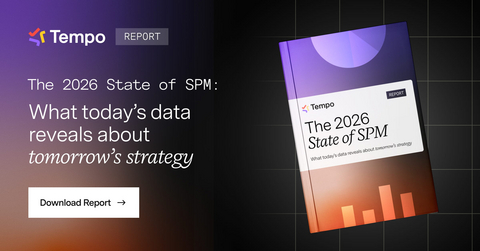
Tempo Software's 2026 State of SPM Report
The report also reveals a stark performance divide: High-performing organizations achieve measurable ROI or strategic value on 81% of projects, compared to just 45% among traditional planning organizations – a gap that, in a modeled scenario, represents up to $260 million in lost annual value.
The research underscores the high cost of outdated planning approaches, showing that organizations are paying a steep financial price for misalignment, delays, low-value initiatives, and ongoing strategic drift.
Based on a global survey of 667 planning and PMO leaders across 43 countries, the report shows that organizations embracing scenario planning, frequent portfolio re-evaluation, and cross-functional alignment are dramatically more likely to adapt quickly, cancel low-value work early, and consistently deliver strategic results.
“Adaptive Strategic Portfolio Management is fundamentally about resource allocation – are you dedicating your money, people, and time to the work that optimizes measurable value?ˮ said Vic Chynoweth, CEO of Tempo Software. “The highest-performing teams arenʼt clinging to perfect plans or heroic roadmaps. They're reviewing frequently, leveraging the power and insights of AI, adapting based on real execution data, and making timely disciplined decisions. And theyʼre seeing the returns to prove it.ˮ
Tempoʼs research identifies a small segment of organizations – called Dynamic Planners – that outperform peers by combining scenario planning, integrated portfolio processes, and continuous adjustment. These organizations report significantly higher confidence, faster re-forecasting, and far stronger alignment between strategy and execution.
Key findings from the 2026 State of SPM report include:
In this report, ROI refers to the share of projects delivering measurable financial return or strategic value, as reported by survey respondents.
- While 90% of organizations say they encourage adaptability and alignment, cross-functional alignment remains the top improvement area, cited by 27% of planning leaders
- Understanding team capacity is the #1 barrier to executing strategy, cited by 30% of respondents – followed closely by prioritization and resource allocation
- Teams using scenario planning report a 17-percentage-point higher rate of projects delivering measurable ROI or strategic value compared to teams not using scenario planning
- Companies with integrated portfolio processes report 14-percentage-point higher project ROI delivery rates than organizations operating in silos
- Teams that review and adjust priorities frequently cancel 8 percentage points more projects than infrequent reviewers – yet deliver nearly 8 percentage points higher ROI, reinforcing the reportʼs “cancellation paradoxˮ
- Nearly one-third of projects are canceled or stopped early due to misalignment or lack of ROI, with high-performing teams treating cancellation as a strength – not a failure
- Only 37% of organizations report good or complete visibility across projects, compared to 82% of those with fully integrated portfolio processes, highlighting the visibility gap created by silos
- Scenario planning users are nearly twice as confident in their ability to adapt to change (85% vs. 46%) and are 3x more likely to use AI extensively in planning (36% vs. 12%)
The cost of strategic drift
Tempoʼs findings also highlight the financial consequences of poor alignment and slow decision-making. The report includes an illustrative enterprise model showing that for an organization with $880 million in strategic spend, misalignment, delays, and low-value work can contribute to as much as $260 million in lost value annually, with $75-85 million in recoverable waste.
In other words: The longer organizations wait to reallocate resources, the more expensive static planning becomes.
“The takeaway is clear,ˮ added Chynoweth. “SPM isnʼt about certainty – itʼs about being ready for and adapting to change. The organizations delivering the strongest outcomes are the ones continuously choosing the right work, at the right time, with eyes wide open.ˮ
The full report can be downloaded at: tempo.io/guides/2026-state-of-spm-report
Methodology
Tempo Software surveyed 667 planning and PMO leaders across 43 countries between October 28 and November 21, 2025. Respondents were asked about portfolio management maturity, visibility, resource and budget agility, decision cadence, scenario planning adoption, value realization, and AI usage in enterprise planning. In this report, ROI delivery refers to the share of projects delivering measurable financial return or strategic value, as reported by respondents.
About Tempo Software
Tempo Softwareʼs modular Strategic Portfolio Management platform helps organizations turn strategy and resources into measurable value. The Tempo suite of #1 Jira add-ons streamlines time tracking, capacity management, and portfolio management. Trusted by 30,000+ customers and 300 solution partners, Tempo is a leading strategic partner in the Atlassian ecosystem.
Discover how to move from static planning to adaptive strategy at Tempo.io.
View source version on businesswire.com: https://www.businesswire.com/news/home/20260224564598/en/
Contacts
Media Contact
Maggie Markert
tempo@0to5.com
(484) 574-1855