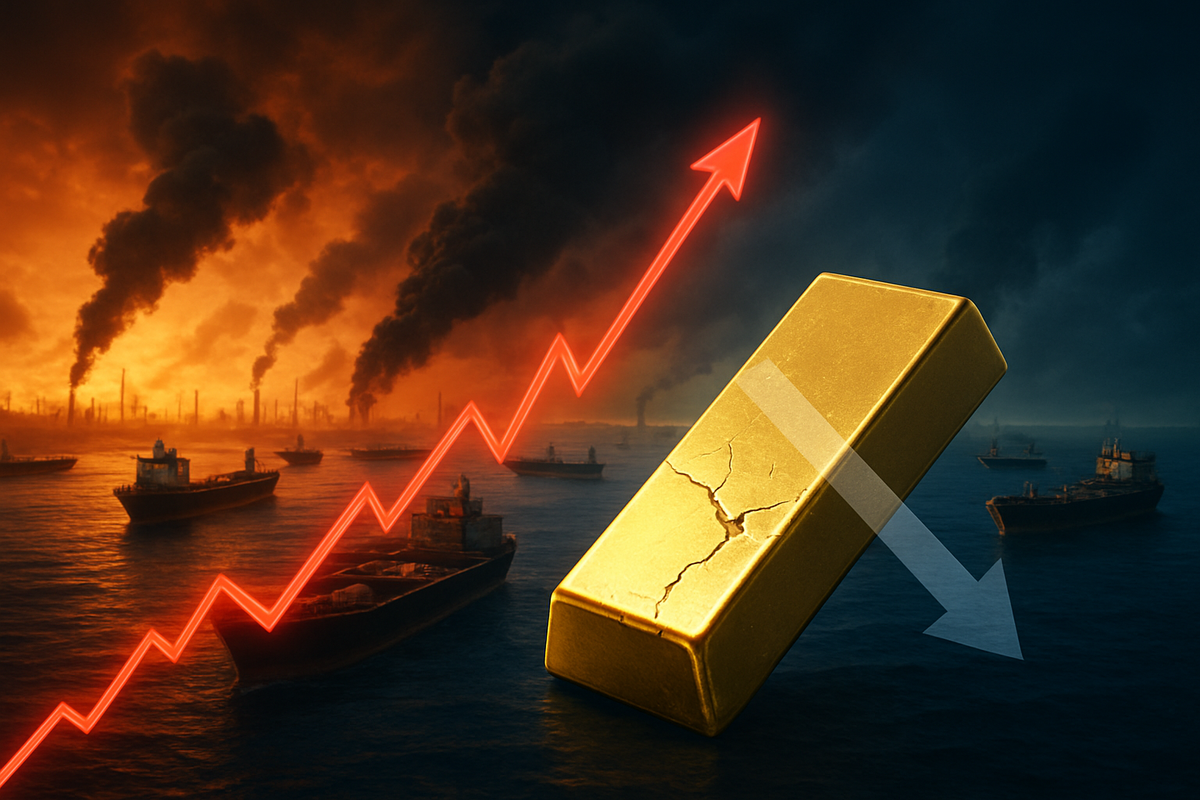
The global economy was thrust into a high-stakes energy crisis this week as dual disruptions in the Middle East sent shockwaves through the commodities markets. The effective closure of the Strait of Hormuz on February 28, followed by precision strikes on the South Pars gas field on March 18, 2026, has catapulted Brent crude to over $126 per barrel and triggered a 35% surge in European natural gas prices. While such geopolitical instability traditionally serves as a "flight to safety" for precious metals, a paradoxical shift is occurring: gold and silver are plummeting.
The culprit is a brutal economic chain reaction. The sudden spike in energy costs has mainlined inflation directly into the wholesale economy, evidenced by a "hot" February Producer Price Index (PPI) report released yesterday. This surge in producer costs has stripped the Federal Reserve of its ability to pivot toward lower interest rates. Instead, the FOMC has adopted a "hawkish hold," signaling that rates will remain elevated to combat entrenched inflation. This higher-for-longer interest rate environment has bolstered the U.S. Dollar and Treasury yields, creating a massive headwind that is crushing the valuation of non-yielding assets like gold.
The Chokehold on Global Energy: A Timeline of Escalation
The current crisis began in earnest on February 28, 2026, when the Islamic Revolutionary Guard Corps (IRGC) moved to block the Strait of Hormuz—the world’s most vital oil transit point—following localized military escalations. By early March, the flow of nearly 20 million barrels of oil per day had ground to a halt. Major shipping conglomerates, including Maersk (CPH:MAERSK-B), suspended all transit through the region, citing "unacceptable risk to crew and cargo." The situation reached a boiling point on March 18, when strikes targeted the South Pars gas field, the planet’s largest natural gas deposit, leading to immediate force majeure declarations by major regional exporters.
The initial market reaction was one of pure volatility. Brent crude oil, which had been trading in the $80 range at the start of the year, spiked to $126 per barrel by March 8. When the South Pars strikes occurred yesterday, global energy markets entered a state of near-panic. Historically, the Strait of Hormuz has been a site of tension, but the 2026 closure represents the most sustained and successful blockade in modern history. The disruption isn't just about oil; it’s about the liquefied natural gas (LNG) that powers European and Asian industrial hubs, creating a supply-side shock that is nearly impossible to mitigate in the short term.
Winners and Losers in a High-Energy, Low-Metal Economy
The primary beneficiaries of this turmoil are large-cap Western energy producers. Companies with diversified global footprints and significant production outside the Middle East are seeing record free cash flow as prices skyrocket. ExxonMobil (NYSE: XOM) and Chevron (NYSE: CVX) have seen their stock prices climb as they capitalize on the higher price floor. Similarly, European energy giants like Shell (NYSE: SHEL) are benefiting from the desperate scramble for non-Russian, non-Middle Eastern gas supplies, despite the broader economic risks.
On the losing side of this equation are the precious metals miners and the metals themselves. Gold, which reached a record high of $5,600/oz in January on anticipation of rate cuts, has suffered a staggering reversal, falling toward $4,800/oz as of March 19. Major miners like Newmont (NYSE: NEM) and Barrick Gold (NYSE: GOLD) are being squeezed from two sides: the falling price of their primary product and the rising cost of energy required to mine it. Silver has fared even worse, with Pan American Silver (NYSE: PAAS) and popular ETFs like the iShares Silver Trust (NYSEARCA:SLV) seeing double-digit percentage drops as the "industrial" component of silver’s value is weighed down by fears of a global manufacturing slowdown.
The Inflationary Feedback Loop and the Fed’s Wall
The wider significance of this event lies in the "death" of the 2026 rate-cut narrative. Yesterday’s PPI data was the smoking gun; headline producer prices rose 0.7% month-over-month, nearly double the expected 0.3%. When the costs for fuel, transportation, and raw materials spike at the wholesale level, they eventually bleed into consumer prices. For the Federal Reserve, this means the mission to tame inflation is far from over. By maintaining a hawkish stance and keeping the federal funds rate at 3.50%–3.75%, the Fed is effectively making it more expensive to hold gold via the "yield trap."
This scenario mirrors the "stagflation" era of the 1970s, but with a modern twist. In previous decades, gold might have risen alongside inflation. However, in 2026, the market is more sensitive to the "real yield"—the difference between bond yields and inflation. With 10-year Treasury yields pushing higher in response to the Fed's hawkish tone, the opportunity cost of holding the SPDR Gold Shares (NYSEARCA:GLD) becomes prohibitive. The market is betting that the Fed will sacrifice economic growth to prevent a hyper-inflationary energy spiral, a policy that prioritizes a strong dollar over commodity-backed safety.
Strategic Pivots: The Path Forward for 2026
In the short term, the market remains at the mercy of geopolitical developments. Should the Strait of Hormuz remain closed for another thirty days, the "inflationary fire" will become a permanent fixture of the 2026 economic landscape. Central banks worldwide may be forced to choose between a deep recession and uncontrolled price hikes. Investors should prepare for a strategic pivot toward "energy-resilient" sectors. If the blockade persists, we may see a renewed push for nuclear energy and domestic LNG infrastructure as Western nations attempt to decouple from Middle Eastern volatility.
Long-term, the pressure on gold and silver may only abate if the Fed reaches a "breaking point" where the economy slows so significantly that they are forced to cut rates despite high inflation. This "regime shift" would be the moment precious metals regain their footing. Until then, the volatility in the energy sector will continue to provide a "false signal" for gold bulls, as the indirect pressure from rising yields and a hawkish Fed overrides the traditional safe-haven demand.
Wrap-Up: What to Watch in the Coming Months
The events of March 2026 serve as a stark reminder that geopolitical risk does not always translate to higher gold prices. The indirect pressure via energy-driven inflation and subsequent central bank aggression has proved to be a more powerful force than the fear of war itself. The key takeaways are clear: energy disruptions are inflationary, inflation triggers hawkish central banking, and hawkish central banking is the ultimate "gold killer."
Moving forward, investors must keep a close eye on two critical metrics: the "Core PPI" and the weekly tanker traffic reports from the Strait of Hormuz. If core inflation begins to decline despite high energy costs, the Fed may soften its tone, providing a floor for precious metals. However, as long as the Middle East energy corridor remains a battleground, the dollar will remain king, and gold will likely continue its search for a bottom in this high-interest-rate environment.
This content is intended for informational purposes only and is not financial advice