The maritime security crisis in the Persian Gulf reached a violent new plateau today, March 31, 2026, as a drone strike on a high-capacity Kuwaiti tanker sent shockwaves through global energy markets. The attack on the Al-Salmi represents the latest escalation in a month-long standoff that has effectively paralyzed the Strait of Hormuz, forcing the international shipping industry to contend with a radical new reality: a "toll booth" strategy deployed by the Iranian Revolutionary Guard Corps (IRGC) that demands political and financial fealty for safe passage.
This disruption to nearly 20% of the world's daily oil supply has triggered a massive rerouting of commodity trade, sent shipping insurance rates into a vertical climb, and pushed Brent crude prices toward historic highs. As major Western powers weigh military intervention against the risk of a broader regional war, the global economy is grappling with a supply chain shock that rivals the energy crises of the 1970s.
The Strike on the Al-Salmi and the Rise of the 'Tehran Toll'
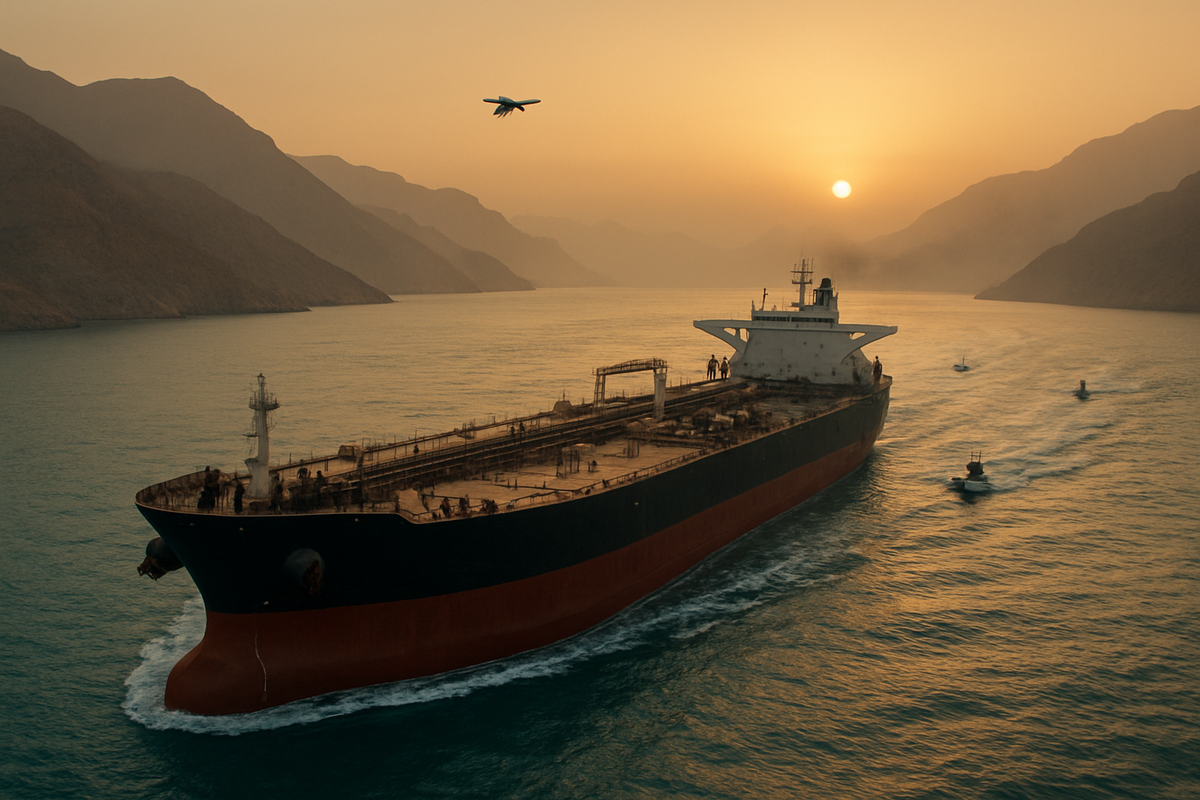
The current flashpoint occurred just after midnight local time when the Kuwaiti-flagged Very Large Crude Carrier (VLCC) Al-Salmi was struck by an Iranian-made suicide drone while at anchor 31 nautical miles northwest of Dubai. The vessel, carrying approximately 2 million barrels of crude oil destined for China, sustained significant hull damage and an onboard fire that took emergency responders hours to extinguish. While no oil spill has been reported and the crew of 24 is safe, the message sent by the IRGC was clear: no vessel, regardless of its destination, is safe without explicit clearance.
The attack on the Al-Salmi follows the formalization of Iran’s "toll booth" strategy earlier this month. Under this scheme, the IRGC has established a mandatory "geopolitical vetting" process for all vessels entering or exiting the Strait of Hormuz. Ship operators are required to submit detailed cargo manifests and ownership chains to IRGC-linked intermediaries. Those deemed "neutral" are often forced to pay "transit fees" as high as $2 million per voyage to secure a safe-passage code and an armed escort through the Larak Island corridor. To circumvent Western sanctions, these payments are reportedly settled in Chinese Yuan via the Cross-Border Interbank Payment System (CIPS) or in cryptocurrency.
The timeline leading to this crisis began in late February 2026, following a breakdown in regional security agreements. Since then, the IRGC has transitioned from occasional harassment to a systemic, monetized blockade. The immediate industry reaction has been one of panic; by mid-March, major marine insurers began canceling annual war-risk policies, and the "toll" system has effectively split the shipping world into those who can pay—or are politically permitted to pass—and those who are forced to take the 14-day detour around the Cape of Good Hope.
Market Fallout: Winners and Losers in a Volatile Gulf
The financial impact of the crisis has been uneven across the energy and logistics sectors. Saudi Aramco (TADAWUL:2222) has been forced to pivot its entire export strategy to its East-West Pipeline, which is now running at a record 7 million barrels per day (bpd) to reach Red Sea ports. While Aramco benefits from the surge in oil prices, the operational costs of this massive rerouting and the threat to its Fujairah terminals have weighed on its long-term outlook. Similarly, ExxonMobil (NYSE: XOM) and Chevron (NYSE: CVX) have seen their stock prices struggle to keep pace with oil gains as they face production shut-ins in Iraq and the UAE due to the logistical bottleneck.
In the shipping sector, A.P. Moller-Maersk (CPH:MAERSK-B) and Hapag-Lloyd (ETR:HLAG) have suspended all transits through the Strait, leading to a surge in freight rates as capacity is squeezed by longer travel times. Conversely, tanker specialists like Frontline Plc (NYSE: FRO) have seen spot rates for vessels available at Red Sea terminals skyrocket, though these gains are tempered by the ballooning cost of insurance. Danaos Corp (NYSE: DAC) also saw shares dip after its container ship, the Express Rome, narrowly avoided a projectile attack near Ras Tanura earlier this week.
Defense contractors have emerged as the clearest financial beneficiaries of the heightened regional tension. Lockheed Martin (NYSE: LMT) and RTX (NYSE: RTX) have received emergency orders for missile defense interceptors like the PAC-3 and SM-6 to protect regional infrastructure and naval assets. Meanwhile, firms providing maritime domain awareness, such as L3Harris (NYSE: LHX) and Northrop Grumman (NYSE: NOC), are seeing increased demand for coastal surveillance and autonomous underwater vehicles tasked with mine countermeasures.
Strategic Shifts and the Insurance Collapse
The Persian Gulf crisis of 2026 fits into a broader trend of "asymmetric economic warfare," where state actors use their geography to hold global supply chains hostage. This event mirrors the 1980s "Tanker War" but with a sophisticated 21st-century twist: the use of digital vetting and financial extortion. The "toll booth" strategy has effectively weaponized the world’s most critical maritime chokepoint, creating a precedent that other nations may look to replicate in the South China Sea or the Bab el-Mandeb.
The most immediate ripple effect has been the collapse of the traditional war-risk insurance market. Premiums have spiked from 0.2% of vessel value to as high as 3% in just three weeks. For a modern VLCC, a single transit now requires a $6 million insurance payment—assuming the vessel isn’t blacklisted as "uninsurable" due to U.S. or Israeli ties. This has forced the U.S. administration to consider a federal insurance backstop, a move reminiscent of post-9/11 aviation policies, to prevent a total cessation of tanker traffic.
Furthermore, the crisis is accelerating the de-dollarization of the energy trade. By forcing "toll" payments through the Chinese CIPS system, Iran is successfully building a financial parallel to the Western-dominated SWIFT network. This shift poses a long-term challenge to the efficacy of U.S. sanctions and could signal a permanent realignment of how commodities are traded in high-risk zones.
The Road Ahead: Escort or Escalate?
In the short term, the market is bracing for the possibility of a coordinated Western naval escort mission, "Operation Sentinel II," aimed at breaking the IRGC’s vetting blockade. If successful, this could restore flow but risks a direct military confrontation with Tehran. Alternatively, if the "toll booth" becomes the "new normal," we may see a permanent shift in trade routes. Saudi Arabia and the UAE are already fast-tracking expansions to their pipeline networks to bypass the Strait entirely, a project that will take years and billions in capital expenditure to complete.
Strategic pivots are already underway. Logistics giants are increasingly turning to airfreight for high-value components, benefiting companies like Flexport and traditional air cargo carriers, despite the 45% increase in costs. In the retail sector, companies like Gap Inc. (NYSE: GAP) and Kontoor Brands (NYSE: KTB) are warning of "landed cost" surcharges as they absorb the double-digit increase in shipping rates for Asian-made apparel.
Investor Outlook and Lasting Impact
As of March 31, 2026, the Persian Gulf remains the world’s most volatile economic theater. The key takeaway for investors is that the era of "frictionless" maritime trade in the Middle East has ended. Even if the current crisis is de-escalated, the precedent of a digital blockade and the fragility of the marine insurance market will leave a lasting scar on global trade.
Moving forward, the market will likely reward companies with diverse logistical footprints and those providing the "picks and shovels" of maritime security—autonomous systems and advanced missile defense. Investors should closely watch for any signs of the "toll booth" strategy spreading to other chokepoints and monitor the progress of a potential U.S. federal insurance backstop, which could serve as a temporary floor for the shipping industry.
This content is intended for informational purposes only and is not financial advice.