The global economy is currently facing its most severe energy crisis in decades as the Strait of Hormuz, a critical maritime chokepoint, remains effectively closed to international shipping. As of March 9, 2026, the blockade has disrupted approximately 20% of the world's daily oil and liquefied natural gas (LNG) flow, sending Brent Crude prices soaring toward the $120 mark and triggering a massive "flight to safety" in financial markets. Investors are dumping riskier assets in favor of the US Dollar, which has surged to multi-year highs as the reality of a prolonged energy shortfall sets in.
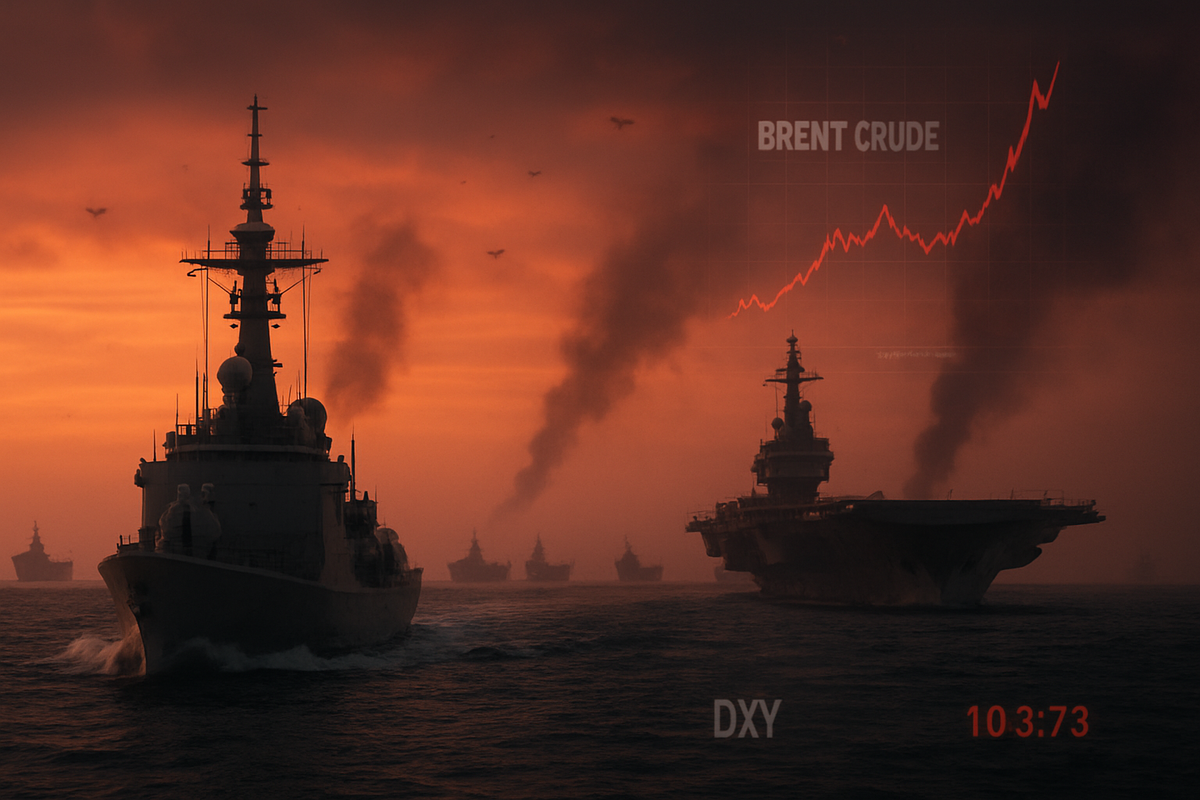
In response to the escalating crisis, G7 finance ministers and the International Energy Agency (IEA) are locked in emergency negotiations to coordinate the largest Strategic Petroleum Reserve (SPR) release in history. Meanwhile, French President Emmanuel Macron has stepped into the diplomatic and military vacuum, proposing a robust naval escort mission led by the French aircraft carrier Charles de Gaulle. The goal is to reopen the trade artery and provide security for commercial tankers, though the geopolitical stakes remain perilously high as the region teeters on the brink of wider conflict.
A Chokepoint Tightens: The Timeline of a Global Emergency
The current paralysis in the Strait of Hormuz is the direct result of a rapid military escalation that began on February 28, 2026, with "Operation Epic Fury," a joint U.S.-Israeli campaign targeting sensitive infrastructure in the region. Following the subsequent reports of a leadership vacuum in Tehran, Iranian forces retaliated by deploying a sophisticated array of sea mines, drone swarms, and anti-ship missiles throughout the narrow waterway. By early March, the Strait—which measures only 21 miles wide at its narrowest point—became impassable for Western-flagged vessels.
By the morning of March 9, 2026, tracking data indicated that vessel traffic through the passage had plummeted by over 90%. More than 150 massive tankers and container ships are currently anchored or drifting in the Gulf of Oman and the Persian Gulf, unable to transit safely. This physical blockade has created an immediate deficit in global markets; major producers like Iraq and Kuwait have already begun cutting production as their onshore storage facilities reach maximum capacity.
The market reaction has been nothing short of explosive. Brent Crude, which was trading near $72 just two weeks ago, hit a peak of $126 per barrel earlier today before settling slightly lower on news of the G7's intervention plans. The volatility has extended to the currency markets, where the US Dollar Index (DXY) is testing the critical 100.00 level. This "safe-haven" rally is being driven not only by fear but also by the increased demand for dollars required by oil-importing nations to pay for their now-exorbitant energy bills.
Winners and Losers: Corporate Giants Navigating the Crisis
The energy sector has seen a sharp divergence in performance as the blockade persists. US-based "supermajors" like ExxonMobil (NYSE: XOM) and Chevron (NYSE: CVX) have emerged as primary beneficiaries in the equity markets. With significant production concentrated in the Permian Basin and other domestic shale plays, these companies are insulated from the physical disruptions in the Middle East while reaping the rewards of $100+ oil prices. Both stocks hit 52-week highs on March 9 as investors pivot toward energy security.
Conversely, European majors such as Shell (NYSE: SHEL) and BP (NYSE: BP) are facing extreme operational volatility. While they benefit from the price spike, their global logistics and LNG networks are under immense strain. Both companies have officially suspended all transits through the Strait of Hormuz, leading to delays in Qatari gas deliveries and forcing them to declare force majeure on several supply contracts. Similarly, the French energy giant TotalEnergies (NYSE: TTE) is under the spotlight as it coordinates closely with the French government to secure alternative shipping routes.
The shipping industry is perhaps the hardest hit by the sudden rerouting of global trade. A.P. Møller - Mærsk A/S (CPH: MAERSK-B) has redirected its entire fleet around the Cape of Good Hope, a move that adds 10 to 14 days to transit times and millions in fuel costs. While freight rates have spiked, Maersk has warned that the astronomical rise in insurance and "war-risk" premiums could lead to a significant decline in its 2026 earnings. On the other hand, pure-play tanker operators like Frontline plc (NYSE: FRO) are seeing daily rates for Very Large Crude Carriers (VLCCs) skyrocket to over $200,000, though the risk of physical damage to their assets remains a terrifying prospect for shareholders.
The G7 Pivot and Macron’s Naval Gambit
This crisis represents a fundamental shift in how global energy security is managed. The proposed G7 release of 400 million barrels of oil would be an unprecedented intervention, dwarfing all previous efforts to stabilize prices. Analysts suggest this move is intended to act as a "psychological circuit breaker" for the markets, signaling that the West will use every available tool to prevent an inflationary spiral that could trigger a global recession. However, critics argue that an SPR release is merely a temporary fix that does nothing to solve the underlying physical blockade.
President Emmanuel Macron’s proposal for an international naval escort represents a more direct—and riskier—approach. By committing the aircraft carrier Charles de Gaulle and a fleet of frigates, France is attempting to lead a "coalition of the willing" to restore the freedom of navigation. This move fits into a broader trend of European "strategic autonomy," where EU powers are increasingly willing to project military force to protect their economic interests, independent of traditional U.S.-led structures. The success of this mission could redefine maritime security for the next decade.
The broader significance of this event lies in the acceleration of "de-globalization" and the fragmentation of trade. The disruption of 20% of the world's oil flow has highlighted the extreme vulnerability of just-in-time supply chains that rely on specific chokepoints. We are likely to see a permanent shift in policy toward domestic energy production and the accelerated adoption of renewables and nuclear power as nations seek to decouple their economies from the volatile Middle Eastern corridor.
Looking Ahead: The Strategic Pivot to a Post-Hormuz World
In the short term, the market will remain fixated on the success of the G7's SPR release and the timeline for Macron’s naval escorts. If the naval mission can successfully clear the sea mines and suppress drone threats, we could see a rapid "relief rally" in equities and a cooling of the US Dollar. However, if the conflict escalates or the blockade holds through the end of the month, Goldman Sachs and other major banks have warned that oil could easily breach $150 per barrel, making a global stagflationary environment almost certain.
Long-term, this crisis will likely force a massive strategic pivot for shipping and energy companies. Expect to see a flurry of investments in "middle-corridor" pipelines and terrestrial trade routes that bypass maritime chokepoints. Furthermore, the insurance industry is expected to undergo a radical restructuring, as "war-risk" becomes a standard and costly feature of global trade, potentially making some shipping routes economically unviable without heavy government subsidies.
Summary and Market Outlook
The March 9, 2026, Strait of Hormuz crisis is a watershed moment for the global financial system. The combination of a 20% supply shock and the subsequent flight to the US Dollar has created a "perfect storm" for investors. While US energy producers like ExxonMobil and Chevron are providing a temporary haven for capital, the broader market remains under extreme pressure as the threat of an energy-induced recession looms.
Moving forward, investors should watch for the official confirmation of the G7's coordinated oil release and the first movements of the French-led naval task force. Any signs of a successful transit by a commercial tanker under military escort would be a major positive catalyst. However, the lasting impact of this event will be a permanent increase in the "risk premium" associated with Middle Eastern energy, likely keeping inflation higher for longer and forcing central banks to rethink their interest rate paths for the remainder of 2026.
This content is intended for informational purposes only and is not financial advice.