In a move that has sent shockwaves through the telecommunications and aerospace sectors, Amazon.com, Inc. (NASDAQ: AMZN) officially announced on April 14, 2026, its definitive agreement to acquire satellite communications pioneer Globalstar, Inc. (NYSE American:GSAT) for approximately $11.6 billion. The deal, valued at $90 per share, represents a staggering premium and marks Amazon’s most aggressive maneuver yet to challenge the market dominance of Elon Musk’s SpaceX and its Starlink constellation. By absorbing Globalstar’s infrastructure and prized spectrum, Amazon is effectively pivoting from a high-speed internet provider to a comprehensive global connectivity powerhouse.
The immediate implications of the deal are profound, particularly for the mobile consumer market. Alongside the acquisition, Amazon revealed a sweeping rebranding of its satellite division, retiring the "Project Kuiper" name in favor of "Amazon Leo." Perhaps most significantly, the retail and cloud giant has solidified a long-term partnership with Apple Inc. (NASDAQ: AAPL) to serve as the primary backbone for the tech giant's burgeoning suite of satellite-based features. The announcement triggered a massive rally in Amazon’s stock, adding over $125 billion to its market capitalization in a single trading session as investors bet on the company's new role as the "connectivity layer" of the modern economy.
The Birth of Amazon Leo: A Strategic Pivot
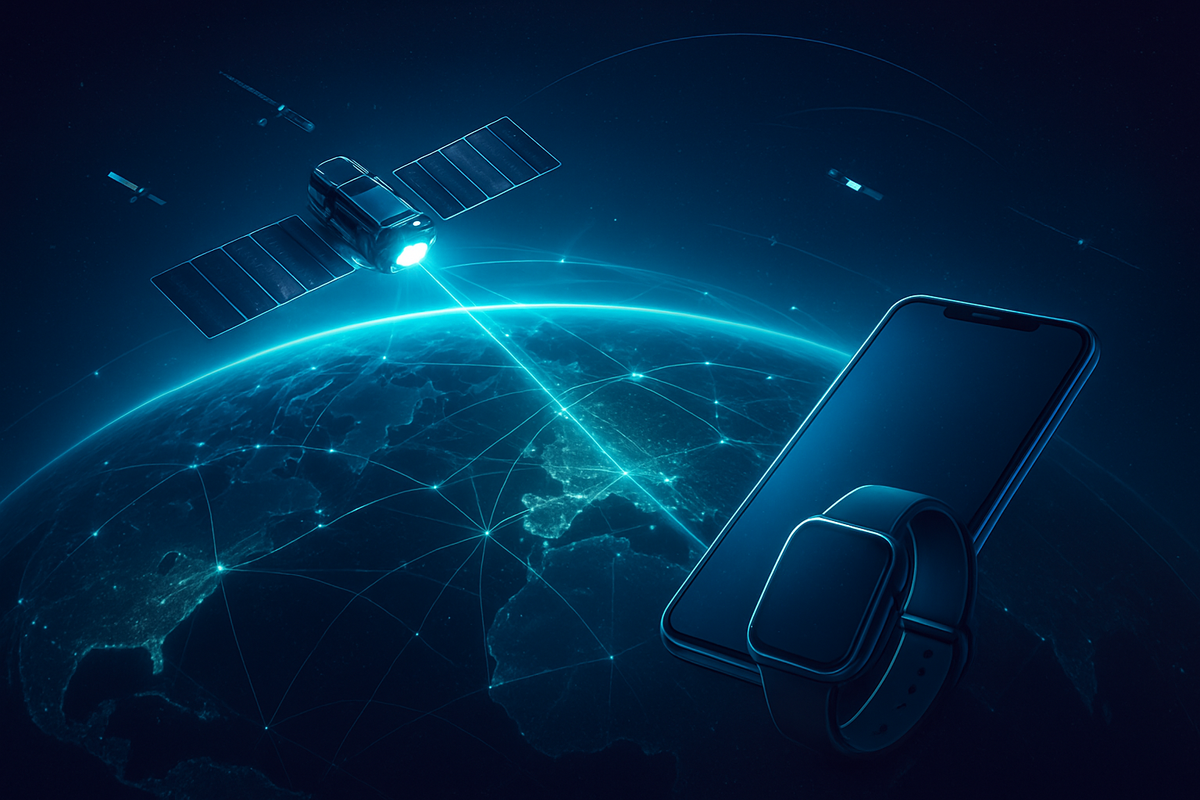
The $11.6 billion acquisition is the culmination of a strategic shift that began in late 2025 when Amazon quietly rebranded its "Project Kuiper" initiative to Amazon Leo. While Kuiper was focused primarily on residential and enterprise broadband, Amazon Leo encompasses a two-tier strategy: the traditional high-speed broadband constellation and a newly integrated Direct-to-Device (D2D) platform. By acquiring Globalstar, Amazon gains immediate control of 24 operational satellites, a global network of ground stations, and, most crucially, Globalstar’s coveted S-band spectrum licenses. This spectrum is the "digital real estate" required to transmit data directly to standard smartphones without the need for specialized ground terminals.
The timeline leading to this blockbuster deal was accelerated by Amazon’s rapid deployment of its own satellites throughout early 2026. As of this announcement, Amazon Leo has over 200 satellites in orbit, with a full commercial launch of broadband services expected by mid-2026. However, the missing piece of the puzzle was the regulatory right to provide mobile services. Globalstar’s existing regulatory framework with the FCC and international bodies provides Amazon a "fast pass" that would have otherwise taken years of litigation and lobbying to achieve. Key stakeholders, including Amazon CEO Andy Jassy and Apple CEO Tim Cook, reportedly negotiated the tripartite agreement over several months to ensure Apple’s satellite-reliant features remained uninterrupted while transitioning to the Amazon-owned network.
Winners and Losers in the Satellite Surge
The primary winner in this transaction, beyond the Globalstar shareholders who saw their holdings skyrocket, is undoubtedly Apple Inc. (NASDAQ: AAPL). Previously, Apple held a 20% stake in Globalstar and relied on the smaller company’s limited resources to power features like Emergency SOS and satellite messaging. By transitioning to Amazon Leo, Apple secures a partnership with a company that possesses the capital and launch capacity to rapidly expand the network. For Apple users, this means the future holds more than just emergency texts; the companies have already teased "Apple Maps via Satellite" and integrated 5G satellite handoffs for the upcoming iPhone 17.
Conversely, the acquisition places immense pressure on SpaceX (Private). While Starlink remains the leader in terms of raw satellite count—approaching nearly 10,000 units—Amazon now possesses a key advantage: a massive "anchor tenant" in Apple. Starlink’s own "Direct to Cell" service, partnered with T-Mobile US, Inc. (NASDAQ: TMUS), now faces a competitor with deeper integration into the world's most popular consumer hardware ecosystem. Other terrestrial telecom providers may also find themselves as "losers" if Amazon and Apple successfully bypass traditional cell towers for routine data tasks, potentially commoditizing cellular data plans in rural and underserved regions.
A New Frontier for Industry Regulation and Competition
This event fits into a broader industry trend of "vertical integration in the sky." Much like the early days of the railroad or telecommunications industries, the winners are those who control both the infrastructure and the services running on it. Amazon’s acquisition of Globalstar mirrors historical precedents where dominant platforms acquire the underlying utility to lock out competitors. This move signals that the satellite industry is moving away from a fragmented landscape of specialized providers toward a "Big Tech" duopoly between Amazon and SpaceX.
However, the deal is certain to invite intense regulatory scrutiny. The FCC and international regulators will likely examine whether Amazon’s control over both the satellite spectrum and a major e-commerce/cloud platform creates an unfair advantage. There are also concerns regarding space debris and "orbital crowding." As Amazon Leo prepares to launch thousands of additional satellites to support the Apple partnership, the environmental and safety implications of a crowded Low Earth Orbit will become a central theme in policy debates throughout 2026 and 2027.
What Lies Ahead: The Roadmap to 2027
In the short term, the market will be watching the regulatory approval process for the acquisition, which is expected to close in 2027. Amazon must prove that it can integrate Globalstar’s aging fleet with its own cutting-edge Amazon Leo hardware without service interruptions for Apple’s millions of SOS-reliant users. We can expect Amazon to begin launching "hybrid" satellites later this year—units capable of handling both high-speed Ku-band broadband and Globalstar’s S-band mobile signals.
Long-term, the strategic pivot required for Amazon involves transitioning its logistics empire onto the Leo network. Imagine a fleet of Amazon delivery drones, vans, and long-haul trucks all interconnected via a proprietary satellite network that functions even in the most remote "dead zones." The market opportunity here is not just in selling internet to consumers, but in creating a global, private 5G network that powers the next generation of autonomous logistics and Internet of Things (IoT) devices.
The Market Minute Wrap-Up
Amazon’s $11.6 billion acquisition of Globalstar is a definitive "all-in" bet on the future of global connectivity. By rebranding to Amazon Leo and securing Apple as a long-term partner, Amazon has solved its two biggest hurdles: regulatory spectrum access and a guaranteed high-volume customer base. This move significantly narrows the gap with Starlink and sets the stage for a decade of intense competition in the "New Space" economy.
For investors, the key takeaway is that Amazon is no longer just an e-commerce and cloud company; it is now a global utility provider. In the coming months, watch for updates on the FCC approval process and any potential counter-moves from SpaceX or terrestrial carriers like T-Mobile. The "connectivity layer" of the world is being rebuilt in orbit, and with the birth of Amazon Leo, the stakes have never been higher.
This content is intended for informational purposes only and is not financial advice.