If you are dealing with leaning fence sections, soft wood near the base, or loose panels, you may need wood fence post rot Pacific Northwest repair services. Fence post rot is especially common in Washington, Oregon, and nearby coastal climates because wood posts are exposed to constant moisture, damp soil, moss growth, and long rainy seasons. Once rot begins below grade, fence stability can decline quickly.
The good news is that post rot can often be repaired if caught early. In some cases, only one post needs replacement. In others, several failing posts may mean it is smarter to rebuild sections of the fence. The right solution depends on how advanced the decay is, what material was used originally, and how drainage affects the fence line.
This guide explains why fence posts rot so often in the Pacific Northwest, how to identify the warning signs, and what contractors recommend for lasting repairs.
Why Fence Post Rot Is So Common in the Pacific Northwest
Wood fencing can last many years, but Pacific Northwest weather creates ideal conditions for decay.
Common causes include:
- Frequent rainfall and wet winters
- Soil that stays damp for long periods
- Moss and algae holding moisture against wood
- Irrigation overspray during summer
- Poor drainage around posts
- Organic mulch piled against fence bases
- Low-quality untreated lumber
Unlike dry climates where wood can fully dry between storms, many western Washington areas stay damp for extended periods. That constant moisture speeds fungal decay.
How Fence Posts Usually Rot
Most homeowners assume posts rot above ground where they can see it. In reality, the most common failure point is at or just below soil level.
Wood Fence Post Rot Pacific Northwest Repair Starts at Ground Level
This area is vulnerable because it experiences:
- Repeated wet/dry cycles
- Oxygen exposure that feeds decay fungi
- Soil moisture contact
- Freeze-thaw movement in some regions
Even a fence that looks fine above ground can have serious hidden damage below grade.
Early Warning Signs of Fence Post Rot
Catching post rot early can save money and prevent full fence collapse.
Watch for These Symptoms:
- Fence leaning or bowing
- Panels wobble when pushed
- Gates no longer latch correctly
- Soft or spongy wood near post base
- Cracks running vertically
- Soil sinking around the post
- Rusting fasteners due to moisture retention
If only one or two posts are affected, targeted repairs may restore the fence without full replacement.
For localized failures, many homeowners schedule fence post repair and replacement Seattle services to stabilize sections before wind or winter rain causes more damage.
How to Inspect a Fence Post Safely
A simple homeowner inspection can reveal a lot.
Step-by-Step Check:
1. Push gently on fence sections to test movement
2. Probe the base with a screwdriver
3. Look for dark discoloration or softness
4. Check if rails have separated from posts
5. Inspect drainage after rainfall
What Soft Wood Means
If a screwdriver sinks easily into the post near ground level, rot may already be advanced.
What Movement Means
If the fence sways, the buried section may be cracked or decayed.
Can a Rotten Fence Post Be Repaired?
Yes, but not every post should be repaired the same way.
Repair May Be Possible If:
- Damage is limited to one post
- Fence panels are still in good shape
- Rot is moderate, not severe
- Surrounding posts remain stable
Replacement Is Better If:
- Multiple posts are failing
- Fence is old and widespread decay exists
- Rails and boards are also damaged
- Fence leans in several areas
A professional evaluation helps determine whether repair or rebuild gives better value.
Common Repair Methods Contractors Use
Wood Fence Post Rot Pacific Northwest Repair Options That Actually Last
1. Full Post Replacement
The damaged post is removed and a new post installed with fresh concrete or approved footing methods.
Best for: Severe rot or structural movement.
2. Partial Section Rebuild
If panels and rails are also compromised, replacing one full section may be smarter than isolated repairs.
Best for: Older fences with mixed damage.
3. Reinforcement Brackets or Post Supports
Metal support systems may temporarily stabilize some posts if rot is minor and upper structure is still sound.
Best for: Limited short-term fixes.
4. Upgrade to Steel Post Core
Some homeowners replace wood posts with steel-supported systems while keeping wood panels.
Best for: Long-term durability upgrades.
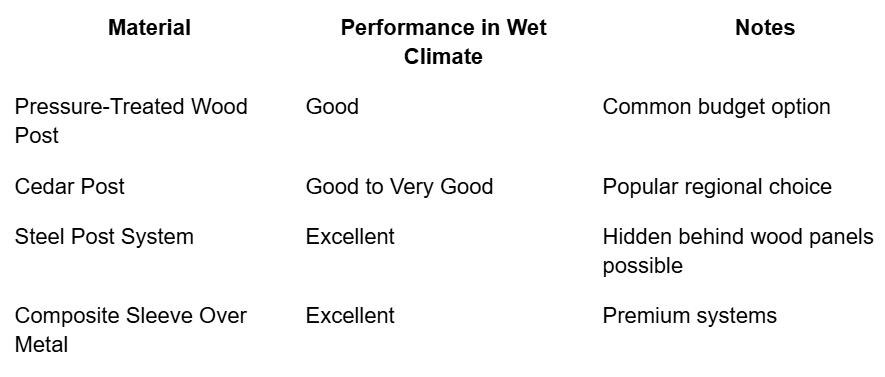
Best Replacement Materials for Washington Climate
Choosing better materials can prevent repeat problems.
Contractor Insight
Many Washington fence installers now recommend steel post systems for high-moisture yards where previous wood posts failed early.
Drainage Is Often the Real Problem
Replacing a rotten post without fixing drainage can lead to the same failure again.
Common Drainage Issues:
- Downspouts emptying near fence line
- Low spots holding water
- Heavy clay soil
- Overwatering lawns
- Mulch packed against posts
Smart Solutions:
- Redirect runoff
- Improve grading
- Use gravel zones where appropriate
- Reduce irrigation overspray
Experienced companies such as Contour Fence often inspect surrounding drainage before replacing posts so new materials last longer.
Typical Fence Post Repair Costs in Washington State
Costs vary by access, fence type, soil condition, and city labor rates.
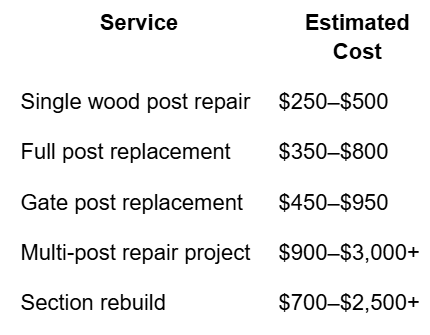
Seattle and Bellevue pricing is often higher than smaller towns. Publishers should verify live local pricing.
DIY vs Professional Repair
DIY May Work If:
- One short decorative section is loose
- You have tools and digging experience
- Utilities are clearly marked
- Fence alignment is simple
Hire a Pro If:
- Concrete footings must be removed
- Multiple posts failed
- Fence is tall or shared with neighbors
- Gates need realignment
- Slope or drainage issues exist
Incorrect post depth or alignment can create new problems fast.
How to Prevent Fence Post Rot in the Future
Prevention costs less than repair.
Annual Maintenance Checklist:
- Inspect posts each spring
- Keep mulch away from wood bases
- Wash moss buildup
- Reseal exposed wood when needed
- Fix drainage problems early
- Tighten loose hardware
- Watch gate movement
Best Upgrade Strategy
If replacing multiple posts, ask whether steel-supported posts make more sense than repeating wood-only installations.
Washington-Specific Climate Considerations
Western Washington
Seattle, Tacoma, Olympia, Everett, and coastal areas usually face:
- More rain
- More moss
- Higher soil moisture
Eastern Washington
Spokane and drier inland markets may see:
- Less rot pressure
- More cracking from dry heat
- Freeze-thaw seasonal movement
Maintenance priorities vary by region.
When Full Fence Replacement Makes More Sense
Sometimes repairs are not economical.
Replace instead of repair when:
- More than 30–40% of posts are failing
- Rails are warped or broken
- Boards are heavily rotted
- Fence is near end of service life
A new fence may cost more upfront but save repeated repair bills.
Conclusion
Smart wood fence post rot Pacific Northwest repair starts with identifying why the posts failed, not just replacing damaged wood. In Washington’s wet climate, most rot begins at ground level where moisture stays trapped. Early repairs can save sections of fencing, but widespread decay may justify a larger rebuild. Whether you choose cedar, treated lumber, or steel-supported replacements, fixing drainage and moisture exposure is the key to long-term success.
FAQ Section
1. Why do fence posts rot faster than fence boards?
Posts stay in constant contact with damp soil and experience repeated wet/dry cycles at ground level, making them more vulnerable than boards above grade.
2. Can one rotten fence post be replaced without replacing the whole fence?
Yes. If surrounding rails and panels are still sound, contractors can often replace one failed post and reconnect the existing fence.
3. How long should wood fence posts last in Washington?
With proper materials and drainage, many posts last 15–25 years. Poor drainage or low-grade lumber can shorten lifespan significantly.
4. Is steel better than wood for replacement fence posts?
In many wet climates, yes. Steel-supported posts often resist rot and may outlast wood alternatives.
5. How do I know if rot is hidden underground?
Signs include leaning sections, wobble, soft wood near soil level, or gates going out of alignment. Underground decay is common.