Aerospace and defense company Redwire (NYSE: RDW) reported revenue ahead of Wall Street’s expectations in Q4 CY2025, with sales up 56.4% year on year to $108.8 million. The company’s full-year revenue guidance of $475 million at the midpoint came in 2.1% above analysts’ estimates. Its GAAP loss of $0.58 per share was significantly below analysts’ consensus estimates.
Is now the time to buy Redwire? Find out by accessing our full research report, it’s free.
Redwire (RDW) Q4 CY2025 Highlights:
- Revenue: $108.8 million vs analyst estimates of $98.78 million (56.4% year-on-year growth, 10.1% beat)
- EPS (GAAP): -$0.58 vs analyst estimates of -$0.18 (significant miss)
- Adjusted EBITDA: -$18.05 million (-16.6% margin, 97.3% year-on-year decline)
- Adjusted EBITDA Margin: -16.6%, down from -13.2% in the same quarter last year
- Free Cash Flow was -$30.12 million, down from $4.73 million in the same quarter last year
- Backlog: $411.2 million at quarter end, up 38.6% year on year
- Market Capitalization: $1.39 billion
Company Overview
Based in Jacksonville, Florida, Redwire (NYSE: RDW) is a provider of systems and components used in space infrastructure.
Revenue Growth
Examining a company’s long-term performance can provide clues about its quality. Any business can put up a good quarter or two, but many enduring ones grow for years. Luckily, Redwire’s sales grew at an incredible 49.8% compounded annual growth rate over the last five years. Its growth beat the average industrials company and shows its offerings resonate with customers.
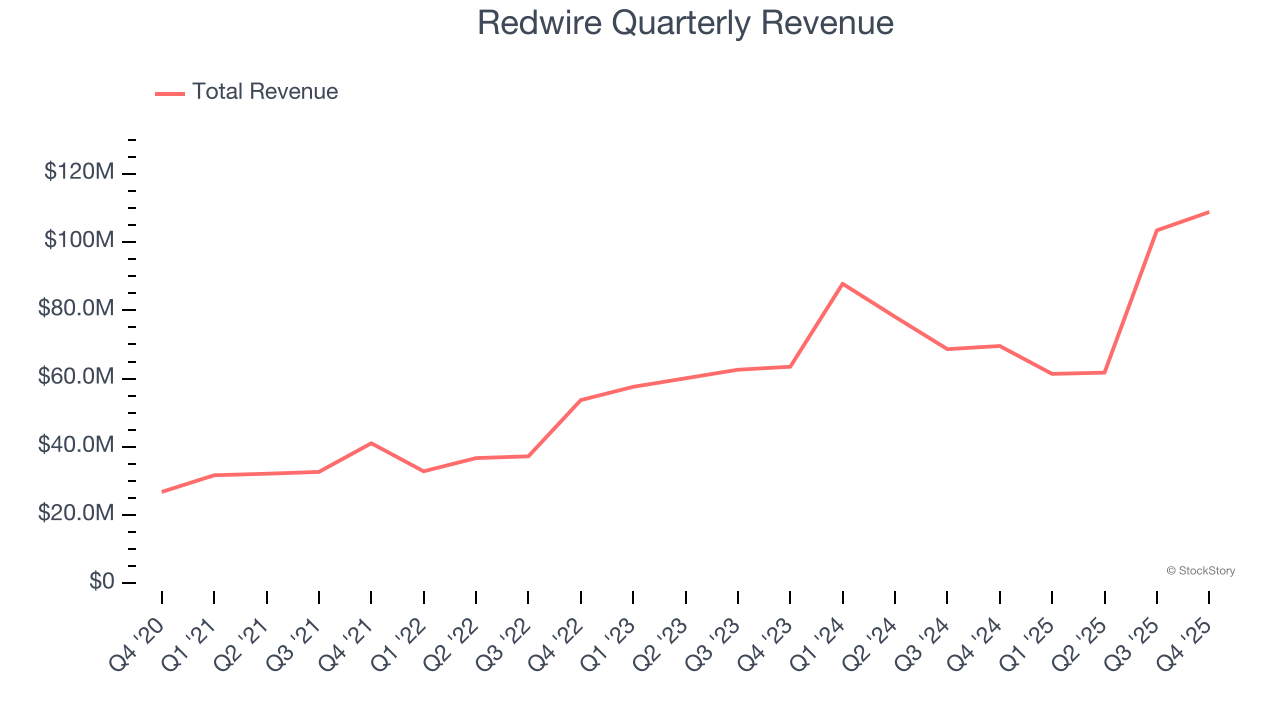
Long-term growth is the most important, but within industrials, a half-decade historical view may miss new industry trends or demand cycles. Redwire’s annualized revenue growth of 17.3% over the last two years is below its five-year trend, but we still think the results suggest healthy demand. 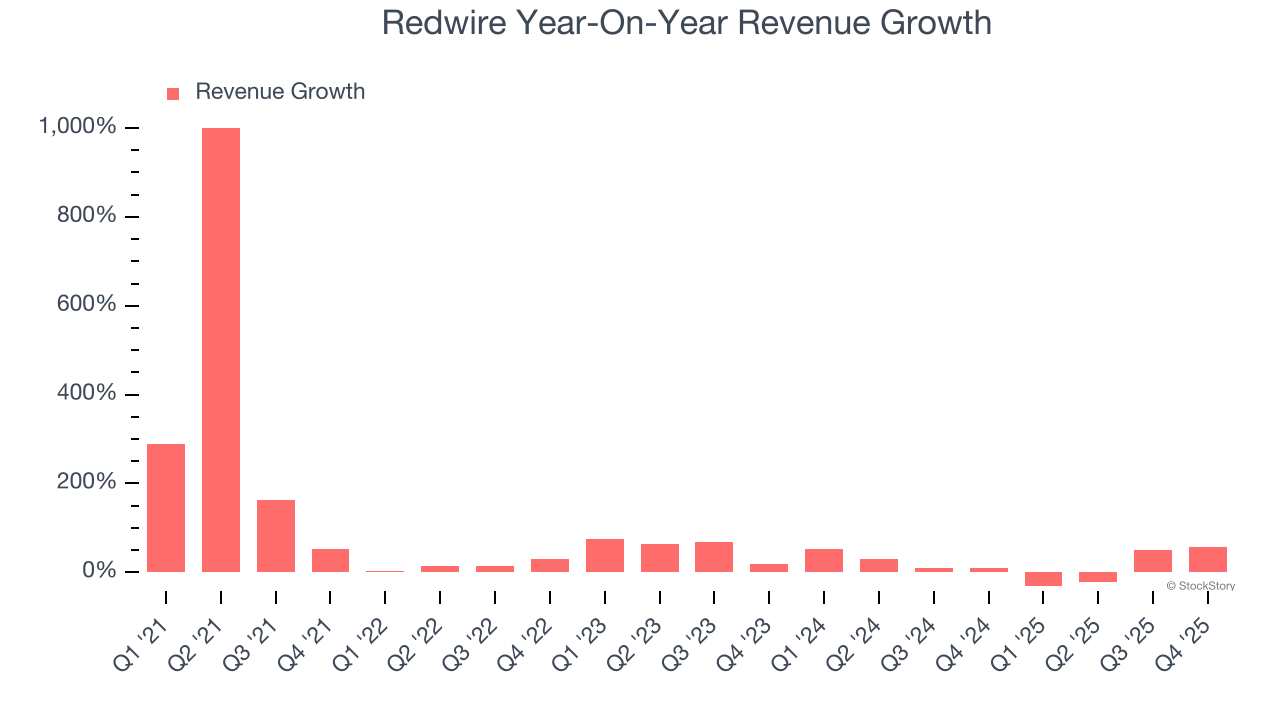
We can better understand the company’s revenue dynamics by analyzing its backlog, or the value of its outstanding orders that have not yet been executed or delivered. Redwire’s backlog reached $411.2 million in the latest quarter and averaged 38.6% year-on-year growth over the last two years. Because this number is better than its revenue growth, we can see the company accumulated more orders than it could fulfill and deferred revenue to the future. This could imply elevated demand for Redwire’s products and services but raises concerns about capacity constraints. 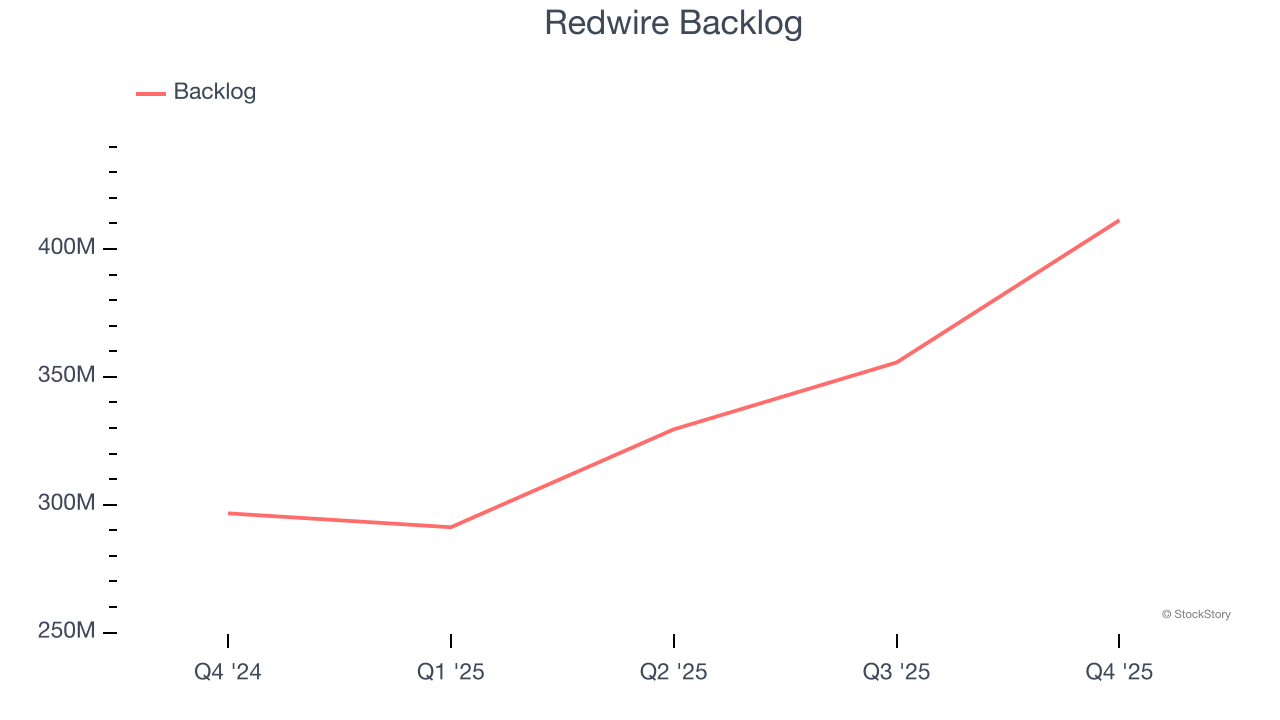
This quarter, Redwire reported magnificent year-on-year revenue growth of 56.4%, and its $108.8 million of revenue beat Wall Street’s estimates by 10.1%.
Looking ahead, sell-side analysts expect revenue to grow 36.2% over the next 12 months, an improvement versus the last two years. This projection is eye-popping and suggests its newer products and services will fuel better top-line performance.
Software is eating the world and there is virtually no industry left that has been untouched by it. That drives increasing demand for tools helping software developers do their jobs, whether it be monitoring critical cloud infrastructure, integrating audio and video functionality, or ensuring smooth content streaming. Click here to access a free report on our 3 favorite stocks to play this generational megatrend.
Operating Margin
Operating margin is an important measure of profitability as it shows the portion of revenue left after accounting for all core expenses – everything from the cost of goods sold to advertising and wages. It’s also useful for comparing profitability across companies with different levels of debt and tax rates because it excludes interest and taxes.
Redwire’s high expenses have contributed to an average operating margin of negative 29.4% over the last five years. Unprofitable industrials companies require extra attention because they could get caught swimming naked when the tide goes out. It’s hard to trust that the business can endure a full cycle.
Looking at the trend in its profitability, Redwire’s operating margin decreased by 30.5 percentage points over the last five years. This raises questions about the company’s expense base because its revenue growth should have given it leverage on its fixed costs, resulting in better economies of scale and profitability. Redwire’s performance was poor no matter how you look at it - it shows that costs were rising and it couldn’t pass them onto its customers.
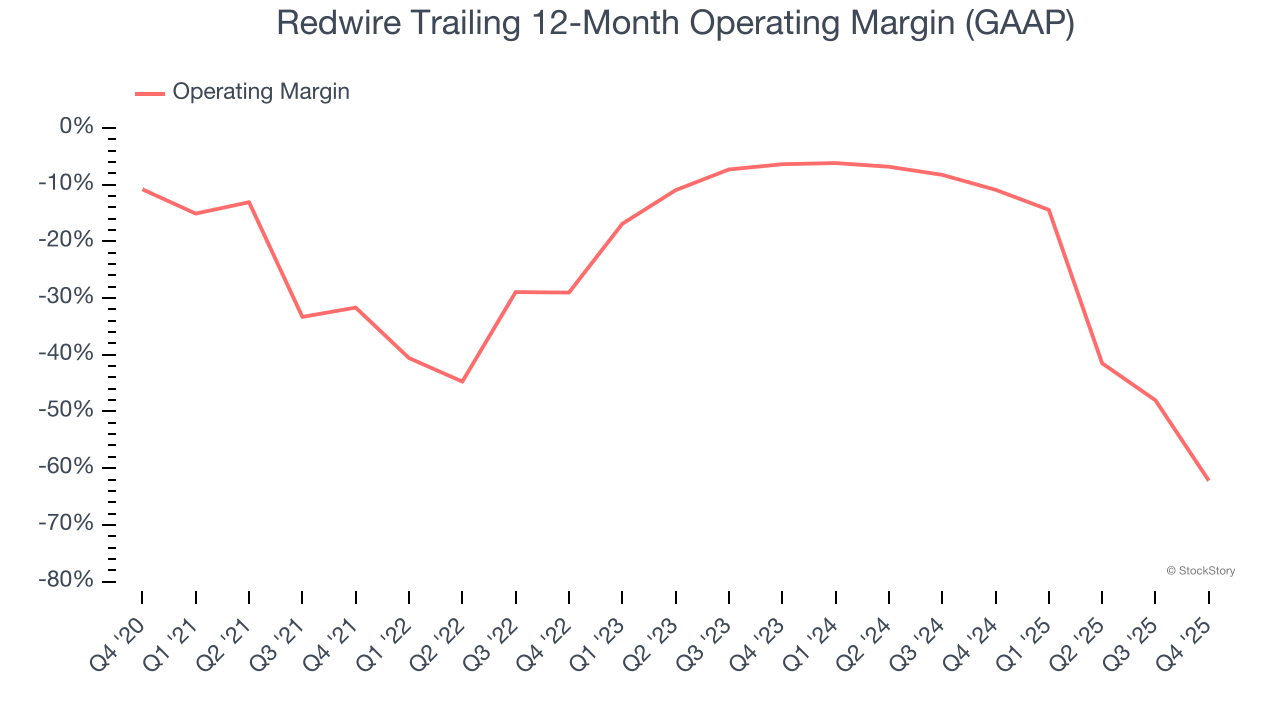
This quarter, Redwire generated a negative 75% operating margin.
Earnings Per Share
Revenue trends explain a company’s historical growth, but the long-term change in earnings per share (EPS) points to the profitability of that growth – for example, a company could inflate its sales through excessive spending on advertising and promotions.
Redwire’s earnings losses deepened over the last four years as its EPS dropped 5.6% annually. We tend to steer our readers away from companies with falling EPS, where diminishing earnings could imply changing secular trends and preferences. If the tide turns unexpectedly, Redwire’s low margin of safety could leave its stock price susceptible to large downswings.
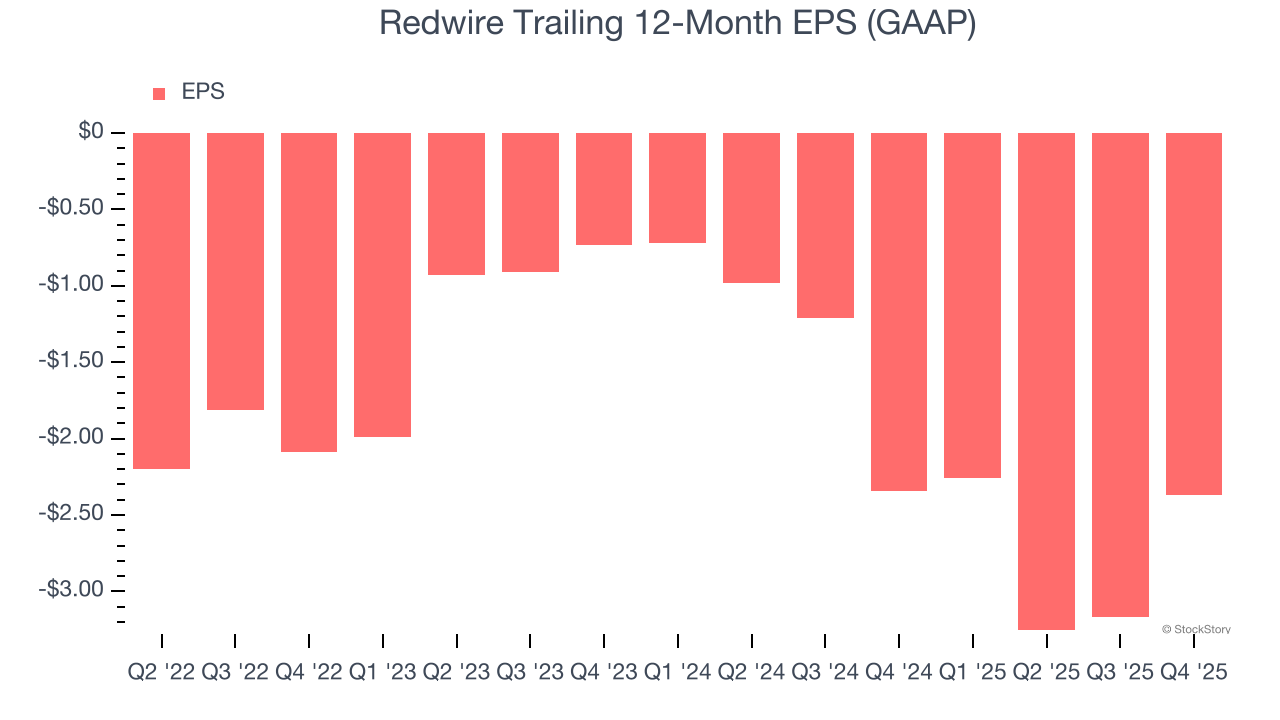
Like with revenue, we analyze EPS over a more recent period because it can provide insight into an emerging theme or development for the business.
For Redwire, its two-year annual EPS declines of 80.2% show it’s continued to underperform. These results were bad no matter how you slice the data.
In Q4, Redwire reported EPS of negative $0.58, up from negative $1.38 in the same quarter last year. Despite growing year on year, this print missed analysts’ estimates. Over the next 12 months, Wall Street expects Redwire to improve its earnings losses. Analysts forecast its full-year EPS of negative $2.37 will advance to negative $0.37.
Key Takeaways from Redwire’s Q4 Results
We were impressed by how significantly Redwire blew past analysts’ revenue expectations this quarter. We were also glad its full-year revenue guidance exceeded Wall Street’s estimates. On the other hand, its EBITDA missed and its EPS fell short of Wall Street’s estimates. Zooming out, we think this was a mixed quarter. Investors were likely hoping for more, and shares traded down 6.4% to $8.09 immediately after reporting.
Big picture, is Redwire a buy here and now? If you’re making that decision, you should consider the bigger picture of valuation, business qualities, as well as the latest earnings. We cover that in our actionable full research report which you can read here (it’s free).