Over the past six months, JFrog’s stock price fell to $40.73. Shareholders have lost 18.4% of their capital, which is disappointing considering the S&P 500 has climbed by 3.1%. This may have investors wondering how to approach the situation.
Following the drawdown, is this a buying opportunity for FROG? Find out in our full research report, it’s free.
Why Is JFrog a Good Business?
Named after the amphibian that continuously evolves from egg to tadpole to adult, JFrog (NASDAQ: FROG) provides a platform that helps organizations securely create, store, manage, and distribute software packages across any system.
1. ARR Surges as Recurring Revenue Flows In
While reported revenue for a software company can include low-margin items like implementation fees, annual recurring revenue (ARR) is a sum of the next 12 months of contracted revenue purely from software subscriptions, or the high-margin, predictable revenue streams that make SaaS businesses so valuable.
JFrog’s ARR punched in at $580.4 million in Q4, and over the last four quarters, its year-on-year growth averaged 23.6%. This performance was fantastic and shows that customers are willing to take multi-year bets on the company’s technology. Its growth also makes JFrog a more predictable business, a tailwind for its valuation as investors typically prefer businesses with recurring revenue. 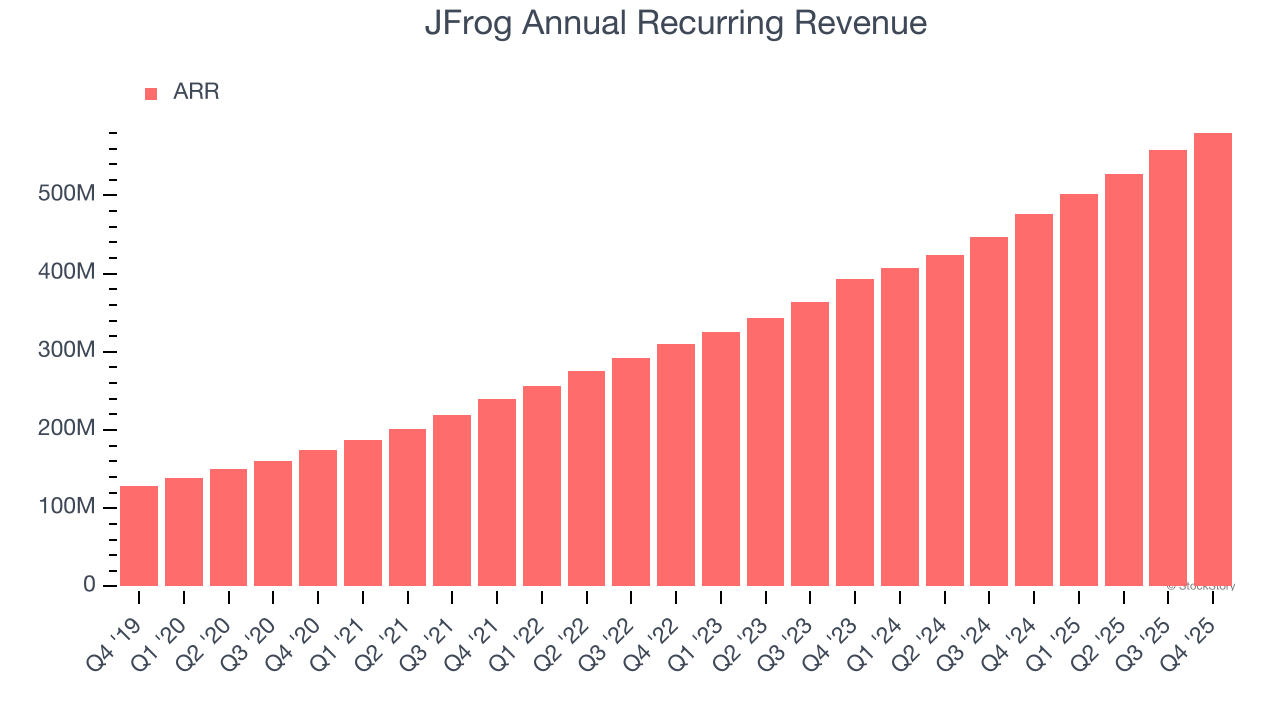
2. Customer Acquisition Costs Are Recovered in Record Time
The customer acquisition cost (CAC) payback period measures the months a company needs to recoup the money spent on acquiring a new customer. This metric helps assess how quickly a business can break even on its sales and marketing investments.
JFrog is quite efficient at acquiring new customers, and its CAC payback period checked in at 30.3 months this quarter. The company’s rapid recovery of its customer acquisition costs indicates it has a strong brand reputation, giving it more resources pursue new product initiatives while maintaining the flexibility to increase its sales and marketing investments. 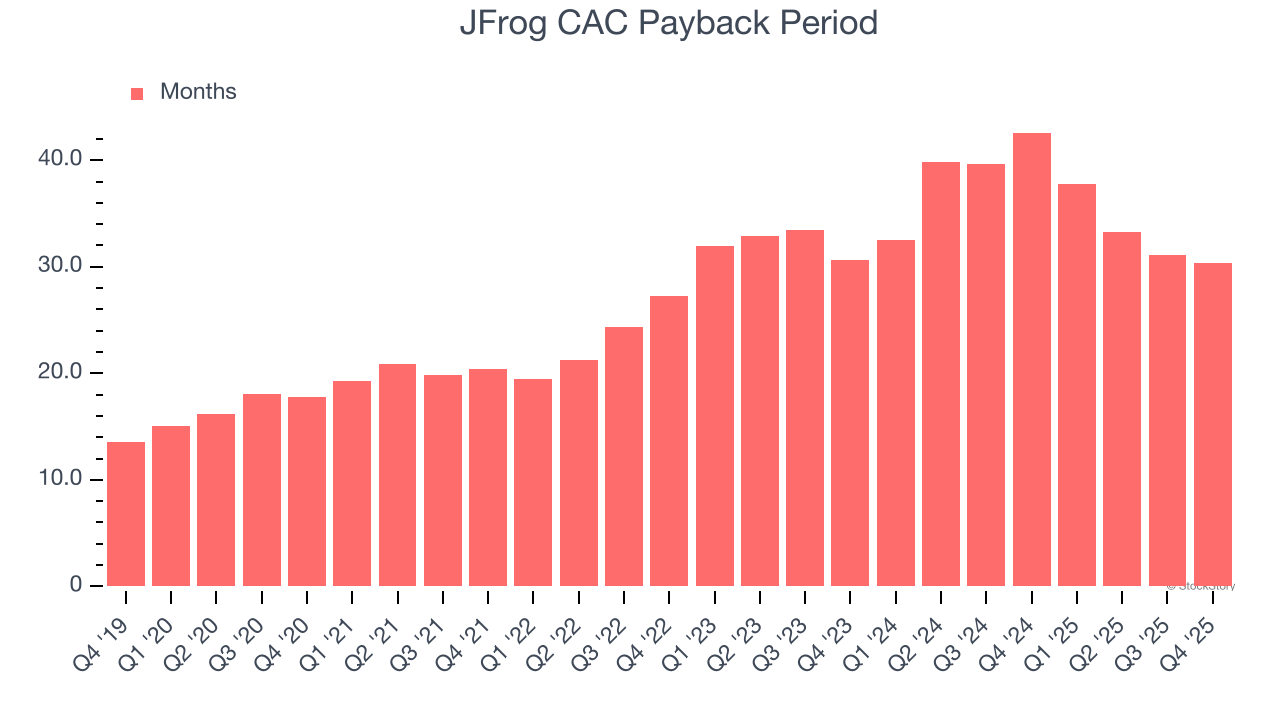
3. Excellent Free Cash Flow Margin Boosts Reinvestment Potential
If you’ve followed StockStory for a while, you know we emphasize free cash flow. Why, you ask? We believe that in the end, cash is king, and you can’t use accounting profits to pay the bills.
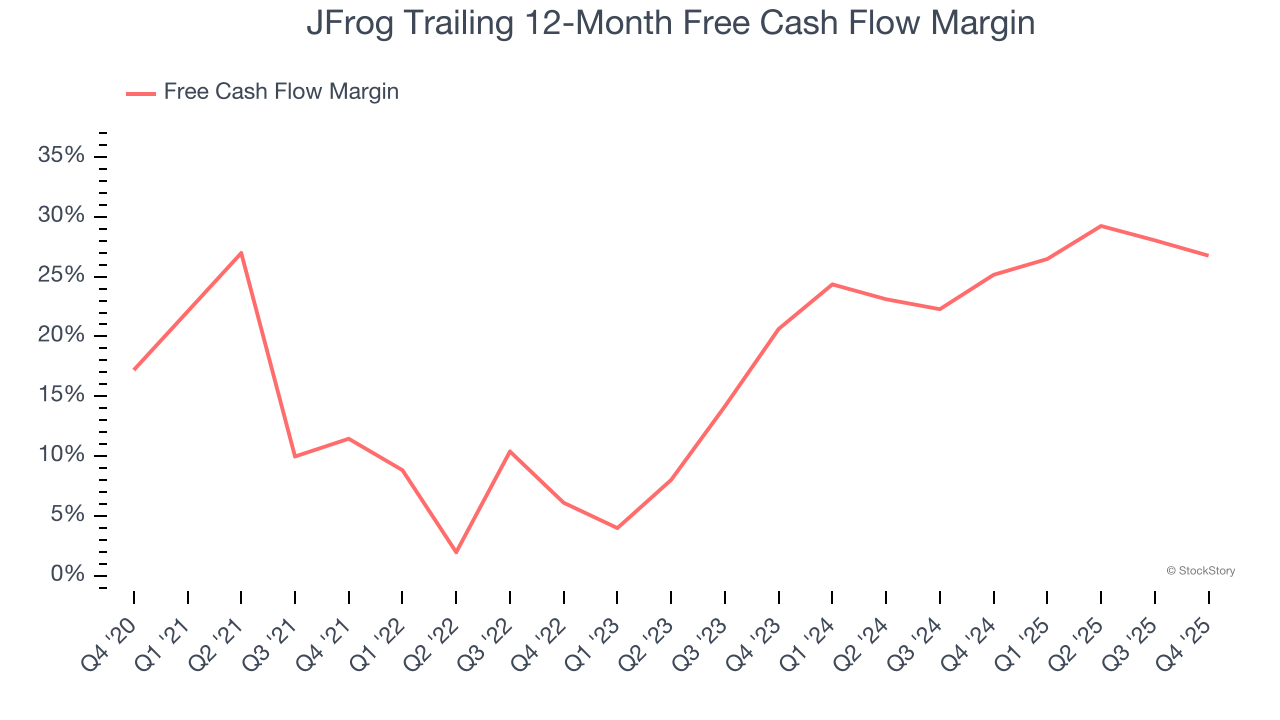
JFrog has shown robust cash profitability, driven by its attractive business model and cost-effective customer acquisition strategy that enable it to invest in new products and services rather than sales and marketing. The company’s free cash flow margin averaged 26.8% over the last year, quite impressive for a software business. The divergence from its underwhelming operating margin stems from the add-back of non-cash charges like depreciation and stock-based compensation. GAAP operating profit expenses these line items, but free cash flow does not.
Final Judgment
These are just a few reasons why we think JFrog is a great business. After the recent drawdown, the stock trades at 8× forward price-to-sales (or $40.73 per share). Is now the time to initiate a position? See for yourself in our in-depth research report, it’s free.
High-Quality Stocks for All Market Conditions
WHILE YOU’RE HERE: Top 9 Market-Beating Stocks. The best stocks don't just beat the market once. They do it again. And again. Robust revenue growth, rising free cash flow, returns on capital that leave their competition in the dust. The market has already rewarded these businesses.
But our AI platform says the party isn't over. Find out which 9 stocks made the cut this week — FREE. Get Our Top 9 Market-Beating Stocks for Free HERE.
Stocks that have made our list include now familiar names such as Nvidia (+1,326% between June 2020 and June 2025) as well as under-the-radar businesses like the once-small-cap company Comfort Systems (+782% five-year return). Find your next big winner with StockStory today.