Audio technology Sonos company (NASDAQ: SONO) beat Wall Street’s revenue expectations in Q2 CY2026, with sales up 8.8% year on year to $375.3 million. Its non-GAAP profit of $0.27 per share was 35% above analysts’ consensus estimates.
Is now the time to buy Sonos? Find out by accessing our full research report, it’s free.
Sonos (SONO) Q2 CY2026 Highlights:
- Revenue: $375.3 million vs analyst estimates of $366 million (8.8% year-on-year growth, 2.5% beat)
- Adjusted EPS: $0.27 vs analyst estimates of $0.20 (35% beat)
- Adjusted EBITDA: $43.97 million vs analyst estimates of $34.9 million (11.7% margin, 26% beat)
- Operating Margin: 8.4%, up from -0.8% in the same quarter last year
- Free Cash Flow Margin: 10.7%, up from 9.5% in the same quarter last year
- Market Capitalization: $2.00 billion
"Our third quarter demonstrates the inflection we've been talking about, as revenue growth accelerated and the reinvention of the business continued to take hold," said Tom Conrad, Chief Executive Officer of Sonos.
Company Overview
A pioneer in connected home audio systems, Sonos (NASDAQ: SONO) offers a range of premium wireless speakers and sound systems.
Revenue Growth
A company’s long-term sales performance can indicate its overall quality. Any business can put up a good quarter or two, but the best consistently grow over the long haul. Over the last five years, Sonos’s demand was weak and its revenue declined by 2.6% per year. This wasn’t a great result and suggests it’s a low quality business.
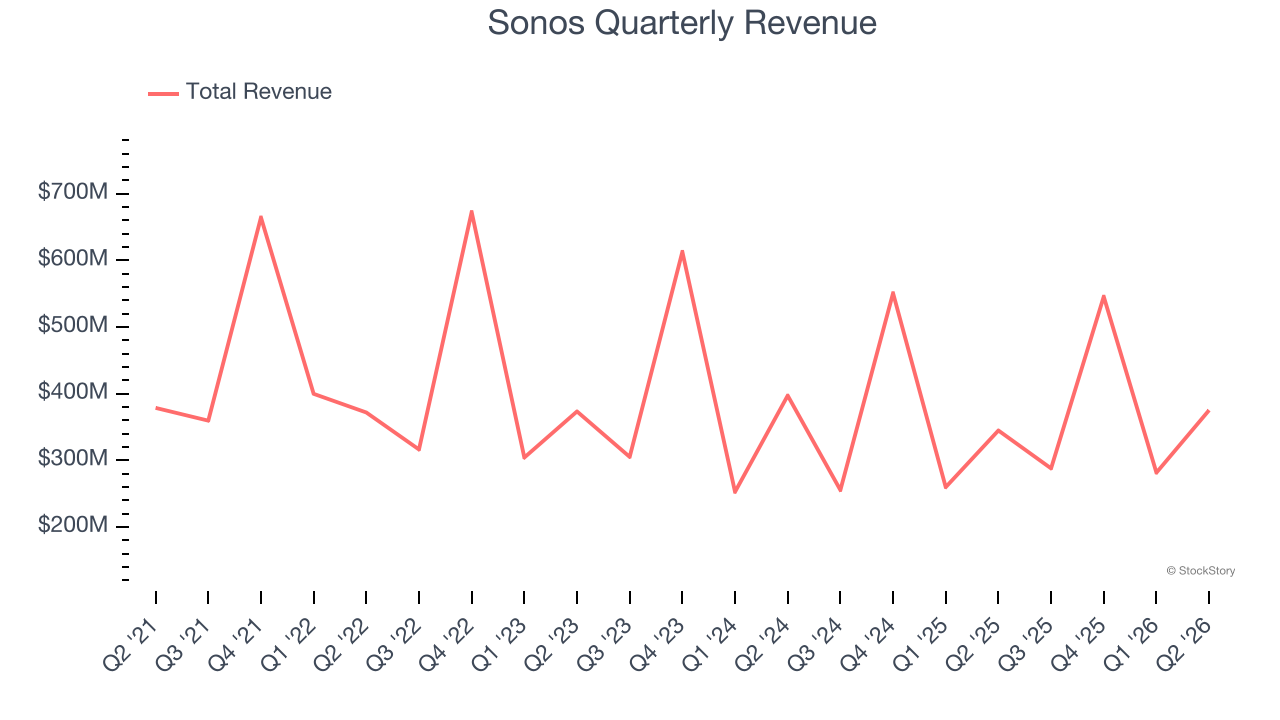
Long-term growth is the most important, but within consumer discretionary, product cycles are short and revenue can be hit-driven due to rapidly changing trends and consumer preferences. Sonos’s annualized revenue declines of 2.5% over the last two years align with its five-year trend, suggesting its demand has consistently shrunk. 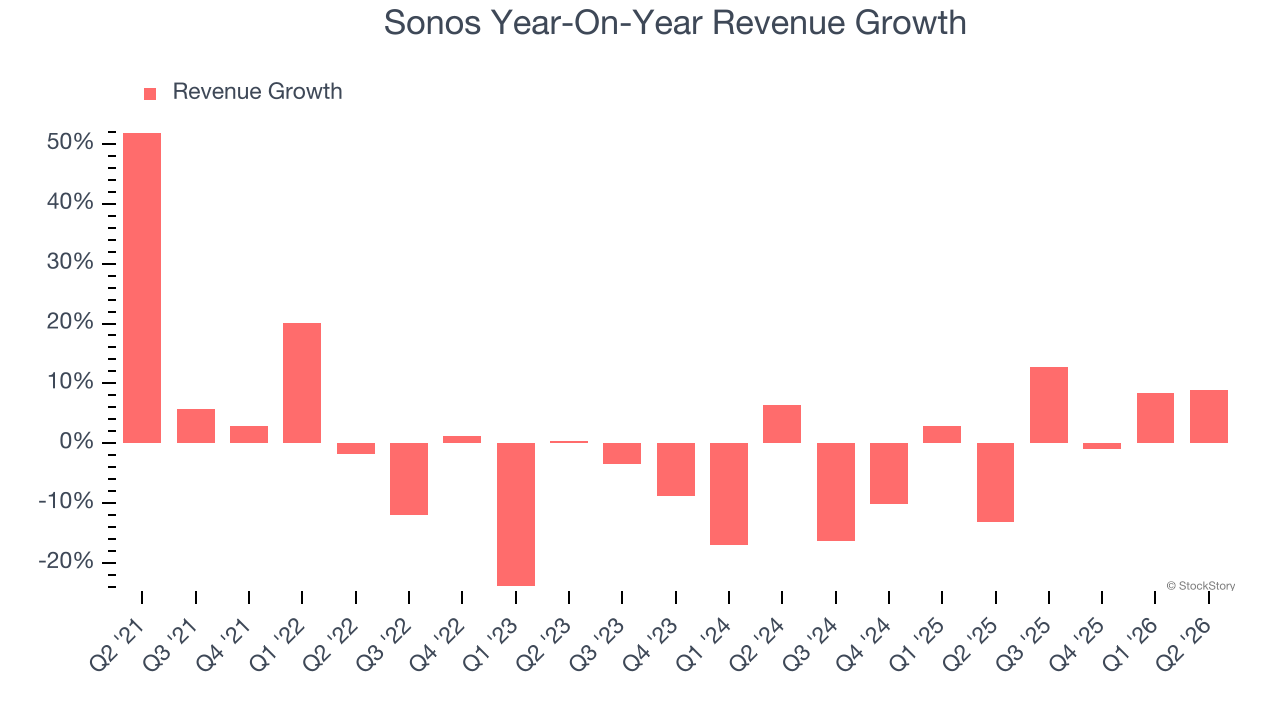
This quarter, Sonos reported year-on-year revenue growth of 8.8%, and its $375.3 million of revenue exceeded Wall Street’s estimates by 2.5%.
Looking ahead, sell-side analysts expect revenue to grow 6.2% over the next 12 months. Although this projection suggests its newer products and services will catalyze better top-line performance, it is still below average for the sector.
ONE MORE THING: 3 Hidden Platforms Growing 3X Faster than Amazon, Google, and PayPal. Amazon, Google, and Meta all followed the same playbook: Dominate an ignored market. Build an unbeatable moat. Scale until you’re unstoppable.
These three platforms are running that exact playbook right now. The early investors in Amazon made fortunes. The early investors in these could do the same. Get All 3 Stocks Here for FREE.
Operating Margin
Sonos’s operating margin has been trending up over the last 12 months, leading to break even profits over the last two years. However, its large expense base and inefficient cost structure mean it still sports inadequate profitability for a consumer discretionary business.
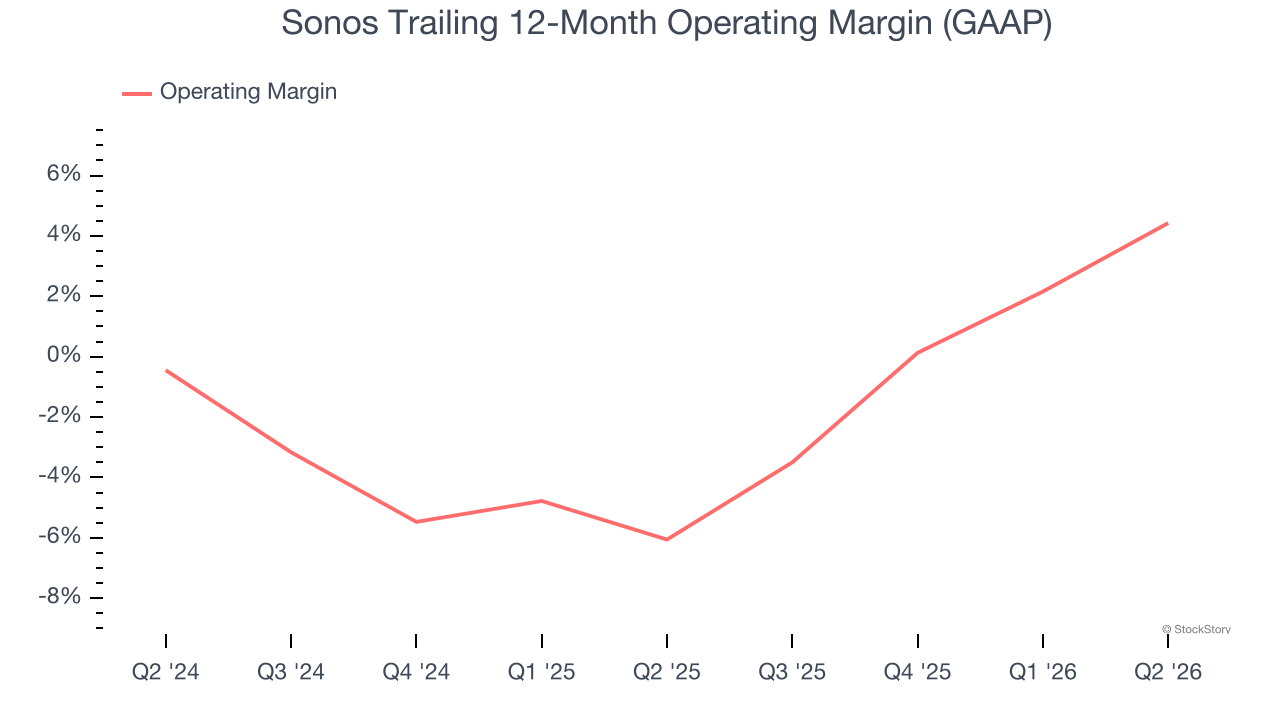
In Q2, Sonos generated an operating margin profit margin of 8.4%, up 9.3 percentage points year on year. This increase was a welcome development and shows it was more efficient.
Earnings Per Share
We track the long-term change in earnings per share (EPS) for the same reason as long-term revenue growth. Compared to revenue, however, EPS highlights whether a company’s growth is profitable.
Sadly for Sonos, its EPS declined by 11.5% annually over the last five years, more than its revenue. We can see the difference stemmed from higher interest expenses or taxes as the company actually improved its operating margin and repurchased its shares during this time.
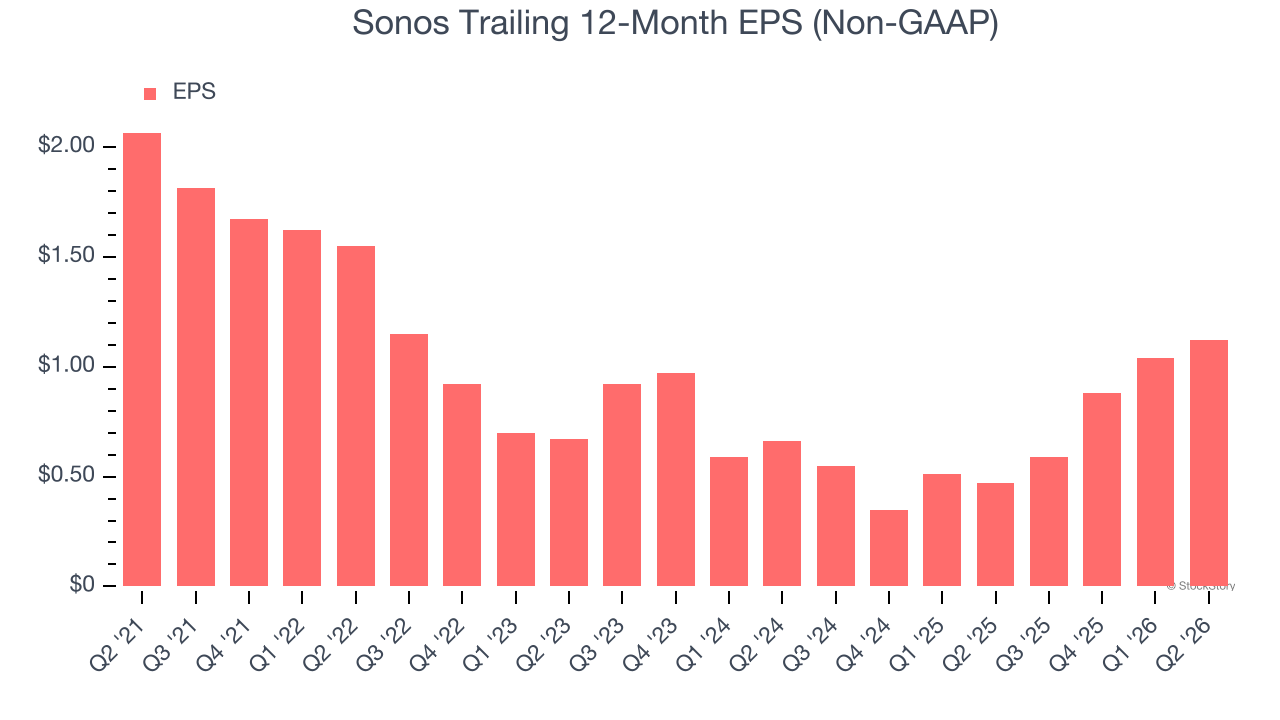
In Q2, Sonos reported adjusted EPS of $0.27, up from $0.19 in the same quarter last year. This print easily cleared analysts’ estimates, and shareholders should be content with the results. Over the next 12 months, Wall Street expects Sonos’s full-year EPS to shrink by 3.6% from $1.12 to $1.08.
Key Takeaways from Sonos’s Q2 Results
It was good to see Sonos beat analysts’ EPS expectations this quarter. We were also excited its EBITDA outperformed Wall Street’s estimates by a wide margin. Zooming out, we think this was a solid print. The stock traded up 1.5% to $17.79 immediately following the results.
Sonos had an encouraging quarter, but one earnings result doesn’t necessarily make the stock a buy. Let’s see if this is a good investment. We think that the latest quarter is only one piece of the longer-term business quality puzzle. Quality, when combined with valuation, can help determine if the stock is a buy. We cover that in our actionable full research report which you can read here (it’s free).