Technology real estate company Offerpad (NYSE: OPAD) missed Wall Street’s revenue expectations in Q2 CY2026, with sales falling 51.5% year on year to $77.7 million. Next quarter’s revenue guidance of $95 million underwhelmed, coming in 17.8% below analysts’ estimates. Its GAAP loss of $1.94 per share was 3.6% below analysts’ consensus estimates.
Is now the time to buy Offerpad? Find out by accessing our full research report, it’s free.
Offerpad (OPAD) Q2 CY2026 Highlights:
- Revenue: $77.7 million vs analyst estimates of $85.2 million (51.5% year-on-year decline, 8.8% miss)
- EPS (GAAP): -$1.94 vs analyst expectations of -$1.87 (3.6% miss)
- Adjusted EBITDA: -$6.2 million (-8% margin, 29.2% year-on-year decline)
- Revenue Guidance for Q3 CY2026 is $95 million at the midpoint, below analyst estimates of $115.6 million
- Operating Margin: -10.6%, down from -4.9% in the same quarter last year
- Free Cash Flow was -$25.89 million compared to -$13.56 million in the same quarter last year
- Homes Sold: down 246 year on year
- Market Capitalization: $18.31 million
Company Overview
Known for giving homeowners cash offers within 24 hours, Offerpad (NYSE: OPAD) operates a tech-enabled platform specializing in direct home buying and selling solutions.
Revenue Growth
A company’s long-term performance is an indicator of its overall quality. Any business can put up a good quarter or two, but the best consistently grow over the long haul. Offerpad struggled to consistently generate demand over the last five years as its sales dropped at a 17.7% annual rate. This wasn’t a great result and suggests it’s a low quality business.
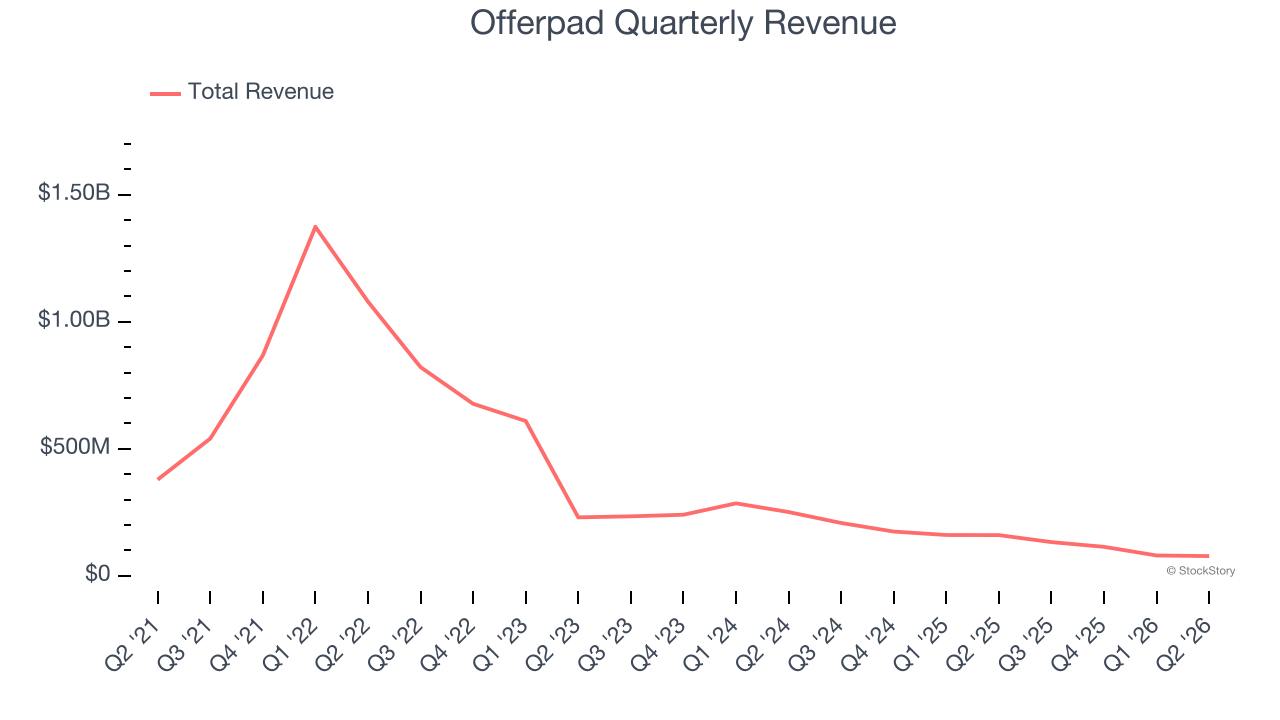
Long-term growth is the most important, but within consumer discretionary, product cycles are short and revenue can be hit-driven due to rapidly changing trends and consumer preferences. Offerpad’s recent performance shows its demand remained suppressed as its revenue has declined by 36.7% annually over the last two years. 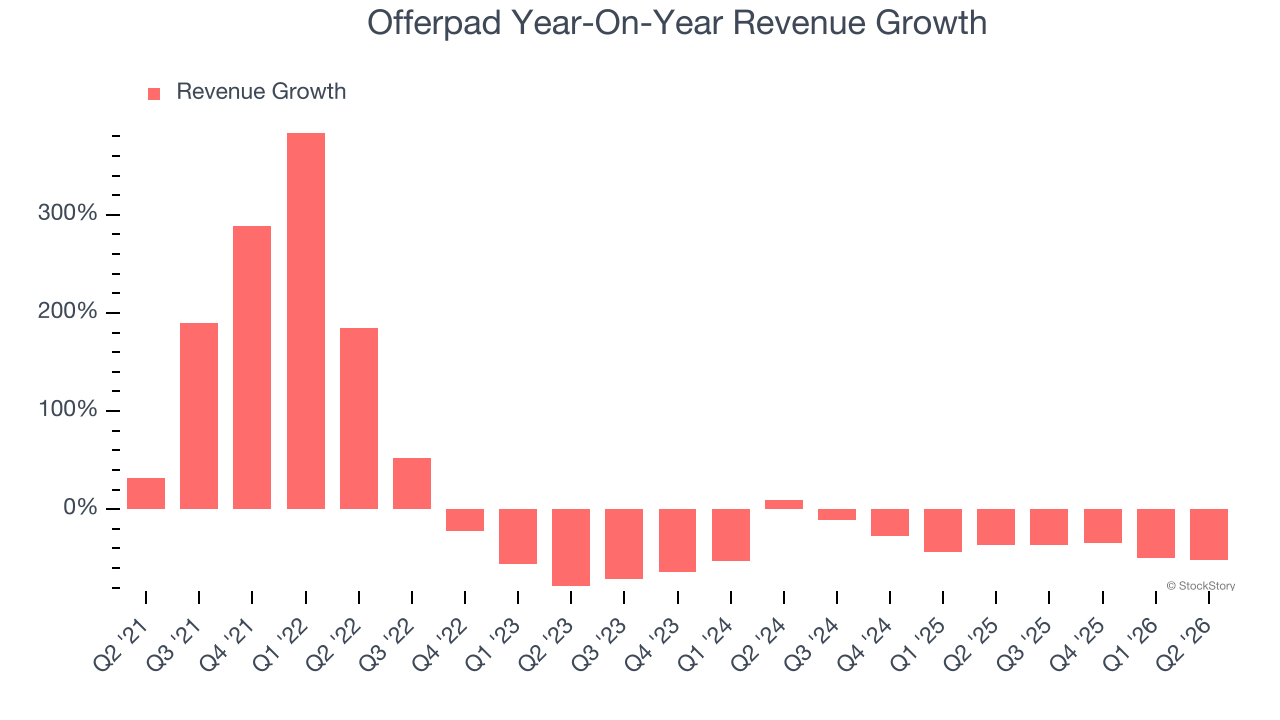
We can better understand the company’s revenue dynamics by analyzing its number of homes sold, which reached 206 in the latest quarter. Over the last two years, Offerpad’s homes sold averaged 39.2% year-on-year declines. Because this number is lower than its revenue growth during the same period, we can see the company’s monetization has risen. 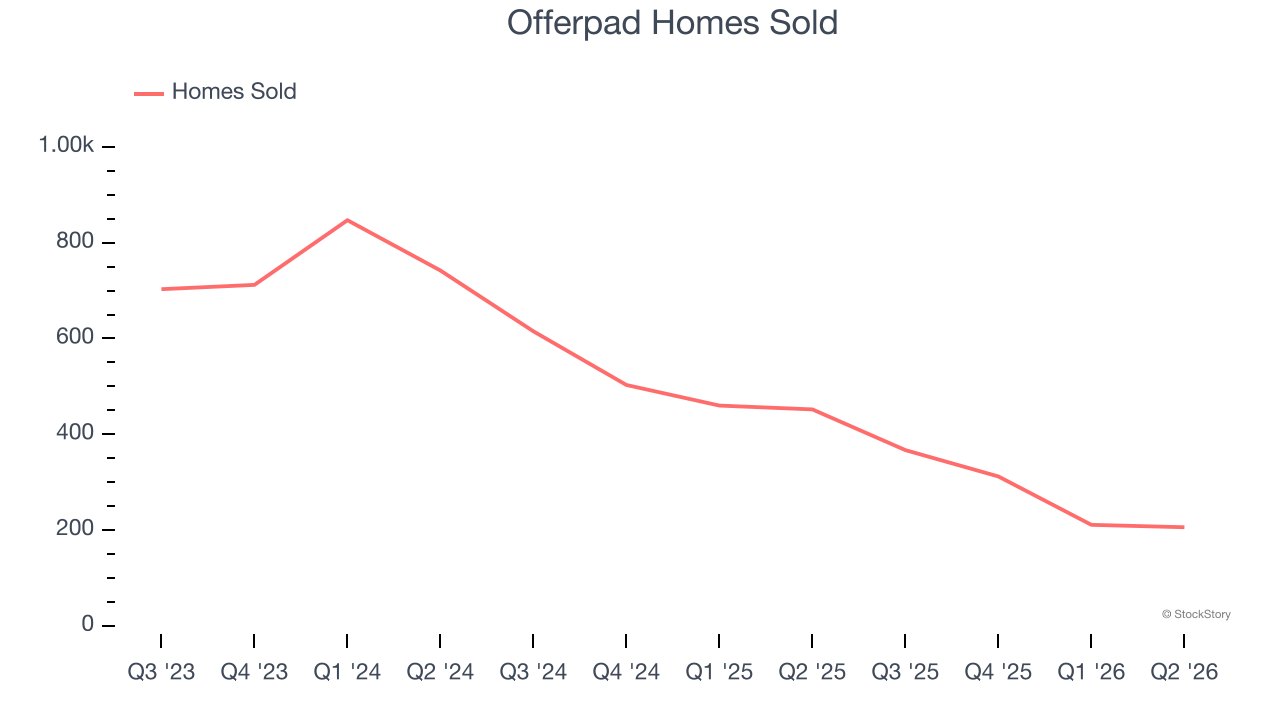
This quarter, Offerpad missed Wall Street’s estimates and reported a rather uninspiring 51.5% year-on-year revenue decline, generating $77.7 million of revenue. Company management is currently guiding for a 28.4% year-on-year decline in sales next quarter.
Looking further ahead, sell-side analysts expect revenue to grow 27.2% over the next 12 months, an improvement versus the last two years. This projection is eye-popping and implies its newer products and services will catalyze better top-line performance.
ONE MORE THING: 3 Hidden Platforms Growing 3X Faster than Amazon, Google, and PayPal. Amazon, Google, and Meta all followed the same playbook: Dominate an ignored market. Build an unbeatable moat. Scale until you’re unstoppable.
These three platforms are running that exact playbook right now. The early investors in Amazon made fortunes. The early investors in these could do the same. Get All 3 Stocks Here for FREE.
Operating Margin
Offerpad’s operating margin has been trending down over the last 12 months and averaged negative 6.6% over the last two years. Unprofitable consumer discretionary companies with falling margins deserve extra scrutiny because they’re spending loads of money to stay relevant, an unsustainable practice.
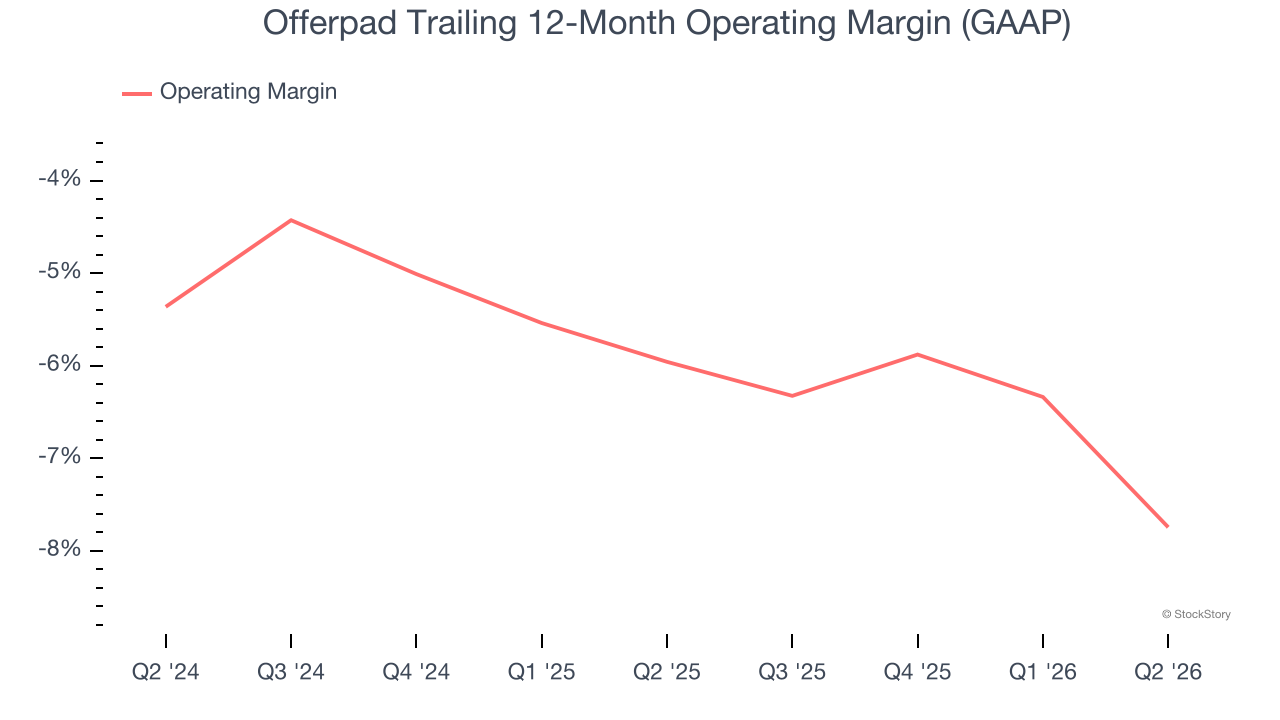
In Q2, Offerpad generated a negative 10.6% operating margin. The company’s consistent lack of profits raises a flag.
Earnings Per Share
Revenue trends explain a company’s historical growth, but the long-term change in earnings per share (EPS) points to the profitability of that growth — for example, a company could inflate its sales through excessive spending on advertising and promotions.
Offerpad’s full-year EPS turned negative over the last four years. We tend to steer our readers away from companies with falling revenue and EPS, where diminishing earnings could imply changing secular trends and preferences. Consumer Discretionary companies are particularly exposed to this, and if the tide turns unexpectedly, Offerpad’s low margin of safety could leave its stock price susceptible to large downswings.
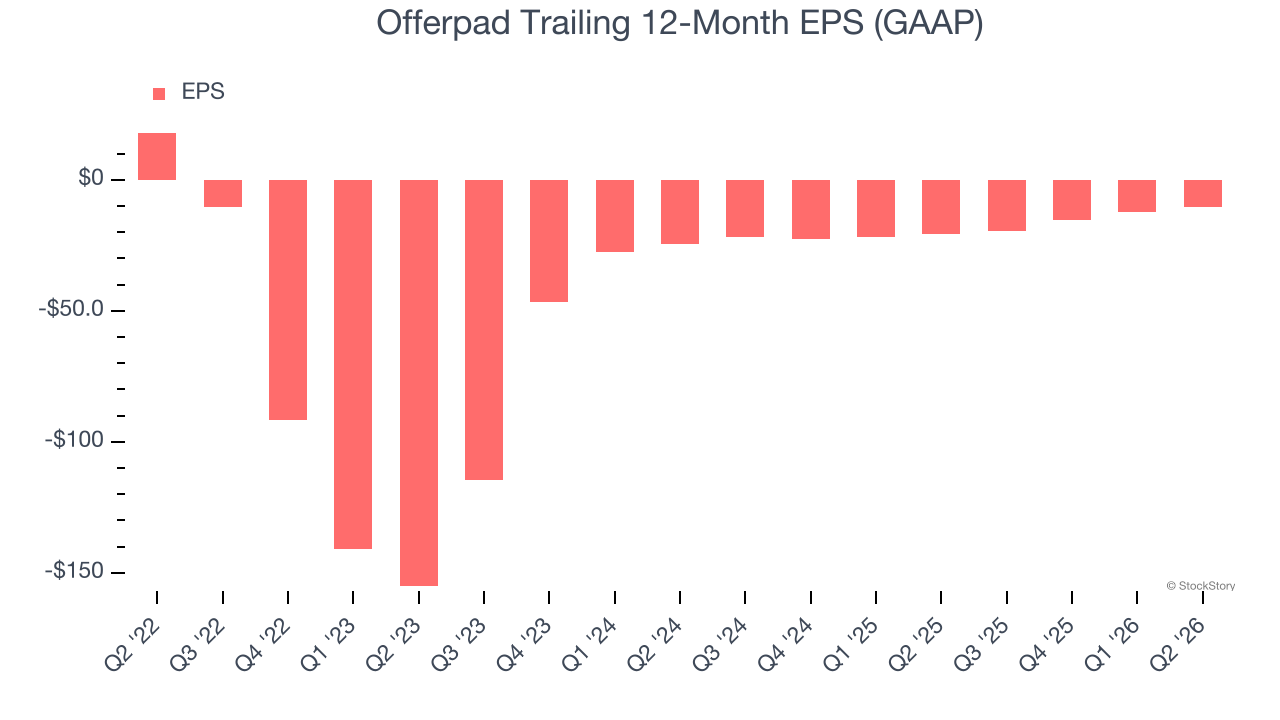
In Q2, Offerpad reported EPS of negative $1.94, up from negative $3.90 in the same quarter last year. Despite growing year on year, this print missed analysts’ estimates. Over the next 12 months, Wall Street expects Offerpad to improve its earnings losses. Analysts forecast its full-year EPS will improve from negative $10.24 to negative $3.64.
Key Takeaways from Offerpad’s Q2 Results
We struggled to find many positives in these results. Its revenue guidance for next quarter missed and its revenue fell short of Wall Street’s estimates. Overall, this quarter could have been better. The stock traded down 2.7% to $3.55 immediately following the results.
Big picture, is Offerpad a buy here and now? The latest quarter does matter, but not nearly as much as longer-term fundamentals and valuation, when deciding if the stock is a buy. We cover that in our actionable full research report which you can read here (it’s free).