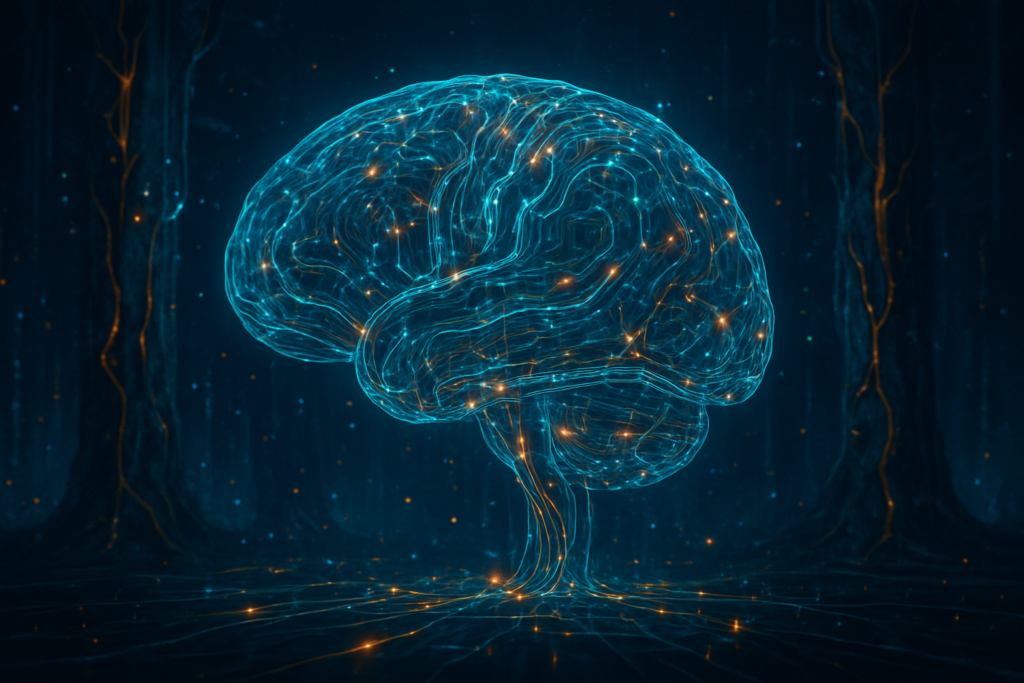
As the global demand for artificial intelligence continues to spiral, the industry has hit a formidable roadblock: the "energy wall." With massive Large Language Models (LLMs) consuming megawatts of power and pushing data center grids to their breaking point, the race for a more sustainable computing architecture has moved from the fringes of research to the forefront of corporate strategy. At the center of this revolution is Intel Corporation (NASDAQ: INTC) and its groundbreaking "Hala Point" system, a neuromorphic computer that mimics the efficiency of the human brain to process data at a fraction of the energy cost of traditional chips.
Unveiled as the world’s largest integrated neuromorphic system, Hala Point represents a fundamental shift in how we build intelligent machines. By moving away from the "Von Neumann" architecture—which has defined computing for nearly 80 years—and embracing "brain-inspired" hardware, engineers are proving that the future of AI isn't just about more power, but about smarter architecture. As of early 2026, the success of systems like Hala Point is forcing a re-evaluation of the dominance of the traditional GPU and signaling a new era of "Hybrid AI" where efficiency is the ultimate metric of performance.
The Architecture of a Digital Brain: Scaling Loihi 2
Hala Point is built on Intel’s second-generation neuromorphic research chip, Loihi 2, and represents a staggering 10-fold increase in neuron capacity over its predecessor, Pohoiki Springs. Manufactured on the Intel 4 process node, the system packs 1,152 Loihi 2 processors into a chassis roughly the size of a microwave oven. The technical specifications are unprecedented: it supports up to 1.15 billion artificial neurons and 128 billion synapses—roughly the neural complexity of an owl’s brain. This is achieved through 140,544 neuromorphic processing cores, capable of 20 quadrillion operations per second (20 petaops).
What sets Hala Point apart from traditional hardware is its use of Spiking Neural Networks (SNNs) and in-memory computing. In a standard GPU, such as those produced by NVIDIA (NASDAQ: NVDA), energy is wasted constantly moving data between a separate processor and memory unit. In contrast, Hala Point integrates memory directly into the neural cores. Furthermore, its "event-driven" nature means neurons only consume power when they "fire" or spike in response to data, mirroring biological efficiency. Initial benchmarks have shown that for specific optimization and sensory tasks, Hala Point is up to 100 times more energy-efficient than traditional GPUs while operating 50 times faster.
The AI research community has reacted to Hala Point with a mix of cautious optimism and strategic pivot. While traditional GPUs remain the "muscle" for training massive transformers, experts note that Hala Point is the "brain" for real-time inference and sensory perception. High-profile labs, including Sandia National Laboratories, have already begun using the system to solve complex scientific modeling problems that were previously too energy-intensive for even the most advanced supercomputers. The shift is clear: the industry is no longer just looking for raw FLOPs; it is looking for "brain-scale" efficiency.
The Strategic Shift: Disruption in the Data Center
The emergence of neuromorphic breakthroughs is creating a new competitive landscape for tech giants. While NVIDIA (NASDAQ: NVDA) continues to dominate the training market with its Blackwell and upcoming Rubin architectures, the high cost of running these chips is driving cloud providers like Microsoft (NASDAQ: MSFT), Amazon (NASDAQ: AMZN), and Alphabet (NASDAQ: GOOGL) to explore neuromorphic alternatives. Analysts project that by late 2026, the market for neuromorphic computing could reach nearly $10 billion, driven by the need for "Hybrid AI" data centers that use specialized chips for different parts of the AI lifecycle.
This development poses a strategic challenge to the established GPU-centric order. For edge computing—such as autonomous drones, robotics, and "always-on" industrial sensors—neuromorphic hardware offers a decisive advantage. Startups like BrainChip (ASX: BRN) and the Sam Altman-backed Rain AI are already competing to bring neuromorphic "Synaptic Processing Units" to market, aiming to displace traditional silicon in battery-operated devices. Even IBM (NYSE: IBM) has entered the fray with its NorthPole chip, which claims to be 25 times more efficient than standard GPUs for vision-based AI tasks.
For the major AI labs, the arrival of Hala Point-scale systems means a shift in research priorities. Instead of simply scaling model parameters, researchers are now focusing on "sparsity" and "temporal dynamics"—mathematical concepts that allow AI to run efficiently on neuromorphic hardware. This has the potential to disrupt the current SaaS model of AI; if high-performance inference can be done locally on low-power neuromorphic chips, the reliance on massive, centralized cloud clusters may begin to wane, giving a strategic advantage to hardware manufacturers who can integrate these "digital brains" into consumer devices.
Beyond the Energy Wall: The Wider Significance for Society
The significance of Hala Point extends far beyond a simple hardware upgrade; it is a critical response to a global sustainability crisis. As of 2026, the energy consumption of AI data centers has become a primary concern for climate goals, with some estimates suggesting AI could account for nearly 4% of global electricity demand by 2030. Neuromorphic computing offers a "green" path forward, enabling the continued growth of AI capabilities without a corresponding explosion in carbon emissions. By achieving "human-brain-like" efficiency, Intel is demonstrating that the path to Artificial General Intelligence (AGI) may require a biological blueprint.
This transition also addresses the "latency gap" in real-world AI applications. Traditional AI systems often struggle with real-time adaptation because they rely on batch processing. Neuromorphic systems, however, support "continuous learning," allowing an AI to update its knowledge in real-time as it interacts with the world. This has profound implications for medical prosthetics that can "feel" and react with human-like speed, or autonomous vehicles that can navigate unpredictable environments with lower power overhead.
However, the shift is not without its hurdles. The "software gap" remains the biggest challenge. Most existing AI software is designed for the linear, predictable flow of GPUs, not the asynchronous, spiking nature of neuromorphic chips. While Intel’s open-source Lava framework is gaining traction as a standard for neuromorphic programming, the transition requires a massive re-skilling of the AI workforce. Despite these challenges, the broader trend is undeniable: we are moving toward a world where the distinction between "artificial" and "biological" computation continues to blur.
The Future of Neuromorphic: Toward Loihi 3 and AGI
Looking ahead, the roadmap for neuromorphic computing is accelerating. Intel has already begun teasing its third-generation neuromorphic chip, Loihi 3, which is expected to debut in late 2026 or early 2027. Preliminary reports suggest a 4x increase in synaptic density and, perhaps most importantly, native support for "transformer-like" attention mechanisms. This would allow neuromorphic hardware to run Large Language Models directly, potentially slashing the energy cost of running tools like ChatGPT by orders of magnitude.
In the near term, we expect to see more "Hybrid" systems where a traditional GPU handles the heavy lifting of initial training, while a neuromorphic system like Hala Point handles the continuous learning and real-time interaction. We are also likely to see the first commercial deployments of neuromorphic-integrated robotics in logistics and healthcare. Experts predict that within the next five years, neuromorphic "accelerators" will become as common in smartphones as image processors are today, providing "always-on" intelligence that doesn't drain the battery.
A New Chapter in Computational History
Intel’s Hala Point is more than just a milestone for the company; it is a milestone for the entire field of computer science. By successfully scaling brain-inspired architecture to over a billion neurons, Intel has provided a viable solution to the energy crisis that threatened to stall the AI revolution. It represents a pivot from the "brute force" era of AI to an era of "architectural elegance," where the constraints of physics and biology guide the next generation of digital intelligence.
As we move through 2026, the industry should keep a close eye on the adoption rates of the Lava framework and the results of pilot programs at Sandia and other research institutions. The "energy wall" was once seen as an insurmountable barrier to the future of AI. With the engineering breakthroughs exemplified by Hala Point, that wall is finally starting to crumble.
This content is intended for informational purposes only and represents analysis of current AI developments.
TokenRing AI delivers enterprise-grade solutions for multi-agent AI workflow orchestration, AI-powered development tools, and seamless remote collaboration platforms.
For more information, visit https://www.tokenring.ai/.