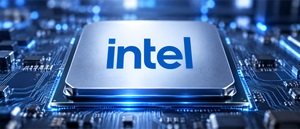
As of today, April 15, 2026, the global semiconductor industry is witnessing a historical inflection point. Intel Corporation (Nasdaq: INTC), a titan once thought to be in irreversible decline, has completed one of the most audacious industrial turnarounds in American history. After a grueling five-year transformation, the company has officially entered the "Angstrom Era," successfully reclaiming the manufacturing crown it lost nearly a decade ago. Today, Intel is no longer just a chip designer; it is the Western world’s primary hope for a domestic leading-edge foundry, serving as a critical pillar in the "Sovereign AI" movement.
Historical Background
Founded in 1968 by Robert Noyce and Gordon Moore, and later led by the legendary Andy Grove, Intel pioneered the microprocessor and defined the "Tick-Tock" model of innovation for decades. However, the 2010s were marked by stagnation. Internal manufacturing delays on the 10nm and 7nm nodes allowed rivals like Advanced Micro Devices (Nasdaq: AMD) to seize market share, while Taiwan Semiconductor Manufacturing Company (NYSE: TSM) took the lead in process technology.
The return of Pat Gelsinger as CEO in 2021 launched the "IDM 2.0" strategy—a plan to manufacture its own chips, use third-party foundries, and open its own factories to external customers. While the path was fraught with financial volatility and leadership changes, culminating in the transition to CEO Lip-Bu Tan in early 2025, the groundwork laid during this period eventually enabled Intel to achieve the "5 Nodes in 4 Years" (5N4Y) goal.
Business Model
In 2026, Intel’s business model is fundamentally bifurcated into two primary engines: Intel Product and Intel Foundry.
- Intel Product: This includes the Client Computing Group (CCG), which dominates the burgeoning AI PC market, and the Data Center and AI (DCAI) group, focused on Xeon processors and Gaudi accelerators.
- Intel Foundry: Now operated as an independent subsidiary with its own financial reporting, the Foundry division sells manufacturing and advanced packaging services to external clients like Microsoft, Amazon, and Tesla.
- Segment Synergy: This model allows Intel to utilize its own "anchor tenant" volumes to keep fab utilization high while generating high-margin revenue from external fabless customers.
Stock Performance Overview
The journey of INTC stock over the last decade is a tale of two halves.
- The Lost Decade (2015-2024): Intel’s share price was a notable underperformer, largely trading sideways or downward while the broader S&P 500 surged. It hit a multi-decade "trough of disillusionment" in early 2025, falling below $18 per share.
- The 2025-2026 Recovery: Following the successful rollout of the 18A (1.8nm) process node and the announcement of the "Terafab" partnership with Elon Musk’s xAI, the stock staged a historic rally.
- Current Standing: As of mid-April 2026, INTC has achieved an all-time high of $65.18, representing a staggering 220% recovery from its 2025 lows, though it remains volatile as investors debate the sustainability of its 120x forward P/E ratio.
Financial Performance
Intel’s Fiscal Year 2025 results signaled the end of a multi-year revenue contraction.
- Revenue: FY 2025 revenue reached $52.9 billion. While modest compared to its 2021 peaks, it represents a stabilized foundation after the restructuring years.
- Margins: Gross margins have recovered to the 40% range, up from a terrifying 30% during the peak of the 18A build-out costs.
- Profitability: The company reported a non-GAAP EPS of $0.42 for 2025, returning to profitability.
- Cash Flow: Operating cash flow remains tight due to massive capital expenditures (CAPEX), but is increasingly offset by CHIPS Act grants and equity investments from partners like Apollo Global Management.
Leadership and Management
The 2025 transition from Pat Gelsinger to Lip-Bu Tan marked a shift from "Visionary Engineering" to "Operational Discipline." Tan, a veteran of the semiconductor industry known for his success at Cadence Design Systems, has brought a ruthless focus on costs. Under his tenure, Intel completed a $10 billion cost-reduction program and successfully spun off non-core assets like Altera and Mobileye. His leadership has restored confidence among Wall Street analysts who previously feared Intel was "spending itself into oblivion."
Products, Services, and Innovations
Innovation in 2026 is centered on two breakthrough technologies: RibbonFET and PowerVia.
- Panther Lake: Launched in late 2025, this consumer chip solidified Intel’s 56% market share in AI PCs, offering superior NPU (Neural Processing Unit) performance for local AI workloads.
- Clearwater Forest: The first major server chip on the 18A node, designed for high-density cloud applications with industry-leading energy efficiency.
- Advanced Packaging: Intel’s Foveros and EMIB packaging technologies have become a $1 billion standalone revenue stream, as customers look for ways to stack chips more efficiently to combat the slowdown of Moore's Law.
Competitive Landscape
- AMD: Remains a fierce rival in the x86 space. While Intel has reclaimed the manufacturing lead, AMD’s architectural efficiency keeps the server market highly competitive.
- NVIDIA (Nasdaq: NVDA): Continues to dominate AI training. Intel has shifted its focus to "Enterprise Inference" with its Gaudi 3 and 4 lines, positioning itself as the "value-for-performance" alternative to NVIDIA’s premium H100/B200 series.
- TSMC: Still the largest foundry in the world. Intel Foundry currently positions itself as the "geographically resilient" alternative, catering to customers who want to diversify their supply chain away from the Taiwan Strait.
Industry and Market Trends
Two macro trends are driving Intel’s 2026 outlook:
- The AI PC Cycle: The industry is currently in the midst of a massive hardware refresh as enterprises upgrade to PCs capable of running large language models locally.
- Sovereign AI: Governments are increasingly funding domestic chip production to ensure national security. Intel, as the only U.S.-based company with leading-edge manufacturing, is the primary beneficiary of this trend.
Risks and Challenges
Despite the recent success, Intel faces significant headwinds:
- Foundry Losses: The Foundry division is still losing money ($10.3 billion in 2025) and is not expected to break even until 2027.
- Execution Risk: Any delay in the next-generation 14A process node (expected 2027) could allow TSMC to leapfrog back into the lead.
- Liquidity: The company’s balance sheet remains leveraged, and it depends heavily on government subsidies to fund its multi-billion dollar "Mega-fabs."
Opportunities and Catalysts
- External Foundry Momentum: Recent wins with Microsoft and Amazon suggest that more hyperscalers may pivot toward Intel 18A for their custom silicon.
- The "Terafab" Project: The partnership with Tesla/xAI to build a dedicated AI manufacturing facility in Texas could provide a blueprint for "custom-dedicated" foundry services.
- CHIPS Act 2.0: Rumors of a second wave of U.S. government semiconductor funding could provide Intel with another multi-billion dollar injection of capital.
Investor Sentiment and Analyst Coverage
Sentiment has shifted from "Strong Sell" in 2024 to a "Cautious Buy" consensus in 2026. Institutional investors, including major hedge funds, have begun rebuilding positions in INTC as a "geopolitical hedge" against Taiwan-based manufacturing risks. However, retail sentiment remains cautious, with many investors still stung by the 2024 dividend suspension.
Regulatory, Policy, and Geopolitical Factors
Intel is arguably the most geopolitically significant company in the United States. It has secured $8.9 billion in direct CHIPS Act funding and a $3.2 billion "Secure Enclave" contract from the Department of Defense. However, export controls on China remain a double-edged sword, limiting Intel’s sales in a region that historically accounted for a significant portion of its revenue.
Conclusion
In April 2026, Intel stands as a symbol of American industrial resilience. The successful launch of the 18A node has proved that the company can still compete at the bleeding edge of physics. While financial risks remain—particularly the massive losses in the Foundry segment—the strategic importance of the company has never been higher. For investors, Intel is no longer a "value trap" but a high-stakes bet on the future of Western manufacturing and the decentralization of the AI supply chain.
This content is intended for informational purposes only and is not financial advice.