Digital banking and fintech services continue to expand at a rapid pace in 2026. Financial companies are under pressure to release secure applications, improve customer experience, and integrate AI-powered services without delays. At the same time, hiring qualified engineers has become increasingly difficult due to global competition for technical talent. Traditional recruitment methods often fail to support urgent product deadlines or large-scale modernization projects. As a result, financial organizations are adopting flexible engineering strategies that allow them to scale development capacity quickly while maintaining quality, compliance, and operational efficiency.
Why Financial Institutions Need Faster Engineering Scalability in 2026
Financial companies now operate in an environment where technology directly affects customer retention, operational costs, and revenue growth. Banks, insurance providers, payment platforms, and investment firms must deliver digital products faster than before while maintaining strict security standards.
Rising Customer Expectations
Consumers expect mobile banking applications, payment systems, and investment platforms to work without interruptions. Slow product releases can affect customer trust and increase churn rates. Financial organizations must continuously improve application speed, personalization, and accessibility to remain competitive.
The demand for fintech software development has increased because customers prefer digital-first financial services. Features such as instant payments, AI-driven analytics, and automated account management are becoming standard requirements.
AI Integration and Automation
Artificial intelligence has become a major part of financial operations. Companies use AI for fraud detection, customer support automation, loan processing, and risk analysis. These technologies require experienced developers, data engineers, and cloud specialists.
Many institutions struggle to recruit enough qualified professionals to support these initiatives. Internal hiring processes often take several months, which slows product delivery and limits innovation.
Security and Compliance Requirements
Financial organizations manage highly sensitive customer information. Regulatory requirements continue to evolve across regions, creating additional development challenges. Teams must maintain compliance with cybersecurity standards, data protection laws, and financial regulations while introducing new digital services.
Engineering delays can expose companies to security risks and operational inefficiencies. Fast engineering team scalability allows organizations to address vulnerabilities, release updates quickly, and support ongoing compliance initiatives.
Traditional Hiring Is Too Slow
The competition for skilled engineers continues to grow globally. Financial firms are competing with technology companies, SaaS providers, and startups for the same talent pool. Recruiting experienced developers through traditional hiring methods can increase operational costs and delay project execution.
The table below highlights the difference between traditional hiring and flexible engineering expansion models.
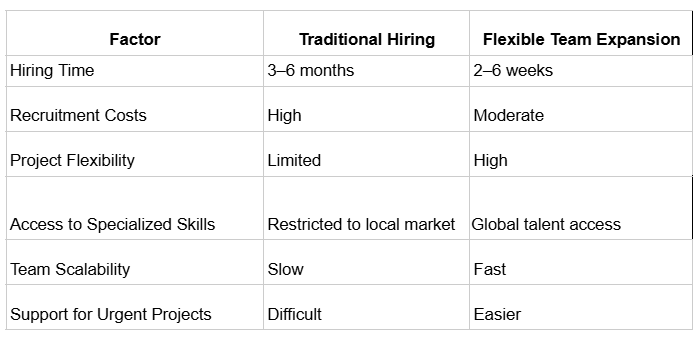
Fast engineering expansion has become essential for organizations managing digital banking systems, payment infrastructure, and AI-driven financial services.
How Staff Augmentation Helps Financial Companies Expand Development Capacity
Financial organizations increasingly rely on Staff Augmentation to strengthen internal engineering teams without long recruitment cycles. This approach allows companies to add experienced specialists to existing projects while maintaining direct control over development processes.
Faster Access to Qualified Developers
One of the biggest advantages of external engineering support is faster onboarding. Financial companies can quickly add developers with experience in cloud infrastructure, cybersecurity, payment systems, and mobile applications.
This model reduces delays during product launches and platform modernization projects. It also helps organizations avoid the costs associated with large internal recruitment campaigns.
Specialized Expertise for Financial Projects
Financial software projects often require highly specific technical skills. Many companies need engineers with experience in blockchain systems, banking APIs, machine learning, or fraud prevention tools.
External specialists help organizations fill these skill gaps without building entire departments internally. Teams looking to expand technical capacity can learn more about flexible engineering support models designed for financial technology projects.
Flexible Scaling for Changing Business Needs
Financial companies rarely operate with fixed development requirements. Product demand can change rapidly due to market conditions, regulatory updates, or seasonal traffic increases.
Staff expansion strategies allow organizations to:
Increase engineering capacity during critical product releases
Reduce development bottlenecks
Support short-term modernization projects
Scale teams across multiple locations
Accelerate fintech digital transformation initiatives
This flexibility is particularly valuable for payment platforms and digital banking providers that manage high transaction volumes and continuous feature updates.
Reduced Recruitment Overhead
Internal recruitment can require significant investments in HR operations, onboarding, training, and infrastructure. Flexible engineering models reduce these administrative burdens while allowing financial firms to maintain technical productivity.
Companies also benefit from access to dedicated development teams that already understand modern development frameworks, DevOps practices, and financial security requirements.
Benefits of Working with an IT Staff Augmentation company
Partnering with an IT Staff Augmentation company gives financial organizations access to technical expertise without expanding internal hiring departments. This approach supports faster development cycles while improving operational flexibility.
Access to Global Engineering Talent
Local hiring limitations often prevent financial companies from finding enough experienced engineers. External partnerships provide access to global technical specialists with expertise in cloud computing, AI systems, cybersecurity, and payment infrastructure.
This wider talent pool helps companies support software development for banks and financial applications without depending solely on regional hiring markets.
Faster Product Delivery
Financial organizations operate in highly competitive markets where release speed directly affects growth. External engineering support allows companies to accelerate:
Mobile banking application development
Cloud migration projects
Fraud detection systems
AI-powered customer support tools
Payment platform modernization
Additional engineers can reduce development backlogs and improve project delivery timelines.
Lower Operational Risk
Rapid internal hiring can create management and training challenges. Working with external engineering specialists reduces the pressure on internal HR and technical leadership teams.
Many financial firms also use financial software outsourcing strategies to manage temporary spikes in development demand without committing to permanent staffing increases.
Support for Multiple Technologies
Modern financial platforms require expertise across several technical areas simultaneously. Organizations often need support for:
Cloud infrastructure
API integrations
AI and machine learning systems
Data analytics
Cybersecurity operations
Mobile application development
An experienced IT Staff Augmentation company can provide engineers with specialized technical backgrounds that align with current business goals.
Improved Team Scalability
Financial organizations frequently manage multiple parallel projects. Product expansion, compliance updates, and platform modernization can create sudden resource shortages.
External engineering partnerships allow companies to scale distributed development operations efficiently. This model also supports remote engineering teams that work across different time zones while maintaining continuous project delivery.
Why IT Staff Augmentation Is Becoming a Long-Term Strategy for Fintech Growth
Financial companies are moving away from rigid hiring structures and adopting flexible workforce strategies. The demand for experienced software engineers continues to increase, while project requirements become more complex.
Hybrid Workforce Models Are Expanding
Many fintech companies now combine internal employees with external technical specialists. This structure improves flexibility while reducing recruitment pressure during periods of rapid growth.
Hybrid teams allow organizations to scale development operations without large permanent staffing commitments.
Remote Collaboration Has Become Standard
Distributed development operations are now common across the financial sector. Companies use outsourced software developers to support projects across cloud engineering, cybersecurity, data analysis, and mobile application development.
Remote collaboration tools and secure cloud environments allow engineering teams to work efficiently from different regions while maintaining compliance standards.
Specialized Fintech Skills Remain in High Demand
Financial applications require engineers with experience in payment systems, compliance frameworks, AI integration, and high-volume transaction platforms. The supply of these specialists remains limited in many markets.
Flexible hiring models in fintech help organizations access niche technical expertise without waiting for long recruitment cycles.
External Engineering Support Drives Long-Term Growth
Modern financial companies require continuous product updates and ongoing infrastructure improvements. External development support helps businesses maintain operational continuity during expansion phases.
Organizations that invest in engineering team scalability are better prepared to respond to changing customer expectations, market conditions, and regulatory requirements.
Conclusion
Financial organizations in 2026 face increasing pressure to deliver secure, scalable, and innovative digital services at high speed. Traditional hiring methods often fail to support aggressive product timelines and growing technical demands. Flexible engineering expansion strategies allow companies to access specialized expertise, improve development speed, and control operational costs. As digital banking and fintech services continue to evolve, scalable engineering structures will remain essential for maintaining competitiveness, supporting innovation, and improving long-term business performance.