As of December 25, 2025, a high-stakes maritime standoff in the Caribbean has fundamentally reshaped the energy landscape. The U.S. government’s decision to implement a "quarantine" of sanctioned oil tankers near Venezuela has effectively severed one of the world’s most controversial supply chains. This aggressive maneuver, involving the physical seizure of cargo and a massive naval blockade, has injected a sharp volatility into energy markets, pushing West Texas Intermediate (WTI) prices toward $61 and Brent crude toward $65 per barrel.
The immediate implications are profound: while a global supply glut and weakening demand signals from the IEA have put downward pressure on oil throughout the quarter, the "Venezuela Premium" is now the primary floor for prices. With approximately 11 million barrels of oil currently idled or seized in Venezuelan waters, the market is grappling with the reality of physical interdiction as a tool of foreign policy, a move that has sent shockwaves through the shipping and refining sectors.
The Siege of the "Dark Fleet"
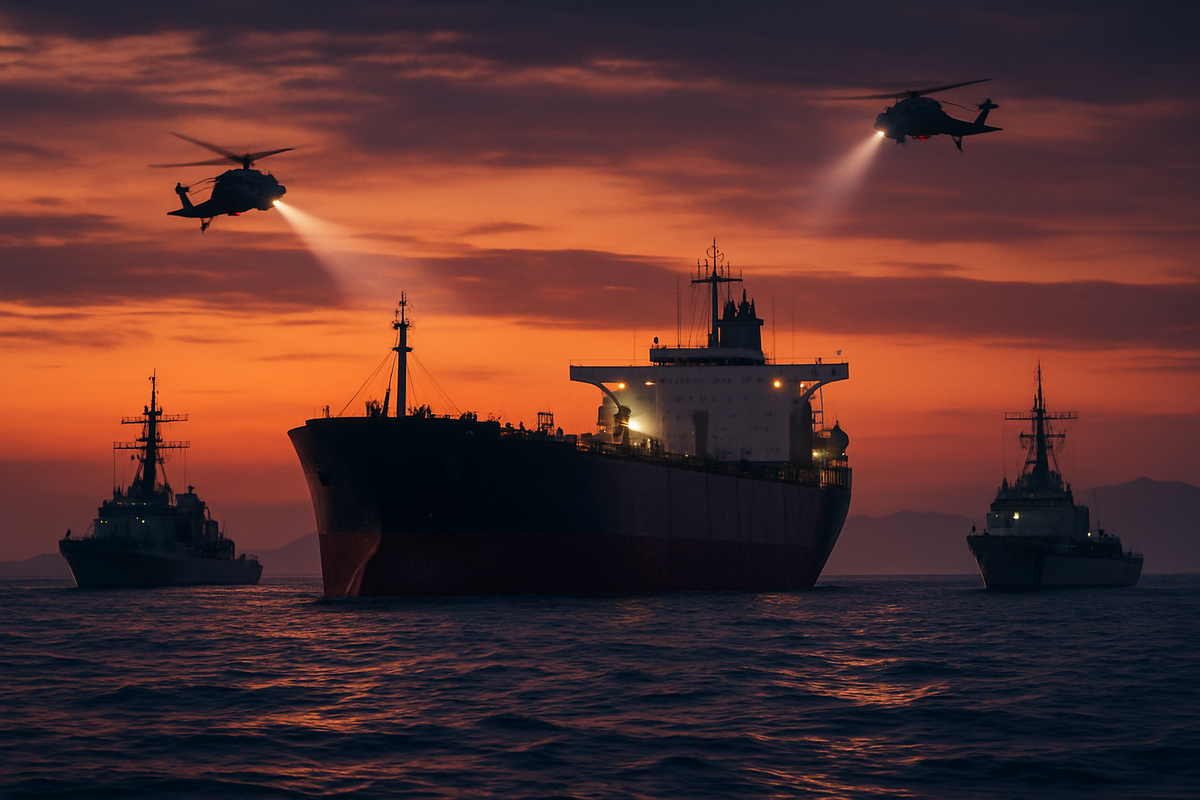
The escalation began in earnest on December 10, 2025, when U.S. Navy commandos conducted a high-profile seizure of the supertanker Skipper, a Very Large Crude Carrier (VLCC) carrying nearly 2 million barrels of heavy Merey crude. This was followed by the apprehension of a second merchant vessel on December 20, as the U.S. Coast Guard engaged in an active pursuit of the Bella 1, a notorious member of the so-called "dark fleet." By Christmas Day, an estimated 75 tankers are idling off the Venezuelan coast, unable to offload or transit due to the presence of roughly 15,000 U.S. troops, aircraft carriers, and guided-missile destroyers.
The timeline leading to this crisis traces back to the White House's designation of the Maduro administration as a "foreign terrorist organization" earlier this fall. The U.S. justification for the quarantine is the reclamation of "stolen assets" belonging to American energy firms that were nationalized years ago. The Maduro government has retaliated with charges of "international piracy" at the UN Security Council, but the physical reality on the water remains unchanged. Market participants, initially skeptical of such a bold move, reacted with a surge in trading volume as the risk of a broader regional conflict became tangible.
Winners and Losers in a Blockaded Market
The most immediate "winner" in an operational sense has been Chevron Corporation (NYSE: CVX). Despite the quarantine, Chevron remains the only U.S. major actively operating in Venezuela under a specific Treasury license. Because its shipments are classified as "debt repayment," its tankers, such as the Searuby and Minerva Astra, have largely been granted passage, allowing the company to maintain a precarious but profitable flow of heavy crude to U.S. Gulf Coast refineries. Conversely, companies like Exxon Mobil Corp (NYSE: XOM) and ConocoPhillips (NYSE: COP) find themselves in a complex position; while the U.S. government is theoretically "reclaiming" assets for them, both firms have shown extreme reluctance to re-enter the decaying Venezuelan infrastructure, preferring to focus on more stable assets in neighboring Guyana.
On the losing side, independent refiners like Valero Energy Corp (NYSE: VLO) and Marathon Petroleum Corp (NYSE: MPC) are facing a tightening squeeze. These refineries are highly optimized for the heavy, sour crude that Venezuela produces. With the "dark fleet" sidelined and official exports under siege, these companies are forced to source more expensive alternative grades from Canada or Iraq. Furthermore, the maritime insurance industry is reeling, as premiums for Caribbean transit have skyrocketed, impacting any shipping firm operating in the Western Hemisphere.
A New Era of Geopolitical Risk Premiums
This event marks a significant departure from the "financial-only" sanctions of the previous decade. By moving toward physical interdiction, the U.S. has signaled that the era of "AIS spoofing"—where tankers hide their locations to bypass sanctions—is over. This fits into a broader industry trend where energy security is increasingly being enforced through military rather than just economic means. The "geopolitical risk premium," which had largely evaporated in early 2025 due to record U.S. shale production, has returned with a vengeance, though it is currently fighting against a macro-economic headwind of high OECD inventories.
Historically, this situation draws parallels to the 1962 Cuban Missile Crisis "quarantine" and the 1980s "Tanker War" in the Persian Gulf. However, the 2025 version is unique because of the role of the "dark fleet"—a shadow economy of 1,500 aging vessels that operate outside Western oversight. The U.S. attempt to dismantle this fleet by seizing its cargo creates a massive regulatory precedent. If successful, it could serve as a blueprint for future actions against other sanctioned producers, potentially permanently altering the risk profile of global maritime trade.
The Road Ahead: Escalation or Exhaustion?
In the short term, the market will remain hyper-focused on whether the U.S. expands the quarantine to include non-sanctioned vessels or if Venezuela attempts to retaliate by disrupting traffic through the Panama Canal or near the Guyanese border. A strategic pivot may be required for global shipping hubs, which must now account for the physical seizure of assets as a standard operational risk. If the standoff persists into Q1 2026, we may see a permanent shift in heavy crude pricing, as the discount for "illicit" oil widens even further, potentially reaching $20 below legitimate benchmarks.
Long-term scenarios range from a total collapse of the Venezuelan oil industry due to lack of export outlets to a negotiated settlement that allows U.S. majors to take over operations in exchange for debt relief. Investors should look for signs of "sanction fatigue" among U.S. allies, who may grow weary of the high insurance costs and supply disruptions. However, as long as the U.S. maintains its naval presence, the "floor" for WTI and Brent will likely remain elevated, regardless of global demand trends.
Market Outlook and Final Thoughts
The U.S. tanker quarantine represents a watershed moment for the energy markets in late 2025. It has successfully decoupled geopolitical risk from mere rhetoric, turning it into a physical reality that traders must price in daily. While WTI at $61 and Brent at $65 might seem modest compared to the triple-digit prices of years past, these figures represent a significant recovery from the bearish lows seen earlier this year, driven almost entirely by the Caribbean blockade.
Moving forward, the market is likely to remain in a state of "tense equilibrium." The key takeaways for investors are the resilience of the U.S. naval enforcement and the continued operational dominance of Chevron in a restricted environment. In the coming months, watch for the "dark fleet" response—whether these vessels attempt to run the blockade or if they simply rust away at anchor. The outcome will determine whether the geopolitical risk premium becomes a permanent fixture of the 2026 energy market or a temporary spike in a world still grappling with an oversupply of oil.
This content is intended for informational purposes only and is not financial advice.