Life sciences company Revvity (NYSE: RVTY) beat Wall Street’s revenue expectations in Q3 2026, with revenue rising 10.3% year on year to $728.9 million. The company expects the full year’s revenue to be around $2.86 billion, close to analysts’ consensus estimates. Its non-GAAP profit of $1.37 per share was 5.7% above analysts’ consensus estimates.
For more on Revvity, read our free full research report.
Revvity (RVTY) Q3 2026 highlights:
- Revenue $728.9 million vs S&P analysts’ consensus estimates of $697.9 million (10.3% year-on-year growth, 4.4% beat)
- Adjusted EPS $1.37 vs S&P analysts’ consensus estimates of $1.30 (5.7% beat)
- Revenue guidance The company slightly lifted its revenue guidance for the full year to $2.86 billion at the midpoint from $2.85 billion
- Adjusted EPS guidance Management raised its full-year adjusted EPS guidance to $5.43 at the midpoint, a 1.4% increase
- Operating margin 13.1%, up from 11.7% in the same quarter last year
- Free cash flow margin 20.9%, up from 18.2% in the same quarter last year
- Organic revenue rose 7% year on year (beat)
- Market capitalization $16.92 billion
“Our exceptional third quarter performance demonstrates the momentum building across Revvity, as broad-based growth and strong execution drove results meaningfully ahead of our expectations,” said Prahlad Singh, president and chief executive officer of Revvity. “With end market conditions continuing to improve, a strong pipeline of innovation, and the benefits of our transformation increasingly evident in our results, Revvity is extremely well positioned to capitalize on the opportunities ahead.”
Revenue growth
Reviewing a company’s long-term revenue performance reveals insights into its quality. Any business can experience short-term success, but top-performing ones sustain growth for years. Revvity’s demand was weak over the last five years as its revenue fell at a 10.9% annual rate. That underwhelming result suggests poor business quality.
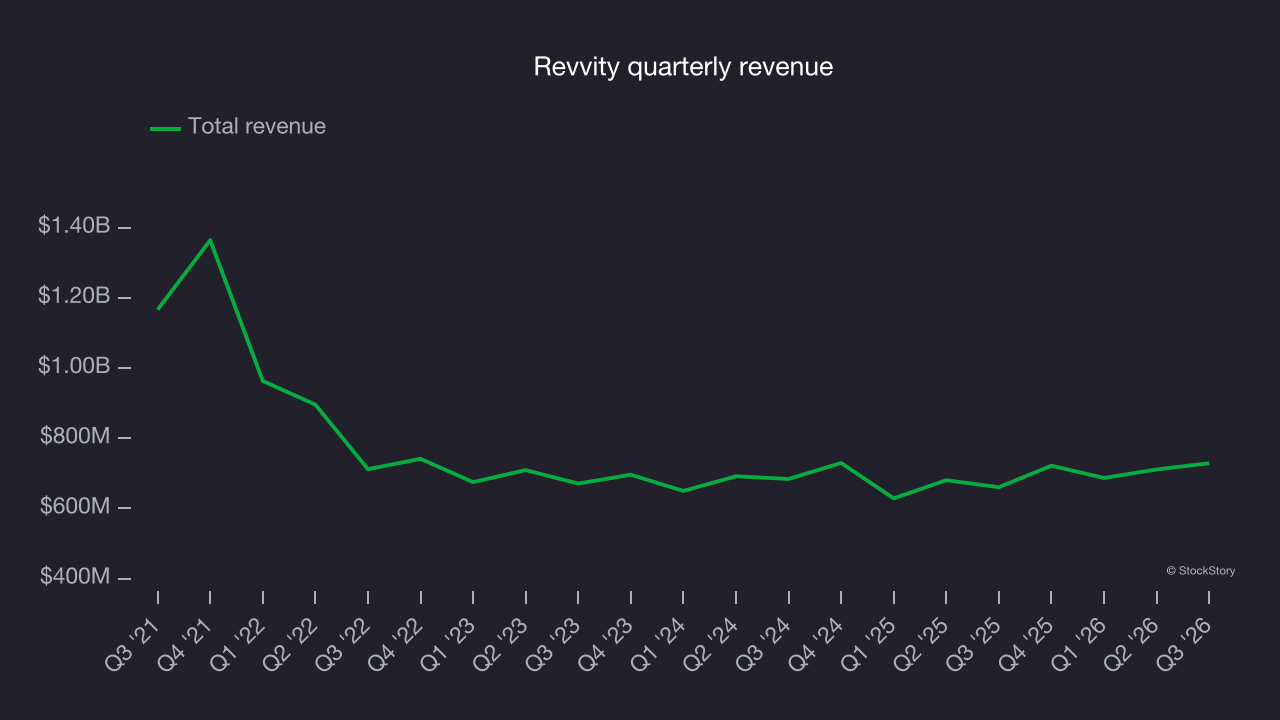
Long-term growth is the most important, but within healthcare, a half-decade historical view may miss new innovations or demand cycles. Revvity’s annualized revenue growth of 2.3% over the last two years is above its five-year trend, a positive sign. 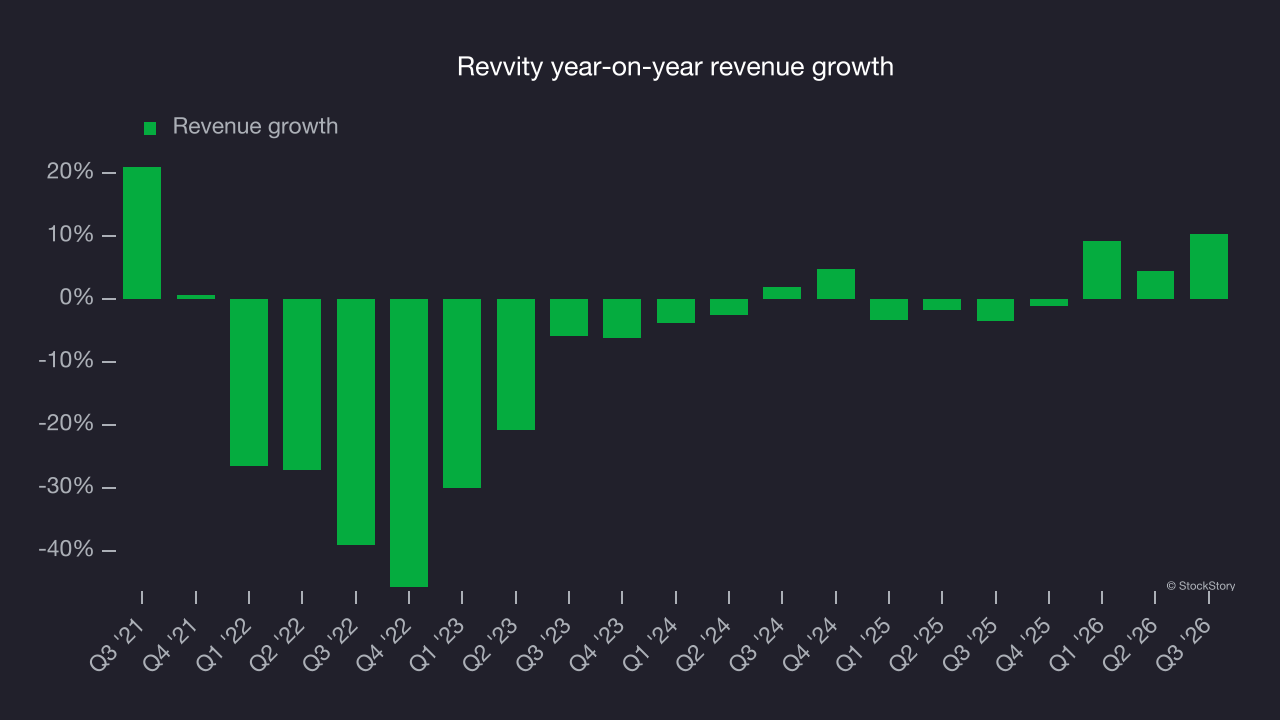
Revvity also reports organic revenue, which strips out one-time events like acquisitions and currency fluctuations that don’t accurately reflect its fundamentals. Over the last two years, Revvity’s organic revenue averaged 3.9% year-on-year growth. Organic growth outpaced its two-year revenue growth, indicating that some combination of divestitures and foreign exchange rates dampened its headline results. 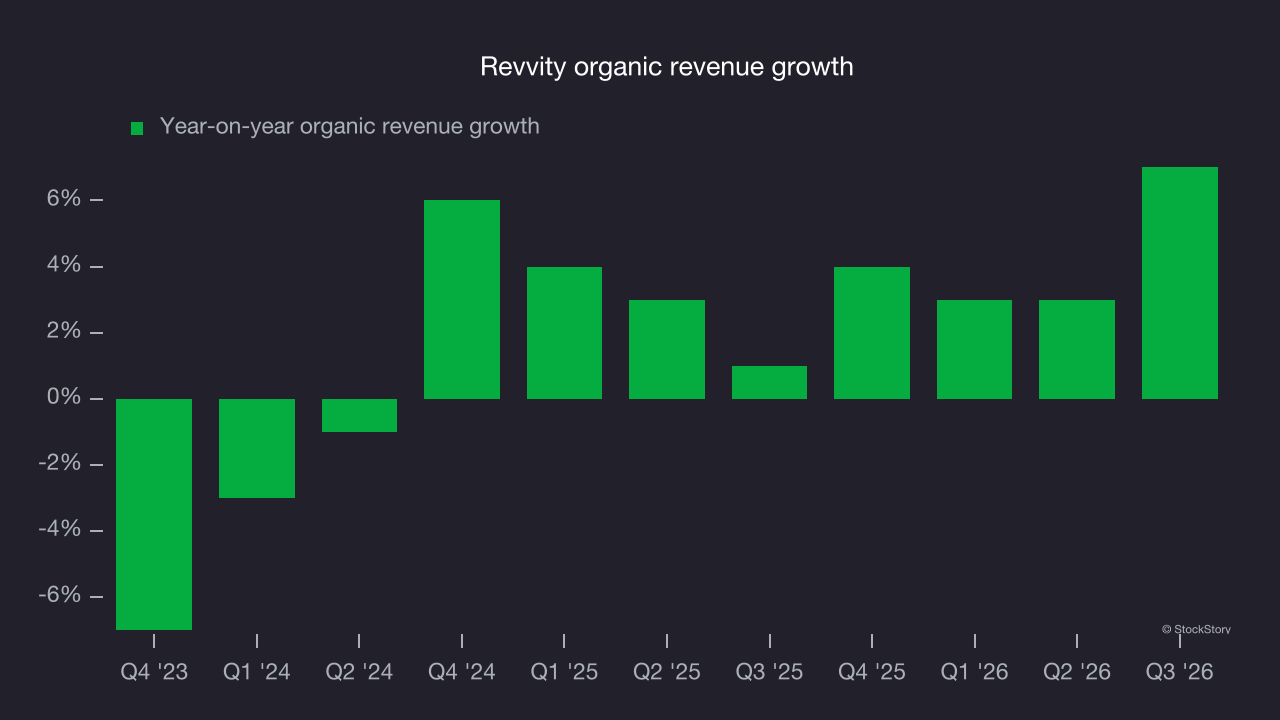
This quarter, Revvity reported year-on-year revenue growth of 10.3%, and its $728.9 million of revenue exceeded Wall Street’s consensus estimates by 4.4%.
Looking ahead, sell-side analysts expect revenue to grow 4.1% over the next 12 months, according to S&P. Although this projection indicates its newer products and services will fuel better top-line performance, it is still below average for the sector.
Adjusted operating margin
Adjusted operating margin is a key measure of profitability. Think of it as net income (the bottom line) excluding the impact of non-recurring expenses, taxes and interest on debt – metrics less connected to business fundamentals.
Revvity has been an efficient company over the last five years. It was one of the more profitable businesses in the healthcare sector, with an average adjusted operating margin of 29.4%.
Looking at the trend in its profitability, Revvity’s adjusted operating margin decreased by 11 percentage points over the last five years. The company’s two-year trajectory also shows it failed to return to peak profitability as its margin fell by 2.9 percentage points. This poor performance shows its expenses were rising and it couldn’t pass those costs on to its customers.
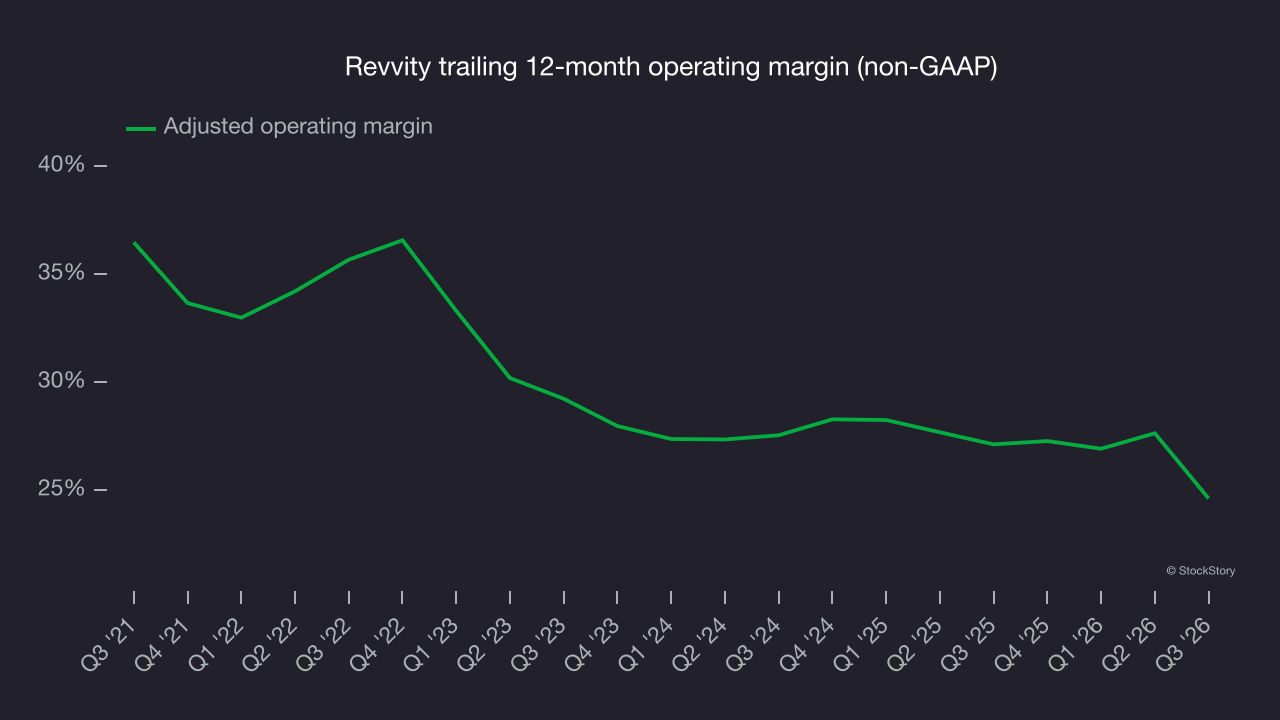
In Q3, Revvity generated an adjusted operating margin of 14.4%, down 11.6 percentage points year on year. This contraction shows it was less efficient because its expenses grew faster than its revenue.
Earnings per share
We track the long-term change in earnings per share (EPS) for the same reason as long-term revenue growth. Compared to revenue, however, EPS highlights whether a company’s growth is profitable.
Revvity’s EPS declined by 15.4% annually over the last five years, more than its revenue. This indicates the company struggled because its fixed cost base made it difficult to adjust to shrinking demand.
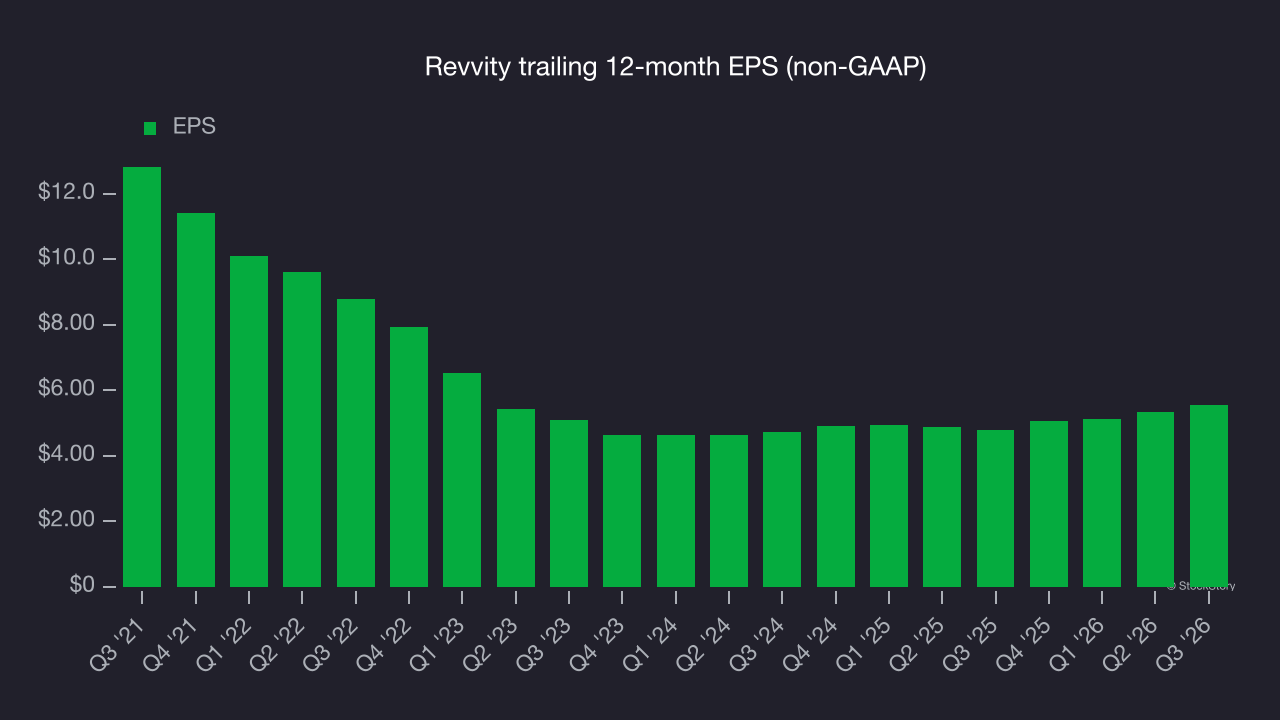
Diving into the nuances of Revvity’s earnings can give us a better understanding of its performance. As we mentioned earlier, Revvity’s adjusted operating margin declined by 11 percentage points over the last five years. This was the most relevant factor (aside from the revenue impact) behind its lower earnings; interest expenses and taxes can also affect EPS but don’t tell us as much about a company’s fundamentals.
In Q3, Revvity reported adjusted EPS of $1.37, up from $1.18 in the same quarter last year. This result beat analysts’ consensus estimates by 5.7%. Over the next 12 months, Wall Street expects Revvity’s full-year EPS to grow 4.1% from $5.54 to $5.77, according to S&P.
Key takeaways from Revvity’s Q3 results
Revvity turned in a decent Q3, with revenue beating analysts’ consensus estimates and organic revenue also ahead of Wall Street’s expectations. Shares surged 5% to $159.29 immediately after the results.
Revvity had a solid quarterly earnings result, but is the stock a good investment? The latest quarter matters, but longer-term business quality and valuation matter more when deciding whether to invest. For more on those factors, read our full research report here (it’s free).