E-commerce platform Shopify (NASDAQ: SHOP) met Wall Street’s revenue expectations in Q3 2026, with revenue up 31.6% year on year to $3.74 billion.
For more on Shopify, read our free full research report.
Shopify (SHOP) Q3 2026 highlights:
- Revenue $3.74 billion vs S&P analysts’ consensus estimates of $3.75 billion (31.6% year-on-year growth, in line)
- Operating margin 15.2%, up from 12.1% in the same quarter last year
- Free cash flow margin 21.8%, up from 18.3% in the previous quarter
- Market capitalization $201 billion
Revenue growth
Examining a company’s long-term performance can provide clues about its quality. Any business can experience short-term success, but top-performing ones enjoy sustained growth for years. Shopify’s 27.5% annualized revenue growth over the last five years was impressive. Its growth surpassed the average software company and shows its offerings resonate with customers.
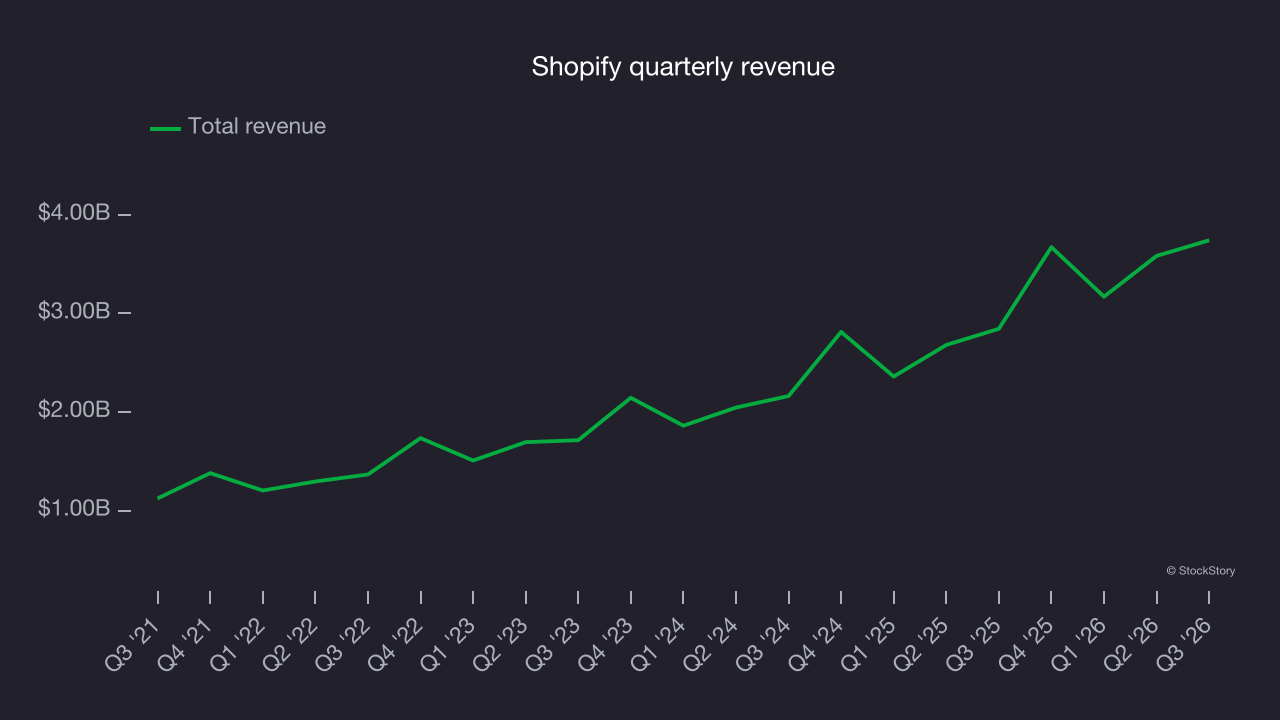
Long-term growth is the most important, but within software, a half-decade historical view may miss new innovations or demand cycles. Shopify’s annualized revenue growth of 31.3% over the last two years is above its five-year trend, suggesting its demand was strong and recently accelerated. 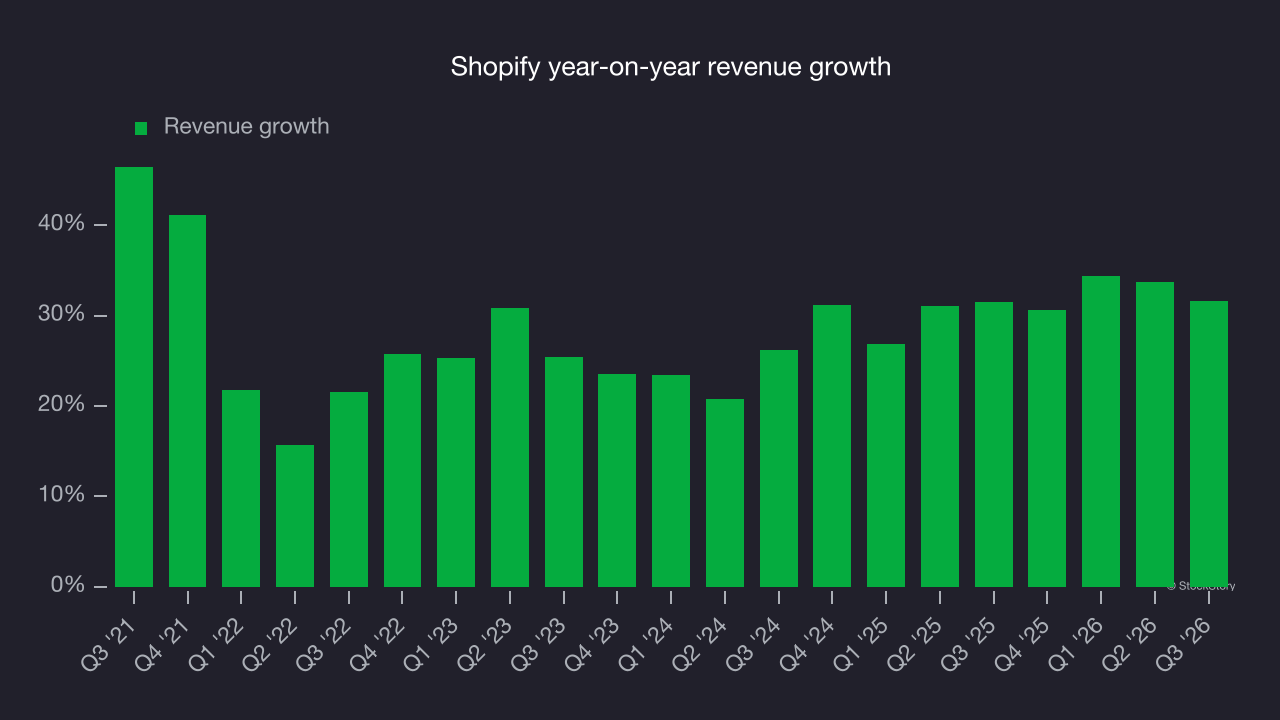
This quarter, Shopify’s year-on-year revenue growth of 31.6% was strong, and its $3.74 billion in revenue was in line with Wall Street’s consensus estimates.
Looking ahead, sell-side analysts expect revenue to grow 27.2% over the next 12 months, according to S&P, a deceleration versus the last two years. Still, this projection is impressive given its scale and indicates the market is forecasting success for its products and services.
Gross merchandise value
Gross merchandise value, or GMV, is the total value of goods and services sold on Shopify’s platform. This is the number from which the company will ultimately collect fees (usually called a take rate), and the higher it is, the higher the switching costs, enabling Shopify to monetize in additional ways (like subscription revenue for more services).
Shopify’s GMV reached $119.1 billion in Q3, and over the last four quarters, its growth was strong as it averaged 31.7% year-on-year increases. This performance aligned with its total revenue growth and shows the company is capturing significant demand. It also indicates that customers are highly active and engaged, giving Shopify more opportunities to upsell adjacent products such as loans and inventory management software driven by artificial intelligence that add to the bottom line. 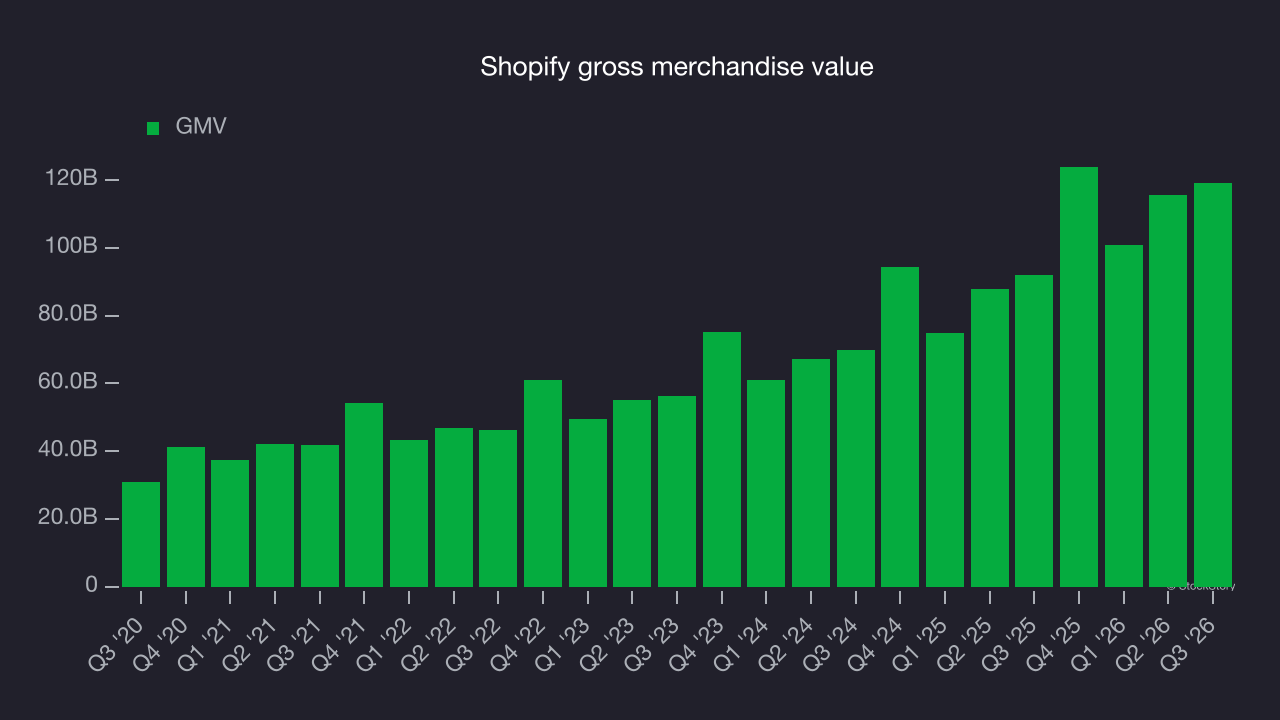
Customer acquisition efficiency
The customer acquisition cost, or CAC, payback period measures the months a company needs to recoup the money spent on acquiring a new customer. This metric helps assess how quickly a business can break even on its sales and marketing investments.
Shopify is highly efficient at acquiring new customers, and its CAC payback period was 6.3 months this quarter. The company’s rapid recovery of its customer acquisition costs indicates it has a highly differentiated product offering and a strong brand reputation due to its scale. These dynamics give Shopify more resources to pursue new product initiatives while maintaining the flexibility to increase its sales and marketing investments. 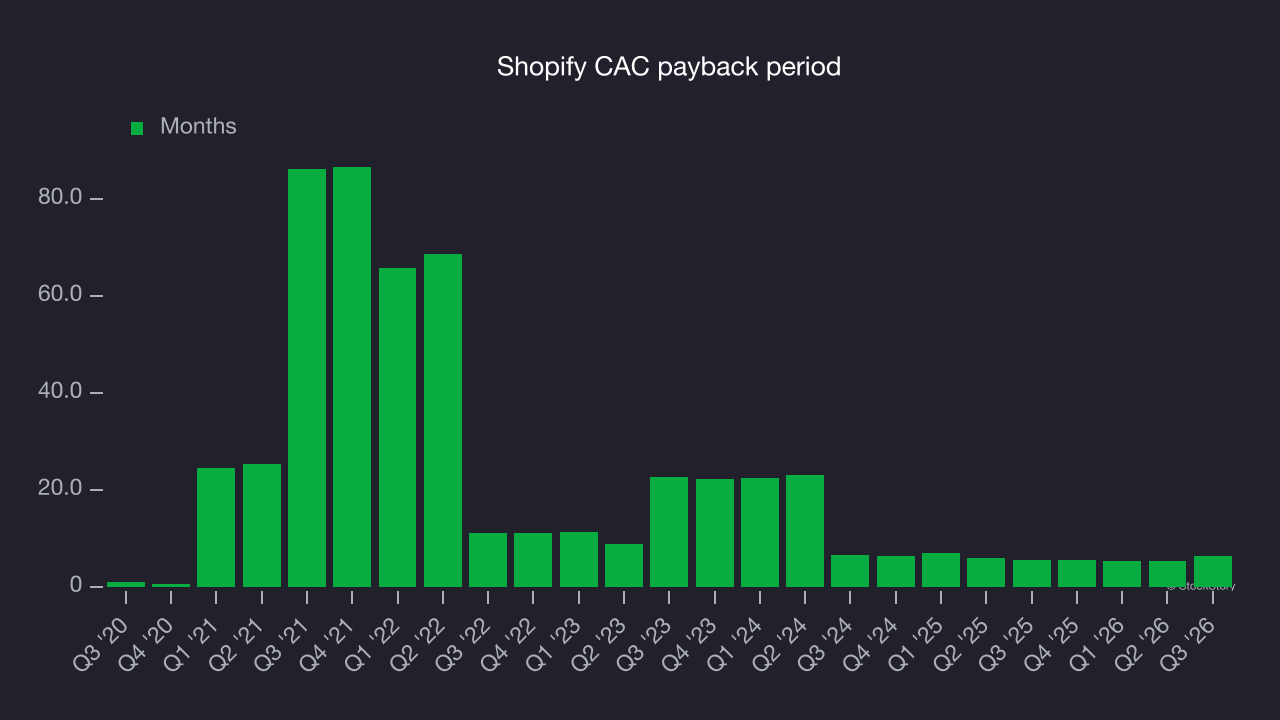
Key takeaways from Shopify’s Q3 results
Shopify’s quarter offered few positives: gross merchandise volume slightly missed expectations and revenue was in line with Wall Street’s consensus estimates. The results could have been better, and shares plunged 15.1% to $132.50 immediately after the release.
Shopify’s latest earnings report disappointed. One quarter doesn’t define a company’s quality, so it’s worth considering whether the stock is a buy at the current price. The latest quarter matters, but not as much as longer-term business quality and valuation when deciding whether to invest in this stock. For more on that, read our full research report here (it’s free).