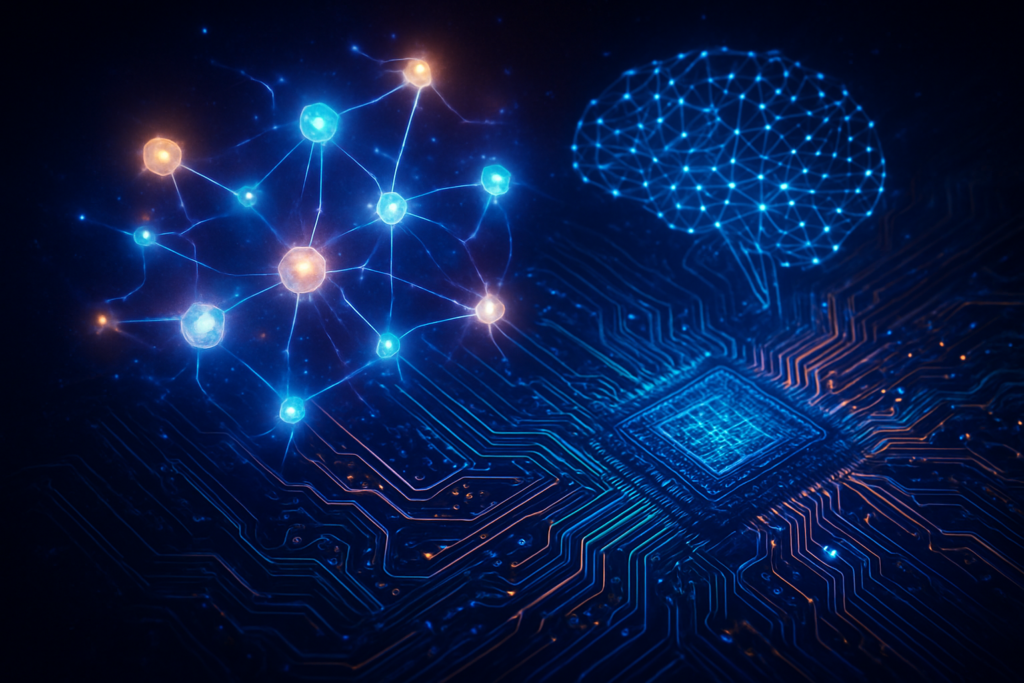
The world of computing stands on the precipice of a monumental shift, driven by the enigmatic power of quantum mechanics. Quantum computing, once a theoretical marvel, is rapidly emerging as a transformative force set to fundamentally redefine semiconductor design, capabilities, and even the very materials that constitute our chips. This isn't merely an incremental upgrade; it's a paradigm shift promising to unlock computational powers previously unimaginable for classical machines, accelerating innovation across both quantum and conventional semiconductor technologies.
At its core, quantum computing harnesses phenomena like superposition and entanglement, allowing qubits to exist in multiple states simultaneously and be interconnected in ways impossible for classical bits. This capability enables quantum computers to tackle problems intractable for even the most powerful supercomputers, ranging from complex material simulations to intricate optimization challenges critical for advanced chip layouts. The immediate significance for the tech industry is profound, as this nascent field acts as a powerful catalyst, compelling leading companies and startups alike to innovate at an unprecedented pace, promising a future where chips are vastly more powerful, efficient, and capable of solving humanity's most complex challenges.
The Quantum Leap in Semiconductor Engineering
The technical ramifications of quantum computing on chip development are both deep and broad, promising to revolutionize every facet from conceptual design to physical fabrication. Quantum-powered AI, for instance, is already proving its mettle in accelerating the development of advanced semiconductor architectures and optimizing complex manufacturing processes. Australian researchers have validated quantum machine learning models that outperform classical AI in simulating critical fabrication steps like ohmic contact resistance, leading to potential increases in yield and reductions in costs for both classical and future quantum chips.
This differs significantly from previous approaches by moving beyond the classical binary limitations, enabling computations at speeds orders of magnitude faster. Quantum systems facilitate the design of innovative structures such as 3D chips and neuromorphic processors, which mimic the human brain's architecture, leading to faster, more energy-efficient chips capable of supporting cutting-edge technologies like advanced AI and the burgeoning Internet of Things (IoT). Moreover, quantum simulators can model material behavior at an atomic level, leading to the discovery of new materials with superior properties for chip fabrication, such as advanced silicon-based qubits with improved stability, strained germanium for cooler and faster chips, and even superconducting germanium-gallium for integrated quantum-classical circuits. Initial reactions from the AI research community and industry experts highlight a mix of excitement and cautious optimism, recognizing the immense potential while acknowledging the significant engineering and scientific hurdles that remain, particularly in achieving robust quantum error correction and scalability.
Corporate Giants and Nimble Startups in the Quantum Race
The race to harness quantum computing's influence on chip development has galvanized tech giants and a vibrant ecosystem of startups, each vying for a strategic advantage in this nascent but potentially trillion-dollar market. Companies like IBM (NYSE: IBM), a long-standing leader, continues to advance its superconducting qubit technology, with processors like Eagle (127 qubits) and the forthcoming Condor (1,121 qubits), while investing billions in R&D to bolster manufacturing of quantum and mainframe computers. Google, having famously claimed "quantum supremacy" with its Sycamore processor, pushes boundaries with its Willow chip, which recently demonstrated significant breakthroughs in quantum error correction by halving error rates and achieving a verifiable "quantum advantage" by running an algorithm 13,000 times faster than the world's fastest supercomputer.
Intel (NASDAQ: INTC), leveraging its vast semiconductor manufacturing expertise, focuses on silicon spin qubits, aiming for scalability through existing fabrication infrastructure, exemplified by its 12-qubit Tunnel Falls chip. More recently, Amazon (NASDAQ: AMZN) officially entered the quantum chip race in early 2025 with AWS Ocelot, developed in partnership with Caltech, complementing its AWS Braket cloud quantum service. Microsoft (NASDAQ: MSFT), through its Azure Quantum platform, provides cloud access to quantum hardware from partners like IonQ (NYSE: IONQ) and Rigetti Computing (NASDAQ: RGTI), while also developing its own quantum programming languages like Q#. Publicly traded quantum specialists like IonQ (trapped ions) and Rigetti Computing (superconducting qubits) are at the forefront of hardware development, offering their systems via cloud platforms. D-Wave Quantum (NYSE: QBTS) continues to lead in quantum annealing.
The competitive landscape is further enriched by numerous startups specializing in various qubit technologies—from superconducting (IQM, QuantWare) and photonic (Xanadu, Quandela) to neutral atoms (Atom Computing, PASQAL) and silicon quantum dots (Diraq). These companies are not only developing new hardware but also crucial software, error correction tools (Q-Ctrl, Nord Quantique), and specialized applications. This intense competition, coupled with strategic partnerships and significant government funding, creates a dynamic environment. The potential disruption to existing products and services is immense: quantum computing could render some traditional semiconductor designs obsolete for certain tasks, accelerate AI development far beyond current classical limits, revolutionize drug discovery, and even necessitate a complete overhaul of current cryptographic standards. Companies that can effectively integrate quantum capabilities into their offerings or develop quantum-resistant solutions will secure significant market positioning and strategic advantages in the coming decades.
Broader Implications and Societal Crossroads
Quantum computing's influence on chip development extends far beyond the confines of laboratories and corporate campuses, weaving itself into the broader AI landscape and promising profound societal shifts. It represents not merely an incremental technological advancement but a fundamental paradigm shift, akin to the invention of the transistor or the internet. Unlike previous AI milestones that optimized algorithms on classical hardware, quantum computing offers a fundamentally different approach, with the potential for exponential speedup in specific tasks, such as Shor's algorithm for factoring large numbers, marks a qualitative leap in computational power.
The societal impacts are multifaceted. Economically, quantum computing is expected to transform entire industries, creating new career paths in quantum algorithm design, post-quantum cryptography, and quantum-AI integration. Industries like pharmaceuticals, finance, logistics, and materials science are poised for revolutionary breakthroughs through optimized processes and accelerated discovery. Scientifically, quantum computers promise to help humanity address grand challenges such as climate change, food insecurity, and disease through advanced simulations and material design. However, this transformative power also brings significant concerns.
Security risks are paramount, as quantum computers will be capable of breaking many current encryption methods (RSA, ECC), threatening banking, personal data, and government security. The urgent need for a transition to Post-Quantum Cryptography (PQC) is an immediate concern, with adversaries potentially engaging in "harvest now, decrypt later" attacks. Ethical concerns include the potential for quantum AI systems to amplify existing societal biases if trained on biased data, leading to discriminatory outcomes. Data privacy is also a major worry, as immense quantum processing capabilities could make personal information more vulnerable. Economically, the high cost and technical expertise required for quantum computing could widen the digital divide, concentrating power in the hands of a few governments or large corporations, potentially leading to monopolies and increased inequality.
The Quantum Horizon: Near-Term Progress and Long-Term Visions
The journey of quantum computing's influence on chip development is marked by a clear roadmap of near-term progress and ambitious long-term visions. In the immediate future (the next few years), the focus remains on advancing quantum error correction (QEC), with significant strides being made to reduce the overhead required for creating stable logical qubits. Companies like IBM are targeting increasingly higher qubit counts, aiming for a quantum-centric supercomputer with over 4,000 qubits by 2025, while Rigetti plans for systems exceeding 100 qubits by the end of the year. The synergy between quantum computing and AI is also expected to deepen, accelerating advancements in optimization, drug discovery, and climate modeling. Experts predict that 2025 will be a pivotal year for QEC, with scalable error-correcting codes beginning to reduce the overhead for fault-tolerant quantum computing.
Looking further ahead (beyond 5-10 years), the ultimate goal is the realization of fault-tolerant quantum computers, where robust error correction allows for reliable, large-scale computations. IBM aims to deliver such a system by 2029. This era will likely see the blurring of lines between classical and quantum computing, with hybrid architectures becoming commonplace, leading to entirely new classes of computing devices. Potential applications and use cases on the horizon are vast, ranging from highly optimized chip designs and advanced material discovery to revolutionizing semiconductor manufacturing processes, improving supply chain management, and embedding quantum-resistant cryptography directly into hardware. Challenges remain formidable, including qubit fragility and decoherence, the immense overhead of error correction, scalability issues, hardware complexity and cost, and the ongoing talent gap. However, experts like Intel's CEO Pat Gelsinger believe that quantum computing, alongside classical and AI computing, will define the next several decades of technological growth, with quantum systems potentially displacing dominant chip architectures by the end of the decade. The period between 2030 and 2040 is projected for achieving broad quantum advantage, followed by full-scale fault tolerance after 2040, promising a transformative impact across numerous sectors.
The Quantum Age Dawns: A Transformative Assessment
The ongoing advancements in quantum computing's influence on chip development represent a pivotal moment in the history of technology. We are witnessing the dawn of a new computational era that promises to transcend the limitations of classical silicon, ushering in capabilities that will reshape industries, accelerate scientific discovery, and redefine our understanding of what is computationally possible. The key takeaway is that quantum computing is not a distant dream; it is actively, and increasingly, shaping the future of chip design and manufacturing, even for classical systems.
This development's significance in AI history is profound, marking a qualitative leap beyond previous milestones. While deep learning brought remarkable advancements by optimizing algorithms on classical hardware, quantum computing offers a fundamentally different approach, with the potential for exponential speedups in solving problems currently intractable for even the most powerful supercomputers. The long-term impact will be transformative, leading to breakthroughs in fields from personalized medicine and materials science to climate modeling and advanced cybersecurity. However, the journey is not without its challenges, particularly in achieving stable, scalable, and fault-tolerant quantum systems, and addressing the ethical, security, and economic concerns that arise with such powerful technology.
In the coming weeks and months, watch for continued breakthroughs in quantum error correction, increasing qubit counts, and the emergence of more sophisticated hybrid quantum-classical architectures. Keep an eye on the strategic investments by tech giants and the innovative solutions from a burgeoning ecosystem of startups. The convergence of quantum computing and AI, particularly in the realm of chip development, promises to be one of the most exciting and impactful narratives of the 21st century.
This content is intended for informational purposes only and represents analysis of current AI developments.
TokenRing AI delivers enterprise-grade solutions for multi-agent AI workflow orchestration, AI-powered development tools, and seamless remote collaboration platforms.
For more information, visit https://www.tokenring.ai/.