
Introduction
Many business owners hope next month will be better and keep going when things get tough. But there are warning signs you should not ignore. If your business is in financial distress, it is smart to talk to company liquidators early. Doing this can keep you, your team, and your options safe. It is important to know when pressure turns into something more serious.
Understanding the Role of Company Liquidators in Australia

Company liquidators handle the formal process when a legal entity cannot pay its bills. They look at assets, go over debts, talk with creditors, and finish the company’s affairs in a way that follows the law.
If there are warning signs, directors start by getting professional advice. They look at whether voluntary administration, restructuring, or liquidation is the best option. When a liquidator is appointed, they take control of the company and move forward with the next steps.
Who Are Company Liquidators and What Do They Do?
Company liquidators are registered insolvency practitioners who step in when a company can no longer operate normally. Their role goes beyond closing the business—they protect the process, assess debts, and manage affairs properly.
Once appointed, liquidators take control of the company, review financial records, identify assets, and handle creditor claims in order of priority.
Directors should consider appointing liquidators if cash flow problems persist, creditors demand payment, or there’s a risk of insolvent trading. Acting early can provide a clearer and safer path forward.
Key Differences Between Voluntary and Compulsory Liquidation
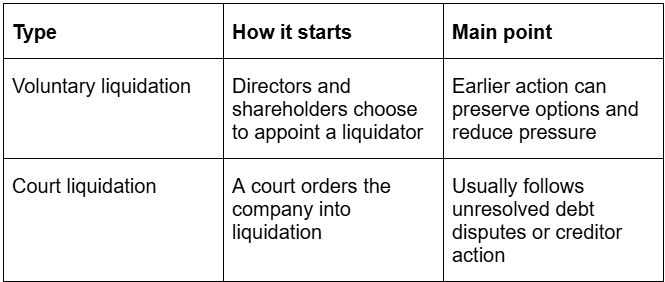
Voluntary liquidation starts with the company taking action itself. In many cases, this is a more controlled formal process because directors and shareholders of the company act before the situation gets pushed into court.
Court liquidation, also called court liquidation, happens when the court orders the company to be wound up. This often follows legal proceedings, unpaid debts, or a statutory demand that has not been resolved.
Early Red Flags: Common Signs a Company May Need Liquidators
The most common early warning signs are mostly about real issues, not big shocks. You might see tight cash flow or unpaid tax debt. There may be pressure from creditors. Sometimes, the bank account never seems to bounce back. These are often clear signs of insolvency.
In simple terms, if the business cannot pay the debts on time, it is a big red flag. The next parts show the most common problems that directors need to watch.
Persistent Cash Flow Problems and Mounting Unpaid Debts
Persistent cash flow problems are strong warning signs. If you keep moving payments, wait for one invoice to pay another, or use quick fixes often, the business may be under real pressure.
For example, the small business hits its overdraft limit each month and still does not pay off suppliers. That means debts are getting bigger, not just a short dip.
Wages, rent, or suppliers are not paid on time more than once.
The overdraft limit is always full or close to full.
Creditor calls and formal warning letters keep going up.
Missed PAYG, Superannuation, or ATO Obligations
Missing PAYG, superannuation, or other Australian Taxation Office payments is a big warning sign. These financial obligations are not small admin tasks. They often show that the company is picking which bills to pay because money is tight.
Directors need to act fast when this starts. A good first step is to get advice, check the financial position, and stop hoping the issue will go away by itself.
PAYG lodgements are late or not paid.
Superannuation is not paid for eligible employees.
ATO debt gets bigger, or a director penalty notice shows up.
How Directors Can Recognise Insolvency Warning Signs
Directors shouldn’t focus only on daily pressures—they must review the business’s overall financial health. This includes checking the balance sheet, current debts, and ensuring all debts are paid on time; sales alone aren’t enough.
Early signs of insolvency often appear in financial numbers before problems surface. To spot these signs, use simple ratios or conduct a basic stress test on your business plan.
Using Financial Ratios and Stress Tests as an Early Indicator
A simple checklist helps directors spot financial distress early. Start by reviewing working capital, debt deadlines, and whether cash inflows cover regular expenses. Ongoing issues should not be ignored.
Use stress tests: Ask what happens if a major client leaves or payments are delayed by 30 days. If the business can’t handle it, review the plan.
Check working capital weekly.
Compare recent financial ratios.
Test if the business can survive revenue drops.
Practical Example: Spotting Trouble Before It Escalates
Here’s a revised, concise version:
A director reviews monthly financial statements and sees three months of losses. Supplier terms have worsened, and staff superannuation is overdue.
Initially, the director considers a new contract, but the business plan needs funds that haven't arrived, and current debts remain unpaid.
This is the time to act—not wait. Directors should seek professional advice within a few days and consider safe options like restructuring or liquidation.
Why Ignoring Warning Signs Can Be a Costly Mistake
Not listening to warning signs can make a tough time much worse and might even lead to legal trouble. If a company goes on trading when it cannot pay its debts, the directors could get into insolvent trading problems. They might even have personal liability.
This is important because legal requirements do not go away just because a business is facing tough times. Waiting too long can also mean that creditors get less money, and it could make things worse for employees as well.
Legal Risks for Directors Who Delay Action
Directors face serious legal risks if they ignore clear signs of insolvency. A major issue is insolvent trading—when a company continues operating but cannot pay its debts.
Tax problems can also become personal. Unpaid tax may trigger a director penalty notice, putting pressure on directors as ATO debt grows.
Directors may face personal liability in certain situations.
The risk of receiving a director penalty notice increases.
In severe cases, breaking duties can lead to criminal charges.
Real-Life Consequences of Late Liquidation Appointments
Late liquidation affects nearly everyone connected to the business. If started too late, few assets may remain, leaving unsecured creditors with little or nothing.
Staff are also impacted, as eligible employees might face delays in receiving their entitlements. While the Fair Entitlements Guarantee can help, waiting is often unavoidable.
For directors, delaying increases stress and scrutiny while reducing available options. Acting early offers a better chance for a positive outcome, even if liquidation is still necessary.
Conclusion
Directors should recognise warning signs that indicate when to call company liquidators. Persistent cash flow problems, missed obligations, and neglected finances can harm both the company and its directors. Ignoring these red flags risks legal trouble and loss of assets. Act early—seek expert help at the first sign of trouble to address issues before they escalate.
Frequently Asked Questions
How quickly should directors act after detecting insolvency warning signs?
Directors should take steps within a few business days when they spot early warning signs of insolvency. Quick action helps to keep more options open. It can also lower the chance of legal action and give time to see if restructuring, voluntary administration, or liquidation is best.
Can delaying liquidation make directors personally liable?
Yes, putting off liquidation can raise the risk of personal liability. This happens most when insolvent trading goes on. There can also be a director penalty notice if there are tax issues. Directors need to get advice quickly. This will help them know their duties under the Corporations Act and other responsibilities that come with the role.
Is there a way to reverse course if warning signs improve?
Sometimes, yes. If the money situation gets better and the business plan works again, you may find safer ways than liquidation. The good news is that early advice can help you look at safe harbour or fix things before ongoing losses get too tough to handle.