LONDON, July 20, 2026 (GLOBE NEWSWIRE) -- New data from studies presented at the 2026 Alzheimer’s Association International Conference (AAIC) in London widened the gulf between science-backed brain plasticity exercises and vague advice to "stay mentally active" as we age. The studies included: a systematic review showing brain training had the largest effect on cognition of various lifestyle interventions; a multimodal study showing brain training combined with other structured lifestyle interventions significantly and substantially improved cognition in older adults; a study which validated online assessments derived from brain exercises making widespread cognitive monitoring more feasible; and a study showing brain training significantly improved a measure of amyloid plaque, indicative of Alzheimer’s disease. Each new finding used technology from the BrainHQ app offered by Posit Science.
“What an extraordinary week to close out an unprecedented year of breakthrough results” noted Dr. Henry Mahncke, a leading brain plasticity researcher and CEO of Posit Science. “Nine months ago, the INHANCE neuroimaging study made history as BrainHQ exercises became the first intervention ever shown to cause persistent upregulation of acetylcholine — the “pay attention” brain chemical known to decline with age and plummet with dementia. Then, in February, the 2800-person ACTIVE Study, in its 20th year, showed a 25 percent lower incidence of Alzheimer’s from very little training — less than 24 hours in total, spread over the first 36 months of the study. And now… all this.”
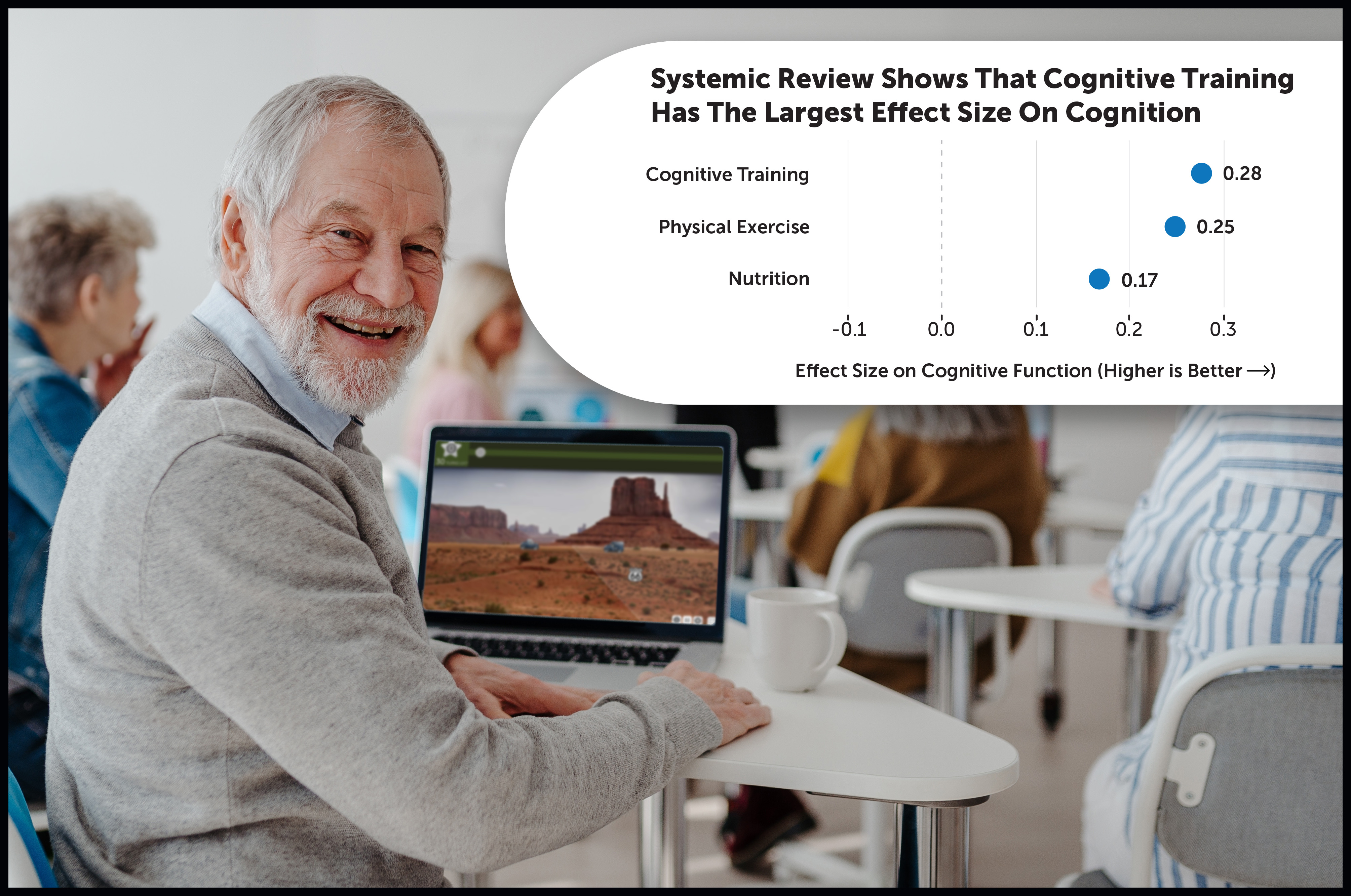
A question that often arises with studies using multiple lifestyle interventions is what the value of each component is. At AAIC, researchers from The University of Texas at Dallas, The University of Iowa, and Posit Science, presented a new meta-analysis, looking at cognitive training, physical exercise, and nutrition. They built an open-source database of randomized controlled trials in those three areas, accessible to future researchers as more studies are completed. All three interventions showed statistically significant benefits, with cognitive training having the most evidence and showing the largest numerical benefit.
The result is consistent with findings reported in the British medical Journal Lancet in 2025, which found: “When compared with active control, only physical exercise and cognitive training combined, and cognitive training alone, revealed significant improvement of global cognition.”
The LATAM FINGERS Study shared its first set of findings from the 11-nation South American part of the Worldwide FINGER Studies — evaluating the impact of a combination of lifestyle interventions on cognitive abilities of older adults. As with several other FINGER studies, BrainHQ was selected for the brain exercise component. LATAM FINGERS reported a significant and substantial (55 percent) improvement in a measure of global cognition. The results were particularly impressive in people with lower initial cognitive scores and less formal education.
A related study tested a 10-minute online BrainHQ assessment of brain speed, memory, and executive function to evaluate how it compared to the results shown from a traditional in-person, clinician-administered battery of assessments that can take as long as an hour to administer. The researchers reported a significant correlation between the results from the clinician-administered battery and the online assessment. While clinician-administered assessment remains the gold standard for evaluating patient diagnoses, the results suggest feasibility or monitoring individual and community cognitive status, especially where cost makes traditional assessments problematic.
The ENACT Study, also presented at AAIC, randomized participants to 20 hours of training on either BrainHQ or computer games. Researchers tested them before and after training for levels of a blood biomarker of beta amyloid, an indicator of Alzheimer’s disease, and reported a significant improvement following BrainHQ training, suggesting that this form of cognitive training may influence biological pathways involved in neurodegeneration.
“There’s always interesting news from AAIC,” Dr. Mahncke observed. “But this year, we learned more than ever before about ways in which plasticity-based brain training can help in our battle to change the course of this horrible disease — which is a part of my family history and so many other families. The new data suggests it’s time to replace the vague advice to ‘stay mentally active’ with advice to engage in specific activities to improve brain health and performance that have been proven in studies — often against control activities that keep people mentally active but deliver no measurable benefit.””
BrainHQ has shown benefits in more than 300 studies. Such benefits include gains in cognition (attention, speed, memory, decision-making), in quality of life (depressive symptoms, confidence and control, health-related quality of life) and in real-world activities (health outcomes, balance, driving, workplace activities). BrainHQ is used by leading health plans, by leading medical centers, clinics, and communities, and by elite athletes, the military, and other organizations focused on peak performance. Consumers can try a BrainHQ exercise for free daily at brainhq.com.
A photo accompanying this announcement is available at https://www.globenewswire.com/NewsRoom/AttachmentNg/2d8446ad-a12d-4fe9-80b7-d84535ec6fa8

Contact: media@brainhq.com