Government and sustainable technology solutions company KBR (NYSE: KBR) fell short of the market’s revenue expectations in Q3 2026, but revenue rose 5% year on year to $2.03 billion. On the other hand, the company’s full-year revenue guidance of $8.13 billion at the midpoint came in 1% above analysts’ consensus estimates. Its non-GAAP profit of $1.12 per share was 11.7% above analysts’ consensus estimates.
For more on KBR, read our full research report, available free.
KBR (KBR) Q3 2026 highlights:
- Revenue $2.03 billion vs S&P analysts’ consensus estimates of $2.06 billion (5% year-on-year growth, 1.7% miss)
- Adjusted EPS $1.12 vs S&P analysts’ consensus estimates of $1.00 (11.7% beat)
- Adjusted EBITDA $268 million vs analysts’ consensus estimates of $247.1 million (13.2% margin, 8.4% beat)
- Revenue guidance The company reconfirmed its revenue guidance for the full year of $8.13 billion at the midpoint
- Adjusted EPS guidance Management reiterated its full-year adjusted EPS guidance of $4.05 at the midpoint
- EBITDA guidance $1.01 billion at the midpoint for the full year, in line with analysts’ consensus estimates
- Operating margin 9.2%, in line with the same quarter last year
- Free cash flow margin 8.0%, down from 9.8% in the same quarter last year
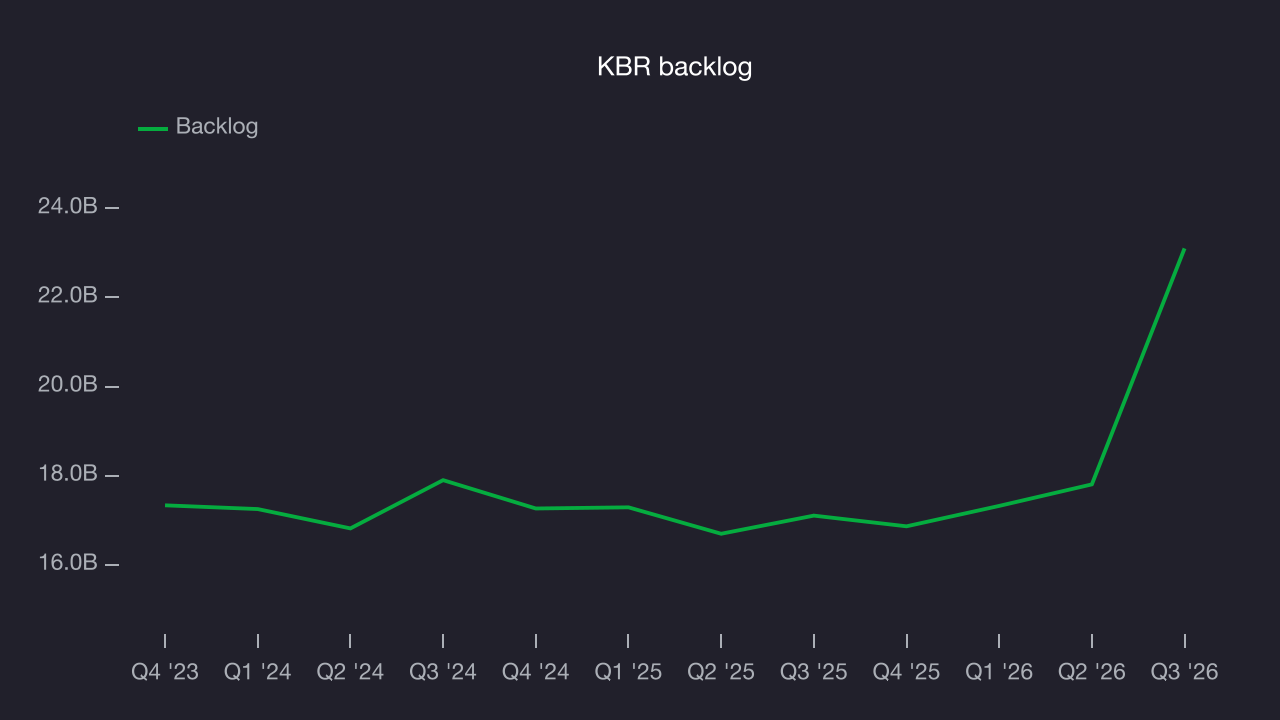
- Backlog $23.1 billion at quarter end, up 35.1% year on year
- Market capitalization $5.06 billion
“We delivered a strong third quarter, with profitable growth and solid execution across both businesses reinforcing our confidence in the full-year outlook,” said Stuart Bradie, President and Chief Executive Officer. “We also achieved important separation milestones during the quarter, including publication of the Form 10 and the successful implementation of key standalone systems and infrastructure. With leadership teams in place, strong customer demand across both businesses and Investor Days approaching, KBR and Trinzic are well positioned to launch as independent companies in January.”
Revenue growth
Reviewing a company’s long-term revenue performance reveals insights into its quality. Any business can report a good quarter or two, but many enduring ones grow for years. KBR’s revenue grew at a sluggish 4.4% annualized rate over the last five years, falling short of the industrials sector standard.
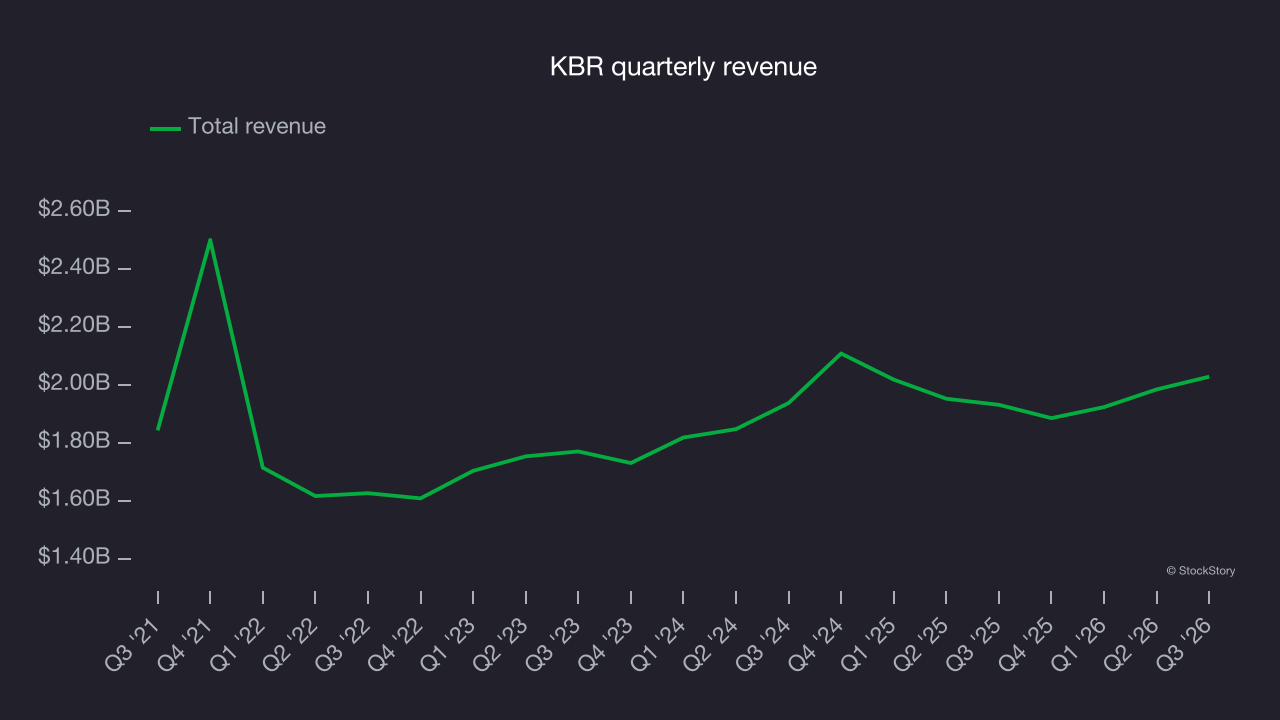
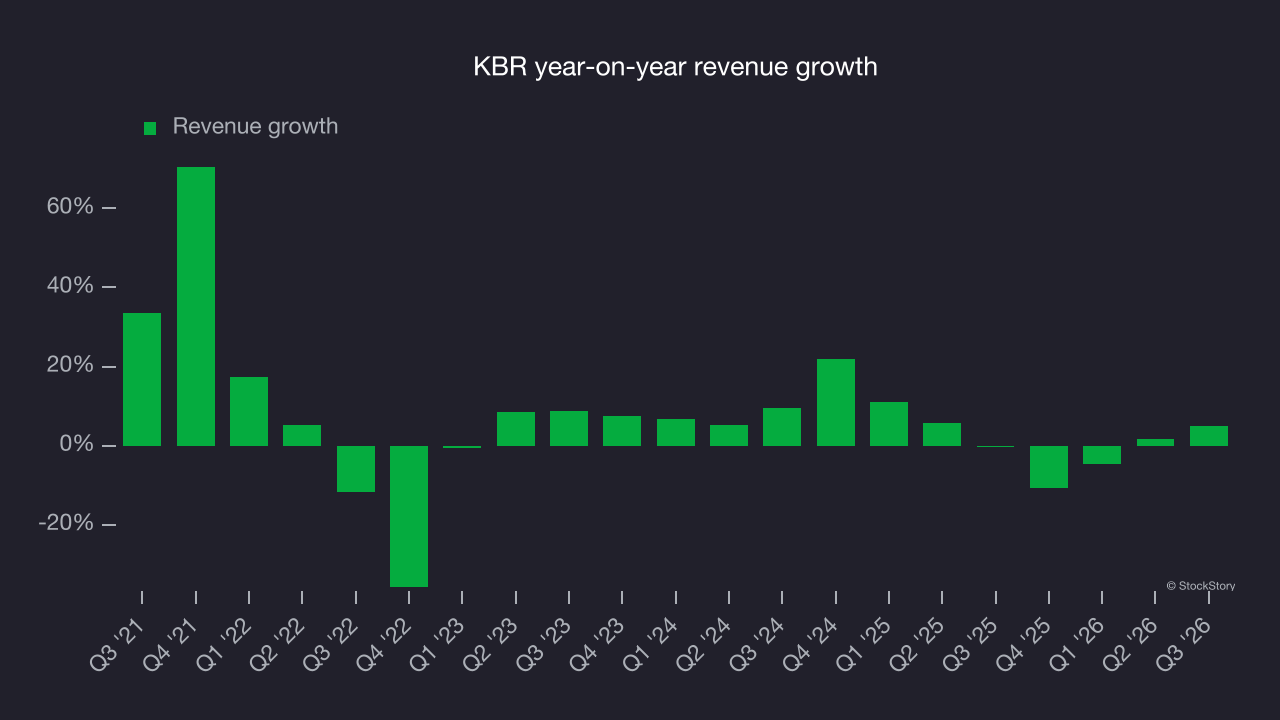
This quarter, KBR’s revenue grew by 5% year on year to $2.03 billion, missing Wall Street’s consensus estimates.
Looking ahead, sell-side analysts expect revenue to grow 7.6% over the next 12 months, according to S&P, an improvement versus the last two years. This projection is above the sector average and indicates its newer products and services will spur better top-line performance.
Operating margin
Operating margin is a key measure of profitability. Think of it as net income, the bottom line, excluding the impact of taxes and interest on debt, which are less connected to business fundamentals.
KBR was profitable over the last five years but held back by its large cost base. Its average operating margin of 7.7% was weak for an industrials business.
On the positive side, KBR’s operating margin rose by 4.6 percentage points over the last five years, as its revenue growth provided operating leverage.
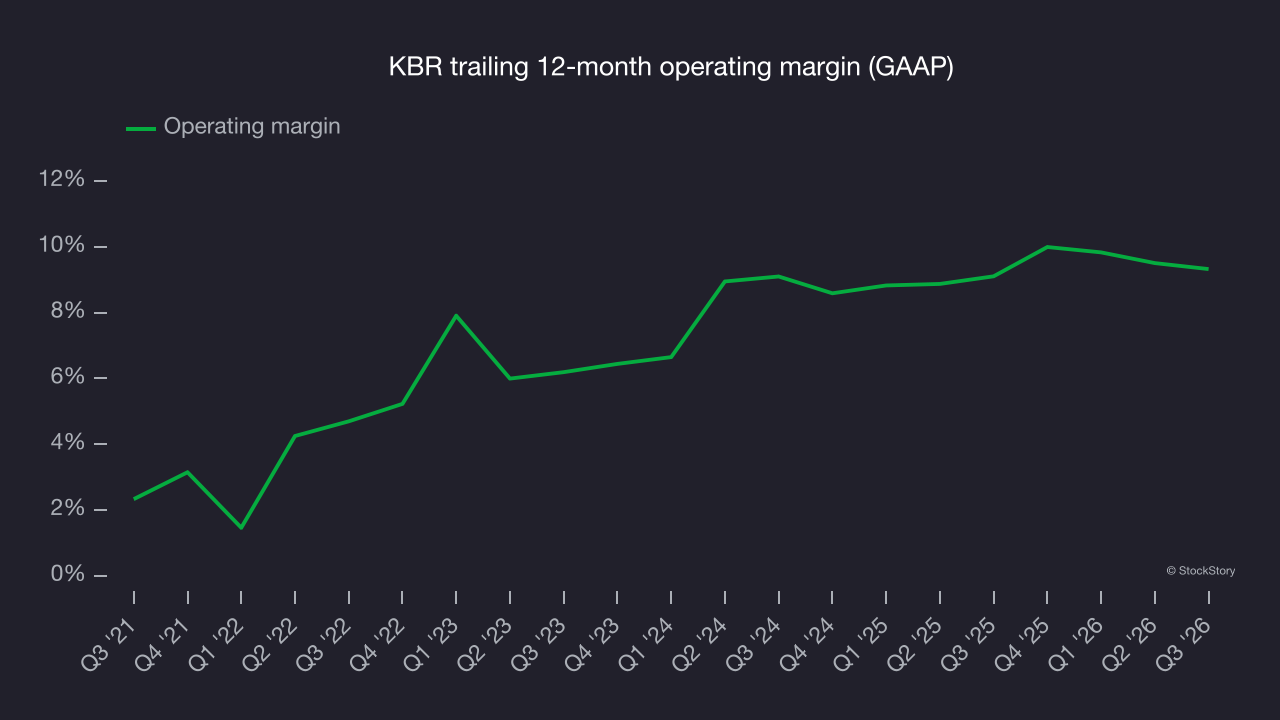
This quarter, KBR generated an operating margin of 9.2%, in line with the same quarter last year. This indicates the company’s overall cost structure has been relatively stable.
Earnings per share
We track the long-term change in earnings per share (EPS) for the same reason as long-term revenue growth. Compared to revenue, however, EPS highlights whether a company’s growth is profitable.
KBR’s EPS grew at a 12.9% compounded annual growth rate over the last five years, higher than its 4.4% annualized revenue growth. This tells us the company became more profitable on a per-share basis as it expanded.
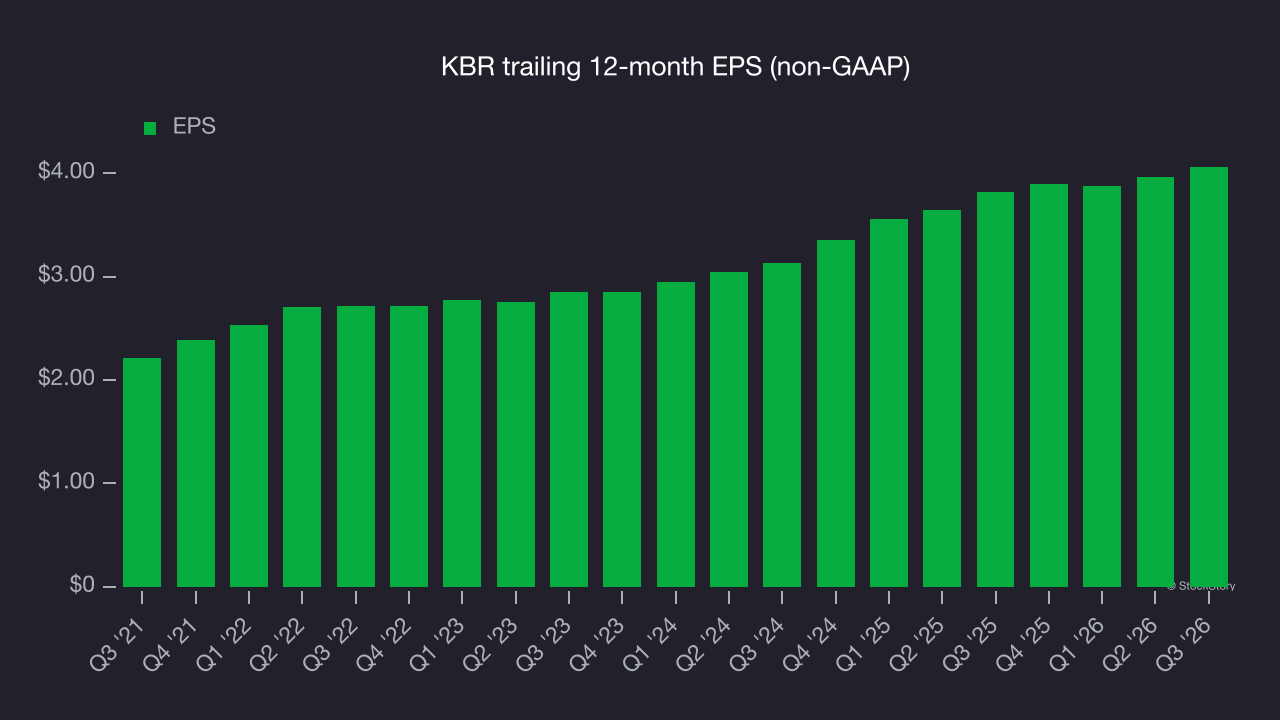
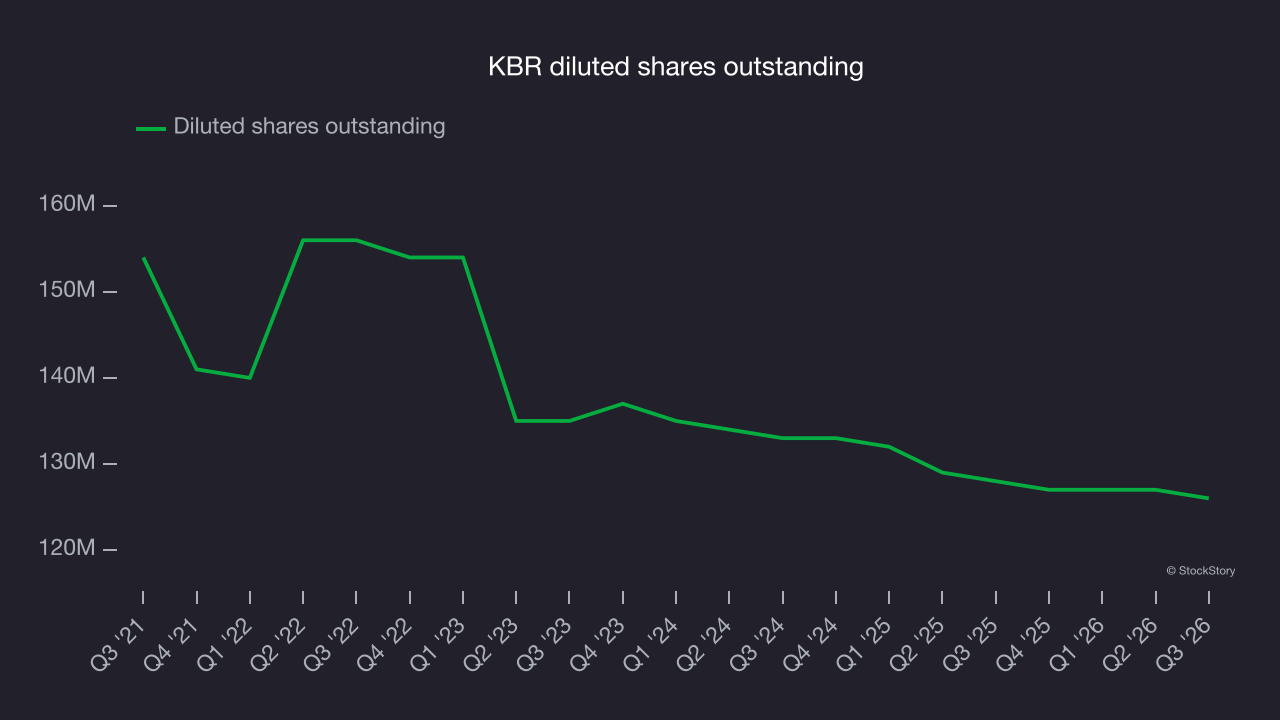
Like with revenue, we analyze EPS over a shorter period to see if we are missing a change in the business.
For KBR, its two-year annual EPS growth of 13.9% is similar to its five-year trend, implying strong and stable earnings power.
In Q3, KBR reported adjusted EPS of $1.12, up from $1.02 in the same quarter last year. Adjusted EPS easily beat analysts’ consensus estimates, a positive result for shareholders. Over the next 12 months, Wall Street expects KBR’s full-year EPS to stay about the same, moving from $4.06 to $4.04, according to S&P.
Key takeaways from KBR’s Q3 results
KBR’s quarter had some key positives: EBITDA beat analysts’ consensus estimates by a wide margin, and EPS also topped Wall Street’s consensus. But revenue missed expectations, leaving a mixed set of results. Shares remained flat at $40.05 immediately after the release.
When evaluating KBR at its current price, the latest quarter matters, but not nearly as much as longer-term fundamentals and valuation. Read the full research report here (it’s free).