AUSTIN, TX / ACCESS Newswire / March 30, 2026 / Let's be real, the weight loss space is loud. There's always something new promising to change everything, and most of the time, those promises quietly disappear once you've opened your wallet.
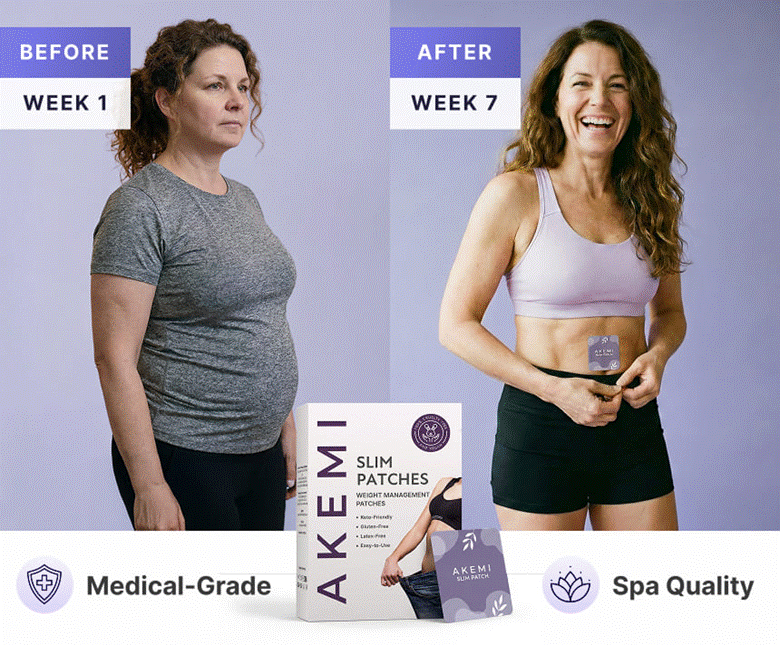
So when I came across Akemi Slim Patch, I'll admit my first reaction was skepticism. A patch you stick near your belly button that supposedly controls hunger and burns fat? It sounded like something off a late-night infomercial.
But I've spent enough time around the wellness industry to know that dismissing something without actually looking into it isn't fair either. So I did what I usually do: I read the claims carefully, looked at the ingredients, compared it to similar products, and paid attention to what real users were saying about their experience, also what other Akemi Slim Patch Reviews Highlighted
What I found was... mixed, in an interesting way. Akemi Slim Patch isn't without merit, and it's not entirely without question marks either. It markets itself as a transdermal weight management solution designed to help reduce appetite, support fat metabolism, and keep your energy stable throughout the day, all without pills, powders, or complicated meal plans.
The appeal is obvious. If you've ever struggled with the cycle of eating well in the morning, craving everything by noon, and feeling guilty by evening, the idea of something that quietly works in the background has a certain charm.
This review isn't here to sell you anything. I've put together what I genuinely observed and researched: the product format, the disclosed ingredients, the policies, and the questions worth asking so you can decide with more clarity than most product pages will give you.
Why Consumers Are Researching Healthy Weight Loss Patches Like Akemi Slim Patch
There's a reason weight loss patches keep trending in search results, and it's not purely about gimmick appeal. To understand the interest, you have to look at what the average person trying to lose weight actually goes through day to day.
Most weight management approaches demand consistent effort: tracking calories, preparing specific meals, remembering to take capsules at set times, or following exercise routines that require both time and energy most people don't always have. Life interrupts. Schedules collapse. And when the routine breaks, so does the momentum. Over time, that cycle of starting, stopping, and restarting becomes exhausting.
This is the gap that transdermal patches are marketed to fill. They're passive. You apply one, and it does its thing while you go about your life. There's no mealtime reminder, no prep, no pill fatigue. For people who have tried more demanding weight loss systems and burned out, that simplicity carries genuine appeal.
There's also growing consumer awareness around digestive sensitivity. Many people have experienced bloating, nausea, or discomfort from oral supplements particularly those with stimulants or high-dose plant extracts. The idea that a patch bypasses the digestive system entirely is, for some, a meaningful selling point rather than a marketing line.
Another trend driving patch research is the shift toward "natural" or "plant-based" weight management. Consumers are increasingly wary of synthetic compounds and pharmaceutical-style interventions with long side-effect lists. Patches marketed with botanical ingredients feel, at least on the surface, more aligned with a wellness-first mindset.
There's also a fatigue factor around injectable weight loss treatments that have dominated headlines recently. Not everyone is comfortable with injections, not everyone can access or afford prescription options, and some people simply prefer to start with something less intensive. Patches sit at an interesting middle ground more than a supplement, less than a medical intervention.
Social media has accelerated research interest too. When someone in a wellness community shares that they've been using a patch and noticed a change in cravings or energy, curiosity spreads quickly. Whether those reports are clinically meaningful or anecdotal, they're enough to send people to search engines.
What I notice when I look at the questions people actually ask, "do weight loss patches really work," "what ingredients are in slimming patches," "are appetite patches safe" is that consumers aren't blindly trusting. They're curious and appropriately cautious. They want to understand the mechanism, not just the promise. That's a healthy sign. And it's exactly why detailed, honest reviews matter more than promotional copy.
In short, the research interest in weight loss patches reflects a broader desire for sustainable, low-friction support tools that don't require overhauling your entire life and a healthy skepticism about whether any of them actually deliver.
What Akemi Slim Patch Really Is
Akemi Slim Patch is positioned as a transdermal weight management product. In plain terms, it's a patch you apply to your skin specifically near the belly button that claims to deliver active plant-based ingredients into your bloodstream through your skin over a period of 24 to 48 hours.
The core idea behind transdermal delivery isn't new. The same principle powers nicotine patches, hormone therapy patches, and certain pain relief products. The skin is genuinely permeable to certain compounds particularly smaller lipid-soluble molecules so the concept has legitimate scientific grounding. The question for any specific patch product is always: which ingredients are being used, in what concentration, and is there credible evidence they actually cross the skin barrier in meaningful amounts?
Akemi Slim Patch markets itself around several functional goals: appetite suppression, fat metabolism support, sustained energy, and digestive comfort. It frames itself as an alternative to pills and stimulant-heavy supplements, leaning on the idea that bypassing the gut means fewer side effects and more consistent absorption.
The product is applied before bed, worn for 24 to 48 hours, then replaced. The brand recommends rotating the application site to avoid skin irritation. It's a once-daily (or every-other-day) routine that, in theory, requires almost no behavioral change beyond remembering to swap the patch.
In terms of what it is not: it's not a pharmaceutical product, it's not FDA-approved as a drug, and it doesn't claim to be a substitute for medical treatment of obesity or metabolic conditions. Like most products in this category, it sits in the dietary supplement or wellness product space which means the claims it can legally make are limited, and the level of clinical evidence required before it can be sold is significantly lower than for prescription treatments.
The branding leans heavily on lifestyle appeal, the idea of effortless consistency, freedom from complicated routines, and steady progress without punishment. That messaging resonates with a real audience, though it's worth noting that marketing copy and product efficacy are two different things.
From what I could gather, Akemi Slim Patch appears to be manufactured and sold primarily through its own official website, with warnings on the site about buying from third-party marketplaces. The product comes with a 30-day money-back guarantee and is presented as safe for daily use.
In summary: Akemi Slim Patch is a plant-based transdermal patch designed for passive weight management support. Whether it delivers meaningfully on that design depends on factors I'll dig into in the sections ahead.
What Consumers Typically Look for in Healthy Weight Loss Patches
Anyone who has spent time researching weight loss patches quickly discovers that not all products in this category are created equally. Over time, informed consumers develop a fairly clear checklist, a set of criteria that separates products worth considering from those that are mostly packaging and promises. Here's what tends to matter most.
Ingredient Transparency: The first thing most careful consumers do is flip to the ingredient list. This seems obvious, but it's remarkable how many products in the wellness space bury their formulas behind vague "proprietary blend" language or simply don't disclose concentrations at all. Transparency matters because it's the only way to assess whether the product contains anything that has meaningful research support, and at doses that could plausibly do something.
Consumers increasingly look for specific named ingredients berberine, green tea extract, garcinia cambogia, guarana, and similar botanicals are common in this space and then research those ingredients independently. They want to know: has this been studied? What does the evidence actually say? Are there known interactions or contraindications?
Delivery Mechanism Credibility: Transdermal delivery is a legitimate pharmaceutical technology, but not every molecule travels well through skin. Consumers who do their homework ask whether the specific ingredients in a patch are actually capable of transdermal absorption. Some compounds, particularly water-soluble ones with large molecular weights, don't cross the skin barrier effectively without chemical enhancers or specialized formulations.
This is one of the more technical questions in the patch category, and most product pages don't address it directly. Savvy consumers notice that gap. They look for any published research on the specific delivery method or formulation technology claimed by the brand.
Absence of Harmful Stimulants: Weight loss products with high doses of caffeine, synephrine, or other stimulants have a mixed track record; some people tolerate them fine, others experience jitteriness, heart palpitations, or sleep disruption. Consumers who have had bad experiences with stimulant-heavy supplements actively look for products that don't rely on those compounds.
This is partly why "gentle" and "plant-based" messaging resonates. Consumers want to feel like the product is working with their body rather than forcing a stress response.
Realistic Claims: Ironically, products that sound too good tend to raise red flags. Experienced supplement shoppers have been burned by "miracle" claims before, so they actually trust products more when the language is measured. Phrases like "support fat metabolism" and "help reduce cravings" are more credible than "linch off your waistline in 72 hours."
Consumers want to understand what the product can plausibly do, not what it can hypothetically do in the best possible circumstances. Products that acknowledge effort is still involved tend to attract a more serious buyer.
Skin Safety and Comfort: Unlike an oral supplement, a patch stays in physical contact with your skin for 24 to 48 hours. That raises practical questions: is the adhesive hypoallergenic? Does it cause redness or irritation with repeated use? Can it be worn during exercise or showering? These are the kinds of questions that appear repeatedly in user reviews, and consumers pay close attention to them.
Return Policy and Money-Back Guarantee: Because patches are a relatively new format for many consumers, and because they carry inherent uncertainty about efficacy, a clear and fair refund policy is a meaningful trust signal. A 30-day money-back guarantee is the basic standard in this category. Consumers look for the fine print: does the guarantee cover opened products? How long does refund processing take? Is customer service actually responsive?
Products that make the refund process difficult or unclear often accumulate complaints in online review spaces, which consumers now actively search before purchasing.
Third-Party Testing and Certifications: In the supplement world, third-party testing is considered the gold standard for quality assurance. It means an independent lab has verified that the product contains what the label says it contains, at the concentrations listed, without contaminants. Certifications from organizations like NSF International or USP carry weight.
Most patch products in this category don't disclose third-party testing, which is worth noting. Consumers who prioritize quality assurance look for this specifically and view its absence as a reason to proceed with more caution.
User Reviews with Specificity: Generic five-star testimonials have largely lost their persuasive power. Consumers now look for reviews that contain specific, believable detail: how long someone used the product, what they noticed and when, whether they changed anything else in their routine, and honest acknowledgment of what didn't work as expected. Reviews that read like marketing copy are typically discounted.
Platforms like Reddit, independent review blogs, and health forums tend to carry more credibility for this research than testimonials on a brand's own website.
Value for Money: Weight loss patches are rarely cheap, particularly when purchased in multi-month bundles. Consumers weigh the cost per day against the expected benefit and compare it to alternatives. Products that only offer a single high-priced SKU with no flexibility can deter budget-conscious buyers, while tiered pricing with a clear introductory option is perceived as more accessible and trustworthy.
Akemi Slim Patch Ingredients: What's Inside the Patch
One of the first things I tried to do when evaluating Akemi Slim Patch was get a clear picture of its ingredient profile. This is where I'll be transparent about a limitation: the product page, while detailed in its marketing language, doesn't present a comprehensive, labeled ingredient breakdown in the way a rigorous supplement label would. What it does reference is a core mechanism tied to the "Berberine pathway," alongside general references to plant-based ingredients. I've done my best to research the components that are typical in transdermal weight patches built around this mechanism.
Berberine: Berberine is the ingredient Akemi Slim Patch specifically names in its mechanism description, and it's worth understanding why. Berberine is an alkaloid compound found naturally in several plants, including barberry, goldenseal, and Oregon grape. It has a fairly substantial body of research behind it more so than most botanical ingredients in the weight management space.
Studies have looked at berberine's effects on blood sugar regulation, insulin sensitivity, and lipid metabolism. Some research suggests it activates AMPK (adenosine monophosphate-activated protein kinase), an enzyme that plays a key role in regulating energy balance at the cellular level. In simplified terms, activating AMPK is associated with increased fat burning and improved glucose uptake effects that are also targeted by some prescription medications for metabolic conditions.
There's also evidence that berberine can influence gut hormone signaling, which may partly explain its appetite-related effects.
Some users report reduced hunger and more stable blood sugar when using berberine-containing products.
The complication with berberine in a transdermal patch is molecular: berberine has relatively limited skin permeability compared to more lipid-soluble compounds. Some formulations use penetration enhancers to address this, and it's worth noting that the patch format, if properly engineered, can provide more sustained low-level delivery compared to a single oral dose which may have its own advantages in terms of steadiness of effect.
Green Tea Extract (EGCG): Green tea extract, particularly the catechin compound EGCG (epigallocatechin gallate), is one of the most researched botanical ingredients in weight management. It appears in the majority of transdermal weight patches and oral supplements in this category.
EGCG has demonstrated thermogenic effects in several clinical studies meaning it may modestly increase the rate at which the body burns calories. It also has antioxidant properties and some evidence supporting fat oxidation, particularly during exercise. The effect sizes in human studies are generally modest, but they're reproducible.
As a patch ingredient, EGCG's transdermal absorption has been studied in cosmetic and pharmaceutical contexts. Some research suggests it can cross the skin barrier, though the bioavailability varies depending on the formulation and vehicle used.
Garcinia Cambogia (Hydroxycitric Acid): Garcinia cambogia extract, specifically its active compound hydroxycitric acid (HCA), became widely known in weight loss circles around a decade ago. It's been claimed to inhibit an enzyme called ATP citrate lyase, which plays a role in fat synthesis, and to increase serotonin levels, potentially reducing emotional eating.
The clinical evidence on garcinia cambogia is more mixed than its popularity might suggest. Some studies show modest reductions in weight and appetite, while others show no significant difference from placebo. Meta-analyses have found small, short-term effects that may not be clinically meaningful on their own.
It remains a common inclusion in weight management formulas partly because of its broad consumer recognition and partly because it carries a low risk profile at typical doses.
Guarana Extract: Guarana is a plant native to the Amazon basin with a naturally high caffeine content significantly higher than coffee beans by weight. It's commonly included in weight management products for its stimulant properties: increased alertness, modest thermogenic effect, and potential appetite suppression.
Unlike isolated caffeine, guarana releases its caffeine more gradually due to the surrounding plant matrix, which is sometimes cited as a reason for a smoother energy effect. In a transdermal format, controlled release of guarana-derived caffeine could theoretically provide sustained stimulation without the spike-and-crash of oral caffeine.
For users sensitive to caffeine, the presence of guarana is worth noting. Even in patch form, stimulant-containing products can affect sleep if worn close to bedtime, though the concentration and delivery rate matter significantly.
Ginger Root Extract: Ginger has a long history in traditional medicine, and modern research has found several mechanisms by which it may support weight management. It has anti-inflammatory properties, supports digestive function, and has shown some evidence of modest thermogenic activity.
Perhaps most relevant to a weight loss context is ginger's effect on gastric emptying and satiety hormones; some studies suggest it may help people feel fuller after meals. Its inclusion in a transdermal patch is plausible given that certain ginger compounds (particularly gingerols and shogaols) are lipid-soluble and have demonstrated skin penetration.
Fucoxanthin: Fucoxanthin is a carotenoid found in brown seaweed, and it's gained research attention for its potential effects on fat metabolism. Animal studies and some early human research suggest it may activate thermogenesis in fat tissue and reduce fat accumulation.
It's a newer ingredient in weight management products compared to berberine or green tea extract, and the human clinical data is still developing. That said, its lipid-soluble nature makes it a reasonable candidate for transdermal delivery.
Cassia Seed Extract: Cassia seed has been used in traditional Chinese medicine and is increasingly appearing in modern wellness formulations. It's associated with mild laxative effects, cholesterol management, and liver support. In a weight context, it's typically included for its digestive benefits and its potential role in reducing water retention.
Its relevance to the core weight loss mechanism (fat burning, appetite control) is more indirect than some other ingredients, but it contributes to the overall gut-comfort positioning of the patch.
A Note on Concentration and Synergy, One of the challenges in evaluating any multi-ingredient formulation is that individual ingredient studies rarely reflect how those compounds perform in combination, at the concentrations used in a commercial product, and via a specific delivery route like transdermal absorption. Synergistic effects are possible; some compounds enhance the absorption or activity of others but proprietary formulas make it hard to assess this from the outside.
What I can say is that the ingredients individually are not without research support. The question of whether they're present in effective concentrations and whether the transdermal delivery actually achieves meaningful bioavailability remains, as with most patch products, something that would require third-party clinical data to confirm with confidence.
How Akemi Slim Patch Compares to Other Format Options
Weight loss products come in many formats, and format genuinely matters not just for convenience, but for how ingredients are absorbed, how consistently they work, and who they're actually suited to. Understanding where patches fit relative to other options helps contextualize what Akemi Slim Patch is actually offering.
Oral capsules and tablets are the most common format in the supplement space. They're well-understood, easy to dose precisely, and the digestive system is actually quite good at absorbing many compounds particularly when formulated with bioavailability enhancers like piperine or lipid carriers. The downside is that some people experience gastrointestinal discomfort, absorption is affected by food timing and gut health, and compliance can be inconsistent when life gets busy.
Powders and drinks offer flexibility and tend to be popular for ingredients that work well in higher volumes of liquid. They're often preferred by people who already have morning supplement routines. The format is less passive than a patch; it requires active preparation.
Gummies occupy an interesting middle ground. They're highly palatable and easy to take, which improves compliance, but sugar content can be a concern for people who are specifically trying to manage caloric intake, and the gummy matrix can limit the range of ingredients that can be included.
Transdermal patches represent the most passive end of the spectrum. Once applied, they require no further action for 24 to 48 hours. This has real advantages for compliance if you're someone who consistently forgets to take pills or doesn't like swallowing capsules, a patch removes that friction entirely.
The trade-off is that transdermal delivery isn't universally effective across all ingredients. The skin is a selective barrier. Lipid-soluble, smaller-molecule compounds tend to cross more readily. Water-soluble or larger compounds require either chemical penetration enhancers or specialized carrier systems. How well a given patch product has addressed this challenge varies, and it's something most brands don't disclose in consumer-facing materials.
There's also the physical comfort dimension. Some people find patches irritating, particularly with daily rotation. The adhesive needs to be strong enough to stay on through activity and showering, but gentle enough not to cause skin reactions with repeated use.
For Akemi Slim Patch specifically, the format makes sense for the stated goal of "passive, consistent support throughout the day." Whether the specific ingredients in the formula are well-suited to transdermal delivery is the more open question, and it's one that deserves more transparency from the brand than most patch products currently provide.
What Akemi Slim Patch Discloses About Its Product
Transparency is one of the more useful ways to evaluate a wellness brand, and it's worth looking at what Akemi Slim Patch actually tells consumers and what it doesn't.
On the positive side, the product page does communicate how the patch is meant to be used, which is clearer than some competitors. The application instructions: clean skin, apply near the belly button, replace every 24 to 48 hours, rotate the site are practical and specific. That kind of usage clarity is genuinely helpful, especially for people new to the patch format.
The brand also discloses the general mechanism it's working with: transdermal absorption and the Berberine pathway. Naming a specific biological mechanism rather than simply claiming "it works" is a step toward scientific accountability, even if the supporting evidence isn't cited directly on the product page.
The customer testimonials provided are somewhat specific: users describe reduced evening cravings, easier routine integration, and a sense of the product being "gentle" rather than intense. These are plausible, reasonable descriptions of what appetite support products might realistically do, which gives them more credibility than hyperbolic before-and-after claims.
However, there are gaps worth acknowledging. A full ingredient list with concentrations isn't prominently featured in the marketing materials I reviewed. This is a significant limitation for any consumer trying to do due diligence. Knowing that berberine is part of the formulation is useful, but not knowing the dose makes it difficult to compare with clinical research.
The product doesn't appear to cite specific clinical studies for the patch formulation itself, only implied references to mechanisms that have broader research support. This is common in the supplement industry but worth flagging. The existence of research on an ingredient doesn't automatically validate a product's specific formulation or delivery method.
There's also no mention of third-party testing or quality certifications in the materials reviewed. For consumers who prioritize verified purity and potency, that absence is notable.
The brand does caution against purchasing from third-party marketplaces, citing concerns about authenticity and guarantee eligibility. This is a reasonable protective measure, though it also means independent marketplace reviews that might provide unfiltered user perspectives are limited.
In summary: Akemi Slim Patch is more transparent than many products in its category, but less transparent than the most rigorous brands. It tells you the general "what" and "how" but leaves some of the most important details, exact ingredients, concentrations, and clinical evidence specific to the formulation incomplete.
Who Akemi Slim Patch Might Be Right For
This kind of transdermal support product isn't for everyone. Based on the format, claims, and user experience, Akemi Slim Patch would best suit people who:
- Want a no-fuss, pill-free addition to their daily routine.
- Are interested in gentle, plant-based support rather than fast results.
- Have sensitive stomachs or difficulty with oral supplements.
- Appreciate the idea of steady, background support for appetite and metabolism.
It's likely less suitable for those expecting rapid fat loss or looking for a substitute for exercise and diet.
Order Akemi Slim Patch From The Official Website
Refund Policies and Customer Support Disclosure
Akemi Slim Patch advertises a 30-day money-back guarantee, which is the standard offering in the wellness supplement space. The brand positions this as a risk-free trial: if the product doesn't work for you, you can return it within 30 days for a refund.
A 30-day window is worth assessing in context. The product's own marketing suggests that meaningful results take up to four weeks, which means the refund window and the recommended trial period are roughly the same length. In practice, this leaves very little buffer if you notice by week three that the product isn't doing anything for you, you're already near the end of your return eligibility.
The brand directs all purchases to its official website and specifically warns against third-party marketplace purchases, noting that guarantee coverage may not apply to those. This is a fairly standard practice for direct-to-consumer wellness brands, but it does mean you're dependent on the company's own customer service for any post-purchase support.
From the information available, the refund process isn't described in granular detail on the main product page; there's no visible FAQ addressing whether returns need to be unopened, what the process timeline looks like, or how disputes are handled. For a consumer considering a purchase, these are reasonable questions to clarify directly with the brand before ordering.
Customer support responsiveness isn't something I could independently verify, but it's one of the most consistent factors in user satisfaction with products in this category. Brands that make returns easy and communicate clearly tend to earn the trust that translates into repeat customers. Brands that create friction around refunds, regardless of their product quality, consistently generate negative sentiment in wellness communities.
Final Thoughts
After spending time with Akemi Slim Patch researching its claims, looking into its ingredients, and comparing it to others in the category I'd describe it as a product with a coherent concept and a reasonable ingredient foundation, but one that leaves some important questions unanswered.
The transdermal format is genuinely appealing for the right person: someone who wants a low-friction daily habit, prefers to avoid oral supplements, and is looking for modest, consistent support rather than dramatic intervention. The mention of berberine as a core mechanism shows at least some alignment with current research.
At the same time, the lack of a full labeled ingredient list with concentrations, absent third-party testing disclosures, and a refund window that barely outlasts the recommended trial period are things worth factoring in before you commit.
Honestly, this isn't a product I'd call a standout, but I also wouldn't dismiss it outright. If the format appeals to you and you're willing to treat it as a support tool not a solution it may be worth a trial. Just go in with clear expectations, read the return policy carefully, and consider it one piece of a broader approach to your health, not the whole strategy.
Disclaimer
This review is based on independent analysis and publicly available product information. It is not sponsored by or affiliated with the Akemi Slim Patch brand. The opinions presented reflect personal research and interpretation for informational purposes only and should not be considered medical advice.
Media Contact:
Media Team
contact@Akemi.com
SOURCE: Akemi Slim
View the original press release on ACCESS Newswire