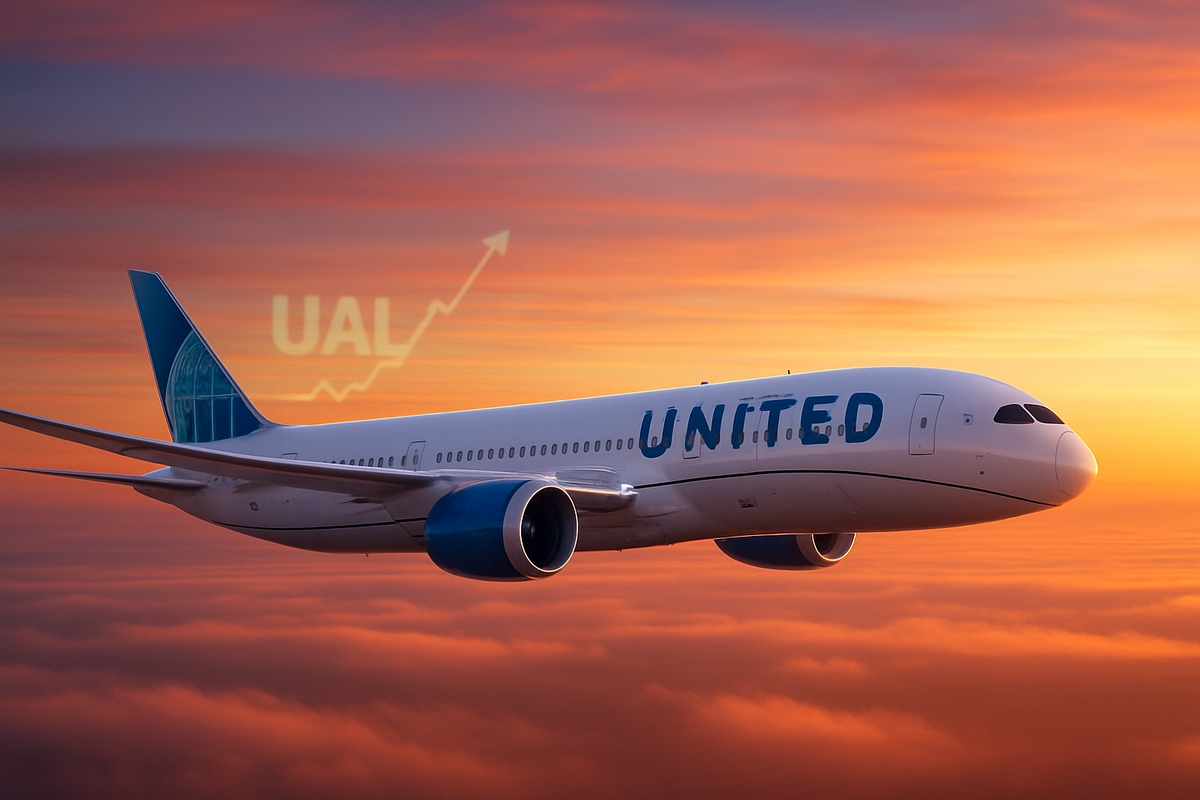
CHICAGO — On January 20, 2026, United Airlines (NASDAQ: UAL) reported fourth-quarter 2025 financial results that comfortably cleared Wall Street’s hurdles, signaling a robust appetite for global travel despite a turbulent economic backdrop in late 2025. The Chicago-based carrier posted record quarterly revenue of $15.4 billion and an adjusted earnings per share (EPS) of $3.10, outperforming the analyst consensus of $2.94. These results reflect a market where the "premiumization" of the skies has become the primary engine of growth, effectively insulating legacy carriers from the price wars currently battering the budget sector.
The report arrives at a pivotal moment for the aviation industry, which spent the final months of 2025 navigating a temporary U.S. government shutdown in November and shifting trade policies. However, United appears to have weathered these storms through a combination of aggressive international expansion and a significant drop in jet fuel prices, which dipped below the $2.00-per-gallon mark in December for the first time in nearly 18 months. As the company sets its sights on 2026, the data suggests that while the "revenge travel" era of the post-pandemic years has ended, it has been replaced by a structurally higher floor for high-margin, international, and business-class demand.
Record Performance Amid Policy Turbulence
The timeline leading up to today’s release was marked by both operational hurdles and unexpected gifts. In late 2025, a temporary government shutdown in November cost the airline approximately $250 million in pre-tax profit due to slowed federal travel and administrative friction. Yet, this was largely offset by a record-breaking winter holiday season. Between December 20, 2025, and January 5, 2026, TSA throughput rose 7% year-over-year, with United carrying a significant portion of the record 181 million passengers it flew across the entire year.
Key stakeholders, including CEO Scott Kirby and CFO Michael Leskinen, highlighted that the airline's "United Next" strategy is bearing fruit. The company’s focus on increasing premium seating capacity—up 75% compared to 2019 levels—drove a 9% surge in premium cabin revenue during the fourth quarter. This shift towards higher-yielding passengers has allowed United to maintain a 9.0% operating margin, a feat that would have been impossible a decade ago under similar inflationary pressures.
Market reaction in the after-hours session was cautiously optimistic, with shares of United Airlines ticking up 3.4%. Investors were particularly encouraged by the airline’s ability to generate $2.7 billion in free cash flow for the full year 2025. This liquidity provides a necessary cushion as the airline continues to navigate the supply chain bottlenecks that have plagued the aerospace sector since 2023.
The Margin Canyon: Winners and Losers in the New Era
The 2025 year-end results have solidified a widening "margin canyon" between the industry's leaders and its laggards. United Airlines and its chief rival, Delta Air Lines (NYSE: DAL), have emerged as the clear victors of this cycle. Both carriers have pivoted toward a "global gateway" model, focusing on high-margin international routes to the Pacific and Europe. Delta, which reported its own beat on January 13, 2026, saw its Pacific revenue jump 10%, mirroring United’s record-breaking unit revenue in the same region.
Conversely, American Airlines (NASDAQ: AAL) continues to face a steep climb. While it remains a domestic powerhouse, its heavy reliance on U.S. routes and a massive $36.8 billion debt load have kept its margins stuck in the low single digits. American is expected to report its results on January 27, and analysts are bracing for a much slimmer profit margin compared to the United/Delta duopoly. For American, the challenge remains converting high domestic volume into meaningful profit while servicing the highest leverage in the industry.
The manufacturers, too, find themselves in a precarious position. Boeing (NYSE: BA) remains the industry’s most significant bottleneck. Persistent certification delays for the 737 MAX 10 and component shortages for the 787 Dreamliner have forced United to adjust its 2026 flight schedule. While Airbus (OTC: EADSY) has gained market share as carriers like United pivot to leasing the A321neo, the European manufacturer is not immune to delays, recently pushing back deliveries of the A321XLR to late 2026. This delay forces United to keep its aging and less fuel-efficient Boeing 757-200 fleet in service longer than intended, which could eat into potential fuel savings.
Shifting Jet Streams: Industry Trends and Policy Ripple Effects
The broader significance of United’s report lies in the stabilization of the "new normal." The airline industry has successfully transitioned from a volume-based business to a value-based one. The 9% growth in premium revenue and 10% increase in loyalty program revenue underscore a shift where the frequent flyer and the business traveler are once again the primary drivers of profitability. This trend is a defensive shield against the cooling of international inbound traffic, which saw a 7.7% drop in late 2025 due to rising visa costs and global processing delays.
Historically, airlines have been highly sensitive to fuel price volatility. The 9.6% decrease in the average price of U.S. Gulf Coast jet fuel in 2025 (averaging $2.11 per gallon) provided a massive tailwind that allowed carriers to absorb rising labor costs. With IATA projecting fuel prices to remain stable or fall slightly in 2026, the industry is entering a rare period where cost pressures are easing just as demand for high-end travel remains resilient.
However, regulatory and policy implications loom over the 2026 outlook. Shifting trade policies and new tariffs introduced in early 2025 have created pockets of volatility in international cargo and business travel. Furthermore, the FAA’s rigorous oversight of Boeing’s production lines has essentially capped the industry’s capacity growth. While this limit on supply has helped keep fares high, it also restricts United’s ability to fully capitalize on its planned expansion to 12 new international destinations in the summer of 2026.
The 2026 Horizon: Strategic Pivots and Scenarios
Looking ahead, United has issued an aggressive 2026 EPS guidance of $12.00 to $14.00. This outlook is predicated on the "United Next" strategy continuing to replace smaller regional jets with larger, more efficient narrowbody aircraft. However, the success of 2026 will largely depend on United’s ability to manage its fleet "shortfall." To mitigate Boeing’s delivery failures, United has already offered pilots voluntary unpaid leave and is pivoting toward more expensive, short-term aircraft leases.
The short-term focus will be on the first quarter of 2026, where United anticipates an adjusted EPS of $1.00 to $1.50, well above the consensus of $1.13. If the airline can maintain its current yield strength in the Pacific and Transatlantic markets, it may reach the upper end of its 2026 guidance. A potential strategic pivot could involve further investment in its "Basic Economy" product to recapture some of the domestic market share currently held by low-cost carriers, though management remains firmly committed to its premium-first identity.
Investor Takeaways: A Resilient Path Forward
The key takeaway from United’s Q4 2025 earnings is that the airline has successfully decoupled its profitability from the broader economic anxieties of the middle class. By targeting the affluent traveler and expanding its global footprint, United has built a resilient model that can withstand government shutdowns and delivery delays. The 10% growth in loyalty program revenue suggests that United's brand remains a powerful asset in capturing long-term customer value.
Moving forward, the market will be watching two critical factors: Boeing’s production stability and the persistence of the premium travel trend. If Boeing can finally achieve certification for the MAX 10 by mid-2026, United’s capacity constraints will ease, potentially leading to a massive expansion in market share. Conversely, if a global economic slowdown finally reaches the premium consumer, the airline’s high-cost structure could become a liability.
For now, investors should watch for United’s summer 2026 schedule announcement and any updates on the Airbus A321XLR delivery timeline. The "Margin Canyon" is unlikely to close anytime soon, and as it stands, United Airlines is flying firmly on the side of the victors.
This content is intended for informational purposes only and is not financial advice.