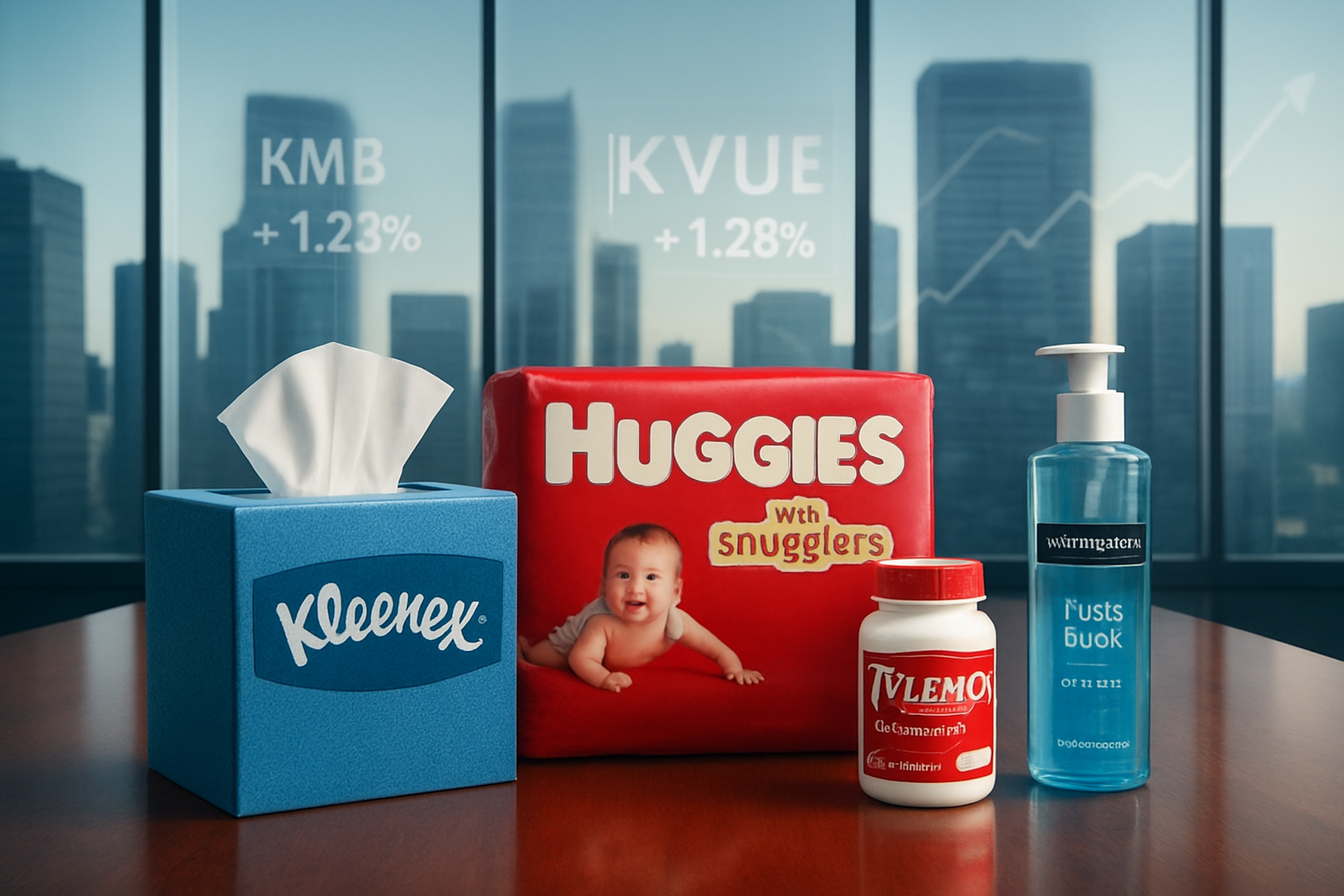
In a move that signals a seismic shift within the consumer staples landscape, Kimberly-Clark (NYSE: KMB) is on the precipice of finalizing its $48.7 billion acquisition of Kenvue (NYSE: KVUE). This colossal deal, if ratified by shareholders tomorrow, January 29, 2026, would create a diversified powerhouse with a formidable footprint across personal care, hygiene, and science-backed wellness. The acquisition marks a definitive pivot for Kimberly-Clark as it seeks to transcend its legacy in paper-based commodities and challenge the dominance of global giants like Procter & Gamble (NYSE: PG).
The immediate implications of this merger are profound, reflecting a broader trend of consolidation as companies grapple with fluctuating raw material costs and an increasingly competitive global market. While the deal promises significant synergies and a premium for Kenvue shareholders, it also burdens Kimberly-Clark with substantial debt and lingering litigation risks associated with Kenvue’s former parent, Johnson & Johnson. As the market awaits the results of the upcoming shareholder vote, the consumer staples sector remains on edge, watching how this merger will redefine brand portfolios and pricing power across the globe.
A High-Stakes Transformation: The Mechanics of the Mega-Bid
The road to this $48.7 billion milestone began in early November 2025, when Kimberly-Clark first announced its ambitious intent to acquire Kenvue. The proposed transaction is structured as a cash-and-stock deal, where Kenvue shareholders are set to receive $3.50 in cash and 0.14625 shares of Kimberly-Clark common stock for each share of Kenvue they own. This valuation represents a nearly 46% premium over Kenvue’s 2025 lows, a figure designed to woo investors who had seen the stock languish since its 2023 spinoff. To fund the cash portion of the deal, Kimberly-Clark took the strategic step of divesting a 51% stake in its International Family Care business to the Brazilian pulp company Suzano for $1.7 billion.
The leadership of the combined entity will fall under current Kimberly-Clark Chairman and CEO Mike Hsu, who has been the primary architect of this "pure-play" personal care strategy. Under the terms of the agreement, the new company will remain headquartered in Irving, Texas, while absorbing three members of Kenvue’s current board to ensure continuity. The timeline has been tight; following the November announcement, both companies have spent the last several months clearing internal hurdles and securing financing, primarily led by JPMorgan Chase (NYSE: JPM).
Market reaction has been a stark study in contrasts. Kenvue’s stock surged nearly 20% following the initial announcement as investors cheered the exit strategy for a company that had struggled with independent growth. Conversely, Kimberly-Clark shares saw a 14% dip as Wall Street expressed concerns over the $8 billion in net debt being assumed and the sheer complexity of integrating Kenvue’s diverse portfolio. However, sentiment began to stabilize in mid-January 2026 after Institutional Shareholder Services (ISS) recommended that shareholders approve the deal, citing the potential for $2.1 billion in annual run-rate synergies by 2030.
Winners, Losers, and the Battle for Market Share
Kenvue shareholders appear to be the most immediate beneficiaries of the deal. After months of underperformance relative to the broader S&P 500, the $48.7 billion bid provides a lucrative exit and a stake in a much larger, more resilient entity. The merger effectively rescues Kenvue from its "identity crisis" as a standalone firm, providing it with the massive distribution network and supply chain infrastructure of Kimberly-Clark. Furthermore, the infusion of Kenvue’s high-margin brands like Neutrogena and Tylenol into Kimberly-Clark’s portfolio is expected to elevate the latter’s overall margin profile over the long term.
However, the "loser" in the short term could be Kimberly-Clark's stock price stability. The company is taking on immense execution risk, and the market remains skeptical of its ability to manage the litigation overhang that Kenvue brings. These legal troubles include ongoing talcum powder litigation and high-profile suits regarding Tylenol’s alleged health impacts. For Kimberly-Clark, the win is strategic and long-term, but for current investors, the immediate future involves navigating a volatile transition period characterized by high debt-to-equity ratios and a concentrated focus on integration over share buybacks.
In the broader sector, Haleon (NYSE: HLN) has emerged as an indirect "winner" in terms of scarcity value. As Kenvue—the largest pure-play consumer health company—is absorbed by Kimberly-Clark, Haleon now stands as the last remaining independent giant in the space. This has already led to speculative buying in Haleon stock, as analysts predict it may become the next target for companies like Unilever (NYSE: UL) or even private equity groups looking for stable, high-margin cash flows in a consolidated market.
The Strategic Pivot: Reshaping the Consumer Staples Landscape
This merger fits into a broader industry trend where traditional "paper and plastic" consumer firms are desperate to pivot toward high-growth, "science-backed" health and wellness categories. By acquiring Kenvue, Kimberly-Clark is essentially buying its way into the medicine cabinet and the premium skincare aisle, moving away from the cyclical and often low-margin world of tissues and diapers. This mirrors moves made by competitors over the last five years who have sought to insulate themselves from the volatility of pulp and commodity prices by owning brands with higher consumer loyalty and inelastic demand.
The ripple effects on competitors like Procter & Gamble and Unilever will be significant. P&G, which has long enjoyed a dominant position in premium personal care, now faces a rejuvenated rival with a comparable brand stable. The new Kimberly-Clark will possess ten "billion-dollar brands," including Huggies and Kleenex alongside Kenvue’s Listerine and Aveeno. This scale provides Kimberly-Clark with unprecedented leverage when negotiating with retail giants like Walmart (NYSE: WMT) and Target (NYSE: TGT), potentially squeezing the shelf space of smaller, independent brands that cannot match the combined entity's marketing spend.
Regulatory scrutiny remains the primary hurdle. The Federal Trade Commission (FTC) is expected to take a hard look at the deal in the spring of 2026, focusing on potential monopolies in the skin health and baby care segments. While the two companies' portfolios are largely complementary rather than overlapping—Kimberly-Clark excels in paper products while Kenvue dominates in over-the-counter (OTC) meds—the sheer size of the combined entity may trigger antitrust concerns in a political climate that has become increasingly wary of corporate consolidation in the consumer goods space.
The Path Ahead: Shareholder Votes and Integration Hurdles
The immediate next step is the crucial shareholder vote scheduled for tomorrow, January 29, 2026. While ISS has given its blessing, the outcome will depend on whether large institutional investors believe the $2.1 billion in projected synergies can be realized amidst the significant legal risks. If approved, the focus will shift to a grueling integration process that is expected to last well into 2027. Management will need to prove they can consolidate logistics and R&D without diluting the brand equity of Kenvue’s legacy products.
In the short term, Kimberly-Clark will likely prioritize debt reduction, meaning investors should expect a pause in aggressive dividend hikes or share repurchases. Strategically, the company may look to further streamline its operations by selling off more of its non-core international paper assets, similar to the Suzano deal. The long-term success of this merger will be measured by Kimberly-Clark’s ability to successfully navigate the legal "minefield" of Kenvue’s past while simultaneously modernizing its digital sales channels to compete with direct-to-consumer wellness brands.
Final Assessment: A Bold Bet on the Future of Wellness
The Kimberly-Clark and Kenvue merger is a watershed moment for the consumer staples sector, marking the end of the "pure-play" experiment for Kenvue and the beginning of a new, diversified era for Kimberly-Clark. It is a bold, $48.7 billion bet that the future of consumer growth lies in the intersection of hygiene and health. By combining iconic household names with medical-grade brands, Mike Hsu is attempting to build a recession-proof juggernaut capable of weathering any economic storm.
For investors, the coming months will require patience and a high tolerance for headlines regarding litigation and regulatory reviews. The true value of this deal will not be reflected in quarterly earnings for several years, as the costs of integration and debt servicing will weigh heavily on the balance sheet. However, if the combined entity can successfully capture the projected synergies and manage its legal liabilities, it will emerge as a formidable challenger to the established order of the consumer goods world. Watch for the shareholder vote results tomorrow—it will be the first domino to fall in what promises to be a transformative year for the market.
This content is intended for informational purposes only and is not financial advice.