WASHINGTON, D.C. — In a move that has sent shockwaves through global financial corridors, President Donald Trump has officially nominated Kevin Warsh to succeed Jerome Powell as the Chair of the Federal Reserve. The announcement, which initially broke via the President's Truth Social account late Friday and resonated through the weekend, has triggered a massive "risk-off" migration. On this Monday, February 2, 2026, the reaction is palpable: a historic meltdown in industrial and precious metals and a sharp retreat in global equities as investors scramble to price in a more "hawkish" and institutionalist trajectory for U.S. monetary policy than previously anticipated.
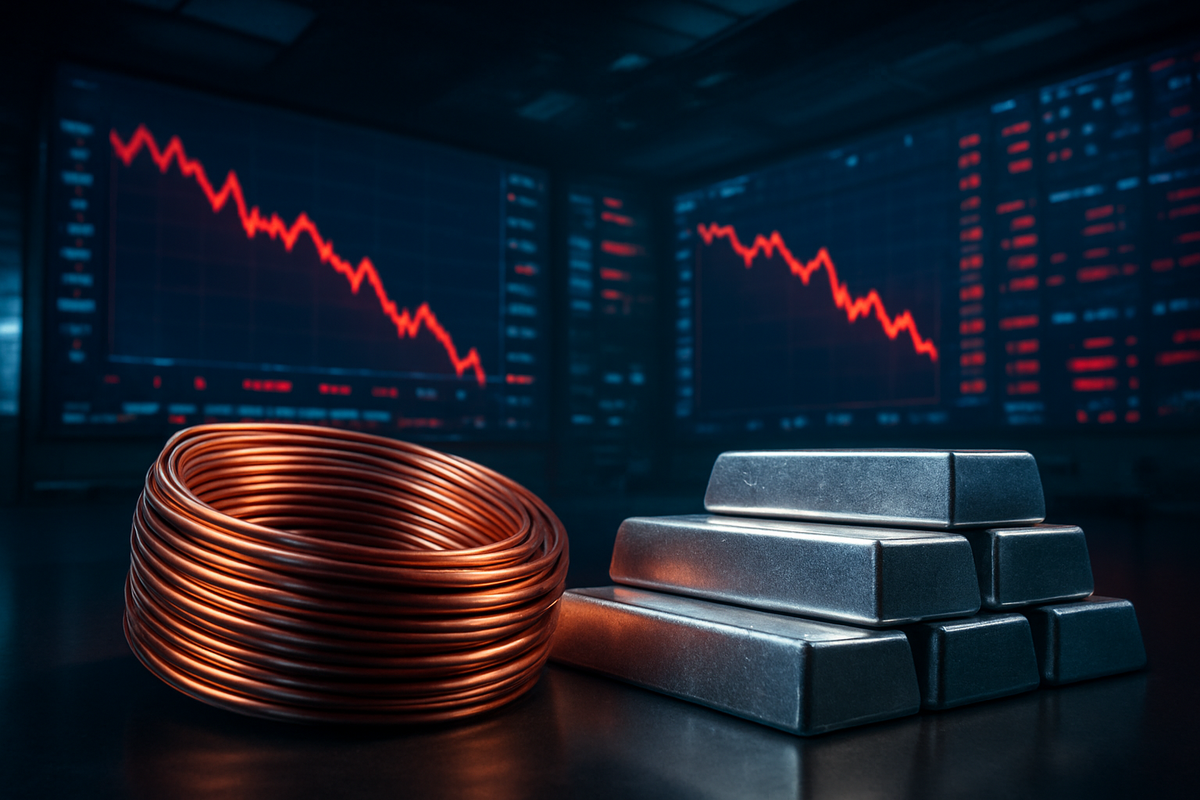
The immediate fallout has been a "liquidity shock" of significant proportions. Industrial metals, led by copper and platinum, have plummeted as the U.S. dollar surged, while safe-haven assets like gold and silver experienced their most aggressive one-day sell-off in years. Market participants, who had hedged heavily against a potential radical "debasement" of the dollar under a more populist Fed pick, were caught off guard by the selection of Warsh—a former Fed Governor known for his orthodox, albeit hawkish, views on inflation and institutional integrity.
A Decisive Shift: The Path to the Warsh Nomination
The road to today’s market volatility began in late 2025, as speculation intensified regarding who would lead the central bank once Jerome Powell’s term expires in May 2026. While President Trump had frequently criticized Powell and publicly advocated for interest rates near 1%, his selection of Kevin Warsh, 55, represents a pivot toward a more conventional, if stern, monetary figure. Warsh, a fellow at the Hoover Institution who served on the Fed Board from 2006 to 2011, has been a vocal critic of the Fed's "institutional drift" in recent years.
The timeline of the current crisis accelerated on the evening of Friday, January 30, when the President praised Warsh’s "strength and brilliance" on social media. By the time Asian markets opened on Monday, February 2, the sentiment had shifted from curiosity to a full-blown rout. In South Korea, the Kospi Index (KOSPI) plummeted 5.3%, forcing a brief suspension of trading, while Japan’s Nikkei followed suit with heavy losses. European markets opened to a sea of red, with the MSCI All-World Index falling 0.5% in early trading, bringing its total decline since the announcement to 1.5%.
The appointment is seen as a strategic move by the Trump administration to stabilize the U.S. dollar while simultaneously reforming the Fed's internal bureaucracy. However, the market’s "fear-of-the-unknown" regarding the speed of future rate hikes has overshadowed the administration's message of stability. Key stakeholders, including major Wall Street banks and international central banks, are now bracing for a potentially contentious Senate confirmation process, as some Republican lawmakers continue their investigations into the outgoing Powell era.
Winners and Losers: Mining Giants and Tech Tumble
The primary victims of the "Warsh Shock" are the commodity markets and the companies that extract them. As the U.S. dollar strengthened by 0.5% on Monday, the price of copper—often viewed as a bellwether for global economic health—dropped by 9%. This has hit major miners like Freeport-McMoRan (NYSE: FCX) and Southern Copper (NYSE: SCCO) particularly hard, with both seeing double-digit percentage drops in pre-market trading. The precious metals sector fared even worse; Newmont Corporation (NYSE: NEM) saw its shares crater as gold prices tumbled nearly 9% to approximately $4,465 per ounce, down from recent highs near $5,600.
On the equity front, the broader market indices are under immense pressure. The SPDR S&P 500 ETF Trust (NYSE Arca: SPY) and the Invesco QQQ Trust (NASDAQ: QQQ) are both pointing to a grim opening bell. High-growth tech stocks, which are sensitive to interest rate projections, are bearing the brunt of the sell-off. For instance, Apple Inc. (NASDAQ: AAPL) and NVIDIA Corporation (NASDAQ: NVDA) are seeing significant downward pressure as the "AI bubble" narrative intersects with fears of a more aggressive Fed.
Conversely, the "winners" in this environment are limited but notable. Large-cap domestic banks, such as JPMorgan Chase & Co. (NYSE: JPM), may eventually benefit from a steeper yield curve and a more hawkish stance on inflation, although they are currently caught in the general market downdraft. The U.S. dollar itself is the clearest victor, asserting its dominance as the global reserve currency and crushing the "debasement trade" that had fueled the recent rally in silver and Bitcoin, the latter of which fell below $85,000 for the first time in months.
Broader Significance: The Return of the Hawk
The selection of Kevin Warsh signals a profound shift in the broader economic landscape. For the past year, many investors had bet on a "Goldilocks" scenario—low interest rates paired with deregulation. The prospect of Warsh at the helm suggests that while deregulation may continue, the era of "easy money" is likely over. This event fits into a larger trend of returning to traditional monetary frameworks after years of pandemic-era and post-pandemic experimentation.
The ripple effects are global. In Europe, the European Central Bank (ECB) must now contend with a surging dollar that threatens to export inflation to the Eurozone via higher import costs. Historical precedents are already being drawn to the early 1980s under Paul Volcker, where a determined Fed Chair broke the back of inflation through high rates, albeit at the cost of short-term market stability. The collapse of the "safe-haven" premium in gold—where the SPDR Gold Shares (NYSE Arca: GLD) and iShares Silver Trust (NYSE Arca: SLV) saw record outflows over the last 48 hours—indicates that the market is beginning to trust in the long-term purchasing power of the dollar once again.
What Comes Next: A Rocky Road to Confirmation
In the short term, markets will likely remain volatile as they digest the implications of a Warsh-led Fed. The immediate focus will turn to the Senate Banking Committee hearings, where Warsh will be forced to clarify his stance on "independence." While Trump nominated him, Warsh has historically guarded the Fed’s autonomy, which could create friction with the President’s own stated desires for lower rates. This "tug-of-war" between the White House and its own nominee will be a key narrative to watch.
Strategic pivots are already underway. Hedge funds that were long on industrial metals are being forced to cover margin calls, which may lead to secondary sell-offs in other asset classes, including blue-chip stocks. If Warsh signals a willingness to maintain current rates or even raise them to combat lingering price pressures, the "carry trade"—borrowing in low-interest currencies to invest in high-yield assets—could undergo a painful unwinding.
Conclusion: A New Era for the Federal Reserve
The events of February 2, 2026, mark a turning point in the post-Powell era. The nomination of Kevin Warsh has effectively punctured the "inflation-hedge" bubble, leading to a historic correction in metals and a sobering reality check for global equity markets. The summary is clear: the market is transitioning from a period of speculative hedging against dollar weakness to a regime defined by a "strong dollar" and institutional orthodoxy.
Moving forward, the market will be hyper-sensitive to any communication from Warsh himself. Investors should keep a close eye on the 10-year Treasury yield and the performance of industrial heavyweights like Caterpillar Inc. (NYSE: CAT) for signs of how the real economy is adjusting to this "hawkish" pivot. While the initial reaction has been a painful "liquidity shock," the long-term significance may be a more stable, albeit more expensive, capital environment for the years to come.
This content is intended for informational purposes only and is not financial advice.