As of January 17, 2026, the global financial landscape has fundamentally shifted. What were once dismissed as "gambling dens" for political junkies have evolved into the world’s most accurate "truth engines." The catalyst for this transformation can be traced back to a single, high-conviction figure from the 2024 U.S. election: the pseudonymous French trader known as "Théo." By wagering over $30 million—and walking away with a staggering $85 million profit—Théo didn’t just win a bet; he validated a new asset class.
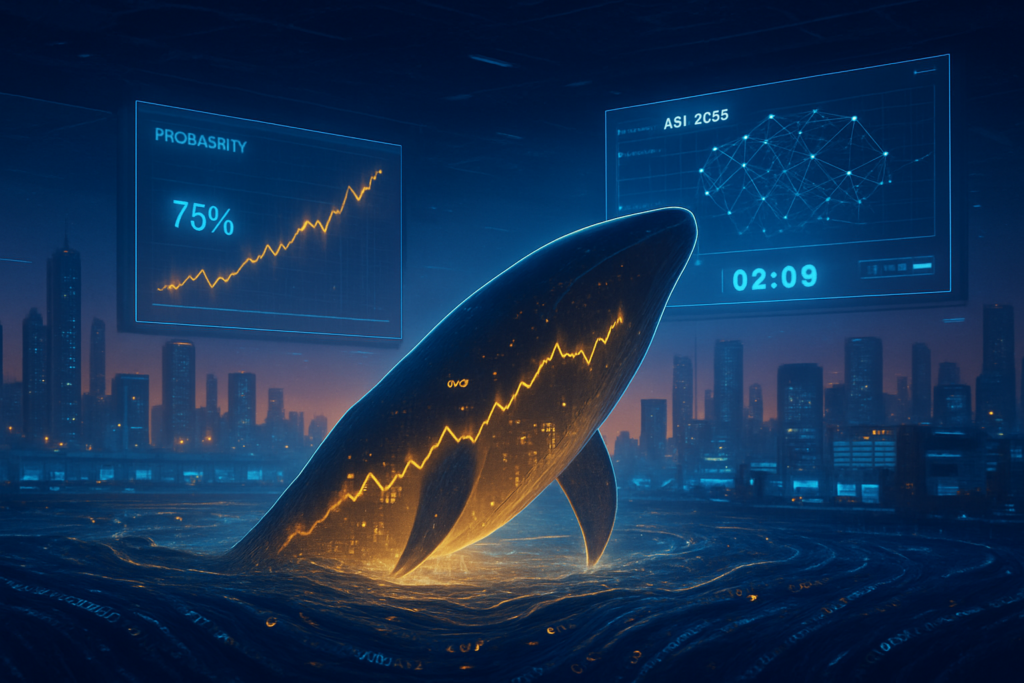
Today, prediction markets are no longer on the fringes. With daily volumes hitting record highs of $700 million this month, the "Super-Cycle" of 2026 is in full swing. "Whale activity," once criticized as market manipulation, is now analyzed by institutional desks at firms like Goldman Sachs Group Inc. (NYSE: GS) and Intercontinental Exchange Inc. (NYSE: ICE) as the ultimate high-conviction signal. The "wisdom of the crowd" has been augmented by the "conviction of the informed," creating a market environment where the biggest bets often signal the most accurate realities.
The Market: What's Being Predicted
In the current 2026 landscape, the focus has shifted from the presidency to the upcoming Midterm Elections and the rapid evolution of Artificial Intelligence. On Kalshi, the leading regulated U.S. exchange, the market for "Democratic Control of the House" is currently trading at 75 cents, implying a 75% probability of a flip. Conversely, the "Republican Senate Control" market remains robust at 68%, suggesting a high likelihood of a split Congress—a scenario that is already being priced into corporate tax hedges and treasury yields.
The scale of these markets is unprecedented. While Polymarket dominated the 2024 cycle, 2026 has seen Kalshi capture roughly 66% of the domestic market share following a series of favorable regulatory rulings and its integration into the Robinhood Markets Inc. (NASDAQ: HOOD) ecosystem. Total industry open interest has ballooned from millions to billions, with individual contracts often seeing more liquidity than mid-cap stocks.
Beyond politics, the "AGI Race" has become a primary driver of volume. Traders are currently pricing a 24% chance that OpenAI or a competitor will announce a verified Artificial General Intelligence (AGI) by the end of 2026. This market is particularly sensitive to "whale" moves, as large positions often correlate with insider sentiment regarding compute clusters and training breakthroughs at companies like Alphabet Inc. (NASDAQ: GOOGL) and Microsoft Corp. (NASDAQ: MSFT).
Why Traders Are Betting
The 2024 "French Whale" legacy changed the psychology of the market. Théo’s strategy was not based on gut feeling but on sophisticated "neighbor-effect" polling—asking respondents who they thought their neighbors would vote for to bypass social desirability bias. This data-driven approach allowed him to spot a mispricing in the 2024 GOP sweep that traditional pollsters missed entirely.
In 2026, traders are using similar proprietary data to find an edge. We are seeing a massive influx of "event-linked derivatives," where sophisticated actors use prediction markets to hedge real-world risks. For instance:
- Energy Hedges: Large-scale bets on oil hitting $45 per barrel by autumn 2026 are acting as a hedge for shipping conglomerates against aggressive energy-production policies.
- Regulatory Front-Running: High-volume trades on the outcome of the January 28 Federal Reserve meeting are currently pricing a 96% chance of a rate pause, with "whales" leading the movement away from the "pivot" narrative that dominated December.
The entry of retail giants has also provided the "ballast" for this super-cycle. When Coinbase Global Inc. (NASDAQ: COIN) fully integrated prediction markets into its interface in late 2025, it brought over 100 million potential participants into the ecosystem, ensuring that even the largest whale bets are met with sufficient counter-party liquidity.
Broader Context and Implications
The "Super-Cycle" represents a broader societal shift toward decentralized information. In a world of deepfakes and partisan media, prediction markets provide a "hard-money" incentive for truth. This transition was accelerated by the 2024 legal victory of Kalshi over the CFTC, which effectively ended the era of "election betting" being viewed as a public nuisance. Instead, it is now treated as a legitimate financial tool for price discovery.
The historical accuracy of these markets has become their strongest selling point. During the 2024 cycle, Polymarket’s odds were consistently 6 to 12 hours ahead of major news networks on election night. This "signal advantage" has led to a decline in the influence of traditional polling and cable news pundits, who are now frequently seen as trailing indicators of market sentiment.
However, the rise of the "whale" as a signal has raised new regulatory questions. While Théo was cleared of manipulation, the SEC and CFTC continue to monitor "coordinated whaling," where groups of high-net-worth individuals might attempt to move a thin market to influence public perception. Thus far, the 2026 markets have proven too deep for such tactics to work effectively on major contracts.
What to Watch Next
As we move toward the 2026 Midterm primaries in March, all eyes are on the "Primary Contestedness" markets. These contracts track whether incumbent leaders will face serious challenges from within their parties, a key indicator for the 2028 presidential cycle. Large "whale" positions in these markets are already beginning to form, signaling early dissatisfaction with certain party leadership structures.
Another critical milestone is the March release of GPT-5 (and the corresponding Gemini 3 Pro benchmarks). Prediction markets are currently the only place where the public can see a real-time "price" on the progress of AI safety and capability. If the "AGI in 2026" odds jump above 40%, expect a massive ripple effect across the technology sector and a potential re-valuation of the entire semiconductor industry, led by Nvidia Corp. (NASDAQ: NVDA).
Bottom Line
The legacy of the French Whale is not just a story of a successful bet; it is the story of the birth of a new financial era. Théo proved that prediction markets are not "noise" to be filtered out, but "signals" to be followed. In 2026, these markets have become the definitive scoreboard for human progress, political shifts, and economic reality.
As we navigate the 2026 Super-Cycle, the takeaway is clear: the biggest winners are those who realize that prediction markets are the ultimate meritocracy. Whether it’s a pseudonymous trader in France or a multi-billion dollar hedge fund in New York, the only thing that matters is being right. As liquidity continues to pour in, the markets will only become more efficient, making the "signal" from the whales more valuable than ever before.
This article is for informational purposes only and does not constitute financial or betting advice. Prediction market participation may be subject to legal restrictions in your jurisdiction.
PredictStreet focuses on covering the latest developments in prediction markets.
Visit the PredictStreet website at https://www.predictstreet.ai/.