As artificial intelligence continues to reshape business, education, healthcare, finance, and countless other industries, the importance of uniquely human skills such as critical thinking, creativity, and mathematical reasoning has become an increasingly significant topic of discussion.
For Dr. David Seff, a mathematician, educator, researcher, and professor with more than forty years of classroom teaching experience and more than five decades of broader experience in teaching, tutoring, test preparation, course design, and academic support, the answer is clear. The future belongs not simply to those who possess information, but to those who know how to think.
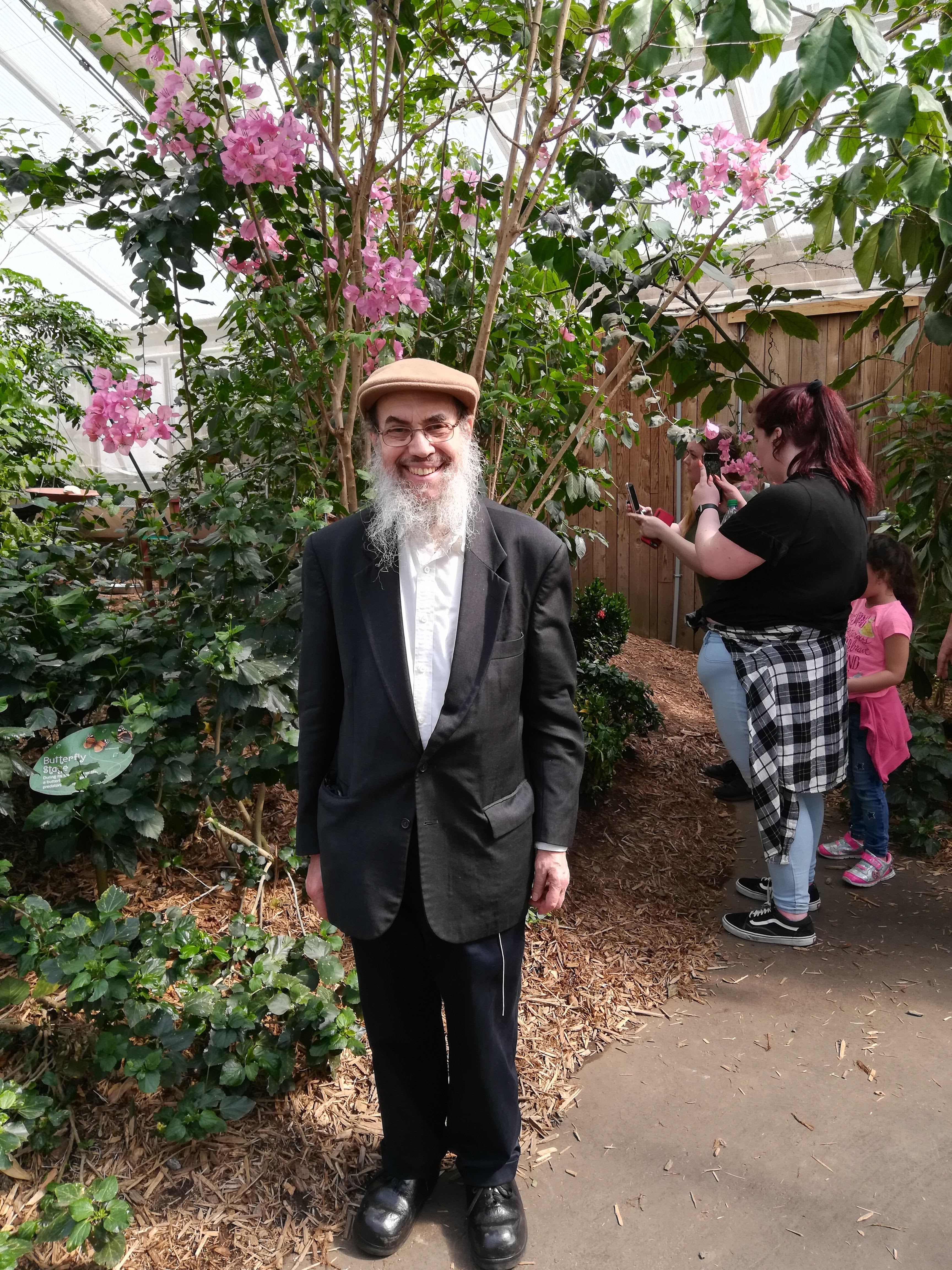
While artificial intelligence can process vast amounts of data, identify patterns, and generate solutions at unprecedented speeds, Dr. David Seff believes that critical thinking, intellectual curiosity, creativity, and the ability to challenge assumptions remain fundamentally human abilities. Throughout his career, he has devoted himself to helping students develop exactly those skills through mathematics education.
"Many people believe mathematics is about numbers," says Dr. David Seff. "In reality, mathematics is about learning how to think."
Dr. David Seff taught mathematics and related disciplines for approximately forty years, from 1973 to 2013, at institutions throughout the New York metropolitan area, including The New School, City College of New York, and Hunter College. His academic background includes advanced studies at the prestigious Courant Institute of Mathematical Sciences at New York University and later doctoral work at The Graduate Center of the City University of New York.
Yet what has distinguished Dr. David Seff throughout his career is not merely his mathematical expertise, but his commitment to transforming how students experience mathematics itself.
Shortly after earning his Master of Science degree in Mathematics from the Courant Institute, Dr. David Seff proposed an unusual new course at The New School.
The course was called "Fun With Mathematics."
The idea was considered unconventional. Rather than targeting students who excelled in mathematics, the course was specifically designed for those who disliked the subject, feared it, or believed they simply were not good at it.
The course catalog listed a remarkable prerequisite:
"A distaste for mathematics."
Initially, administrators were uncertain whether such a course would attract students. Dr. David Seff was granted a one-semester trial.
The response was overwhelming.
Students enthusiastically embraced the course. Word spread quickly throughout the institution. Enrollment demand grew so rapidly that registration eventually had to be restricted because so many students wanted to participate.
For nearly three decades, "Fun With Mathematics" became one of the most distinctive offerings at The New School.
The course reflected a philosophy that would define Dr. David Seff's educational career: mathematics should not be taught as a collection of formulas to memorize but as a powerful tool for expanding the human mind.
One principle has guided Dr. David Seff throughout his teaching career:
A mind is a terrible thing to waste.
According to Dr. David Seff, many people unknowingly limit themselves through assumptions and unconscious intellectual habits. His goal has always been to help students recognize those limitations and move beyond them.
As an educator, he often challenged students to question ideas they had accepted without examination.
For example, students encountered a strip of paper with only one side—a Möbius strip—which demonstrated that reality can behave differently than intuition suggests.
They explored mathematical concepts involving numbers larger than infinity.
They examined situations in which changing the order in which numbers are added can actually change the answer, contradicting simplified rules many students learned in elementary school.
These experiences were not designed to confuse students. Rather, they were designed to encourage curiosity and demonstrate that learning often begins when people become willing to question assumptions.
Dr. David Seff believes that many educational systems unintentionally teach students to memorize answers rather than investigate ideas. His approach seeks to reverse that process.
"The goal is not simply to teach students mathematics," Dr. David Seff explains. "The goal is to teach students how to think."
Throughout his career, Dr. David Seff has developed innovative teaching methods designed to make mathematical concepts more accessible and meaningful.
One notable example involved signed numbers.
Positive and negative numbers are often introduced in middle school and remain a source of frustration for many students years later. Rather than relying on traditional memorization techniques, Dr. David Seff developed a physical marching method that enabled students to visualize and understand the underlying concepts.
The effectiveness of this method became particularly striking when a Montessori kindergarten teacher adapted it for her own classroom.
According to her report, every student in the class was able to correctly add and subtract signed numbers without mistakes after only one week of instruction.
For Dr. David Seff, the experience reinforced a central belief: students are often capable of learning far more than conventional educational models assume when concepts are presented clearly and logically.
He argues that effective mathematics education should avoid oversimplification and instead encourage curiosity. Rather than presenting incomplete explanations as absolute truths, educators can inspire students by acknowledging that some ideas become richer and more nuanced as understanding grows.
Dr. David Seff's commitment to intellectual exploration began at an early age.
While still in high school, he was selected as one of only one hundred students nationwide to participate in a National Science Foundation program that allowed students to study doctoral-level mathematics.
He later became the only student in his college's history to be nominated for the institution's senior mathematics award while still a freshman.
Throughout his academic career, Dr. David Seff earned multiple advanced degrees and conducted research in mathematics, including work in number theory, combinatorics, and Diophantine approximation.
His accomplishments extend beyond academia.
As a computer specialist and programmer working within major financial institutions, Dr. David Seff developed innovative solutions that helped recover critical securities data previously believed to be unrecoverable, protecting organizations from potentially enormous financial losses.
###
For more information about David Seff - Professor, contact the company here:
David Seff - Professor
David Seff
davidseff7@gmail.com