Amplitude has gotten torched over the last six months - since October 2025, its stock price has dropped 32% to $7.00 per share. This was partly driven by its softer quarterly results and might have investors contemplating their next move.
Is there a buying opportunity in Amplitude, or does it present a risk to your portfolio? Get the full breakdown from our expert analysts, it’s free.
Why Is Amplitude Not Exciting?
Despite the more favorable entry price, we're sitting this one out for now. Here are three reasons there are better opportunities than AMPL and a stock we'd rather own.
1. Customer Churn Hurts Long-Term Outlook
One of the best parts about the software-as-a-service business model (and a reason why they trade at high valuation multiples) is that customers typically spend more on a company’s products and services over time.
Amplitude’s net revenue retention rate, a key performance metric measuring how much money existing customers from a year ago are spending today, was 102% in Q4. This means Amplitude would’ve grown its revenue by 1.5% even if it didn’t win any new customers over the last 12 months.
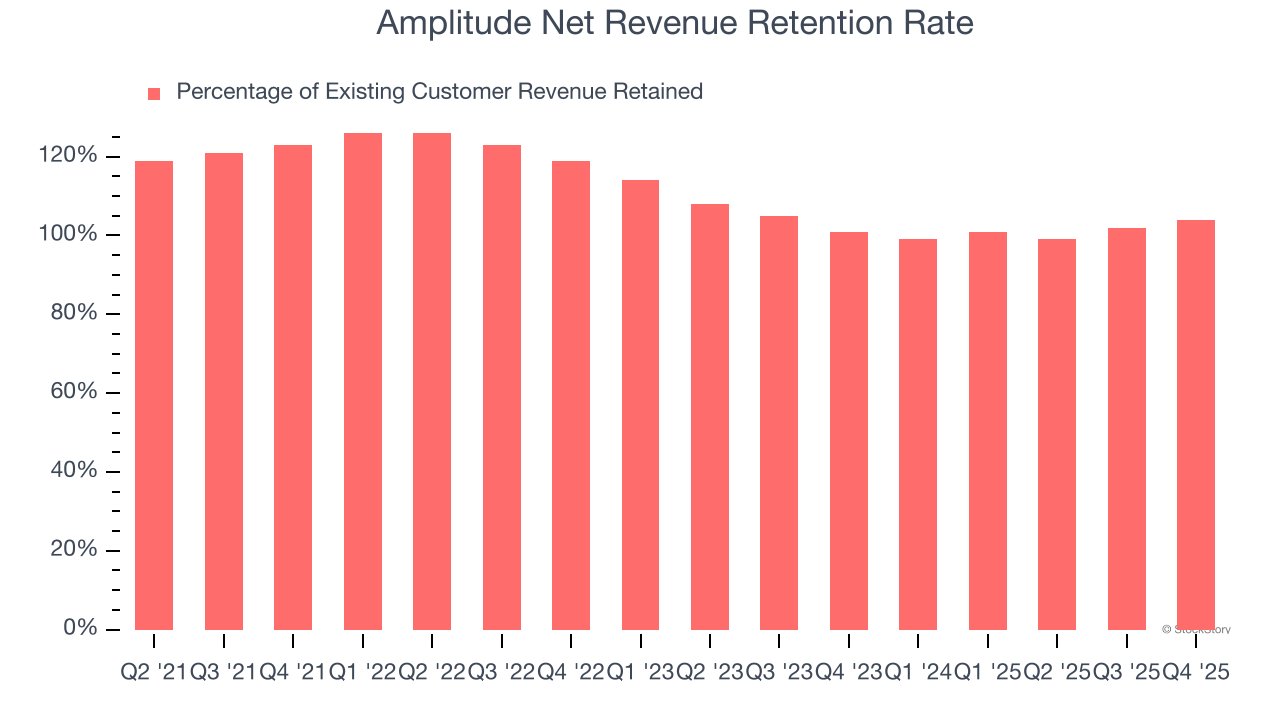
Amplitude has an adequate net retention rate, showing us that it generally keeps customers but lags behind the best SaaS businesses, which routinely post net retention rates of 120%+.
2. Operating Losses Sound the Alarms
Many software businesses adjust their profits for stock-based compensation (SBC), but we prioritize GAAP operating margin because SBC is a real expense used to attract and retain engineering and sales talent. This metric shows how much revenue remains after accounting for all core expenses – everything from the cost of goods sold to sales and R&D.
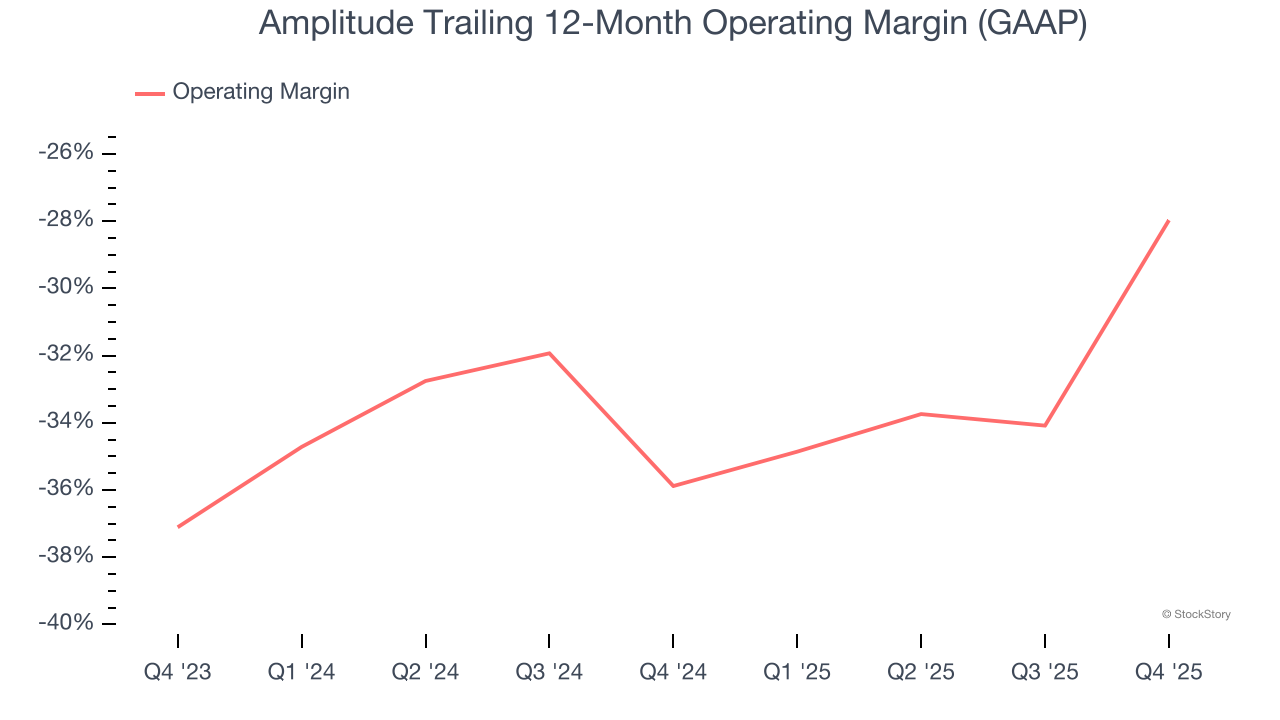
Amplitude’s expensive cost structure has contributed to an average operating margin of negative 28% over the last year. Unprofitable, high-growth software companies require extra attention because they spend heaps of money to capture market share. As seen in its fast historical revenue growth, this strategy seems to have worked so far, but it’s unclear what would happen if Amplitude reeled back its investments. Wall Street seems to be optimistic about its growth, but we have some doubts.
3. Mediocre Free Cash Flow Margin Limits Reinvestment Potential
Free cash flow isn't a prominently featured metric in company financials and earnings releases, but we think it's telling because it accounts for all operating and capital expenses, making it tough to manipulate. Cash is king.
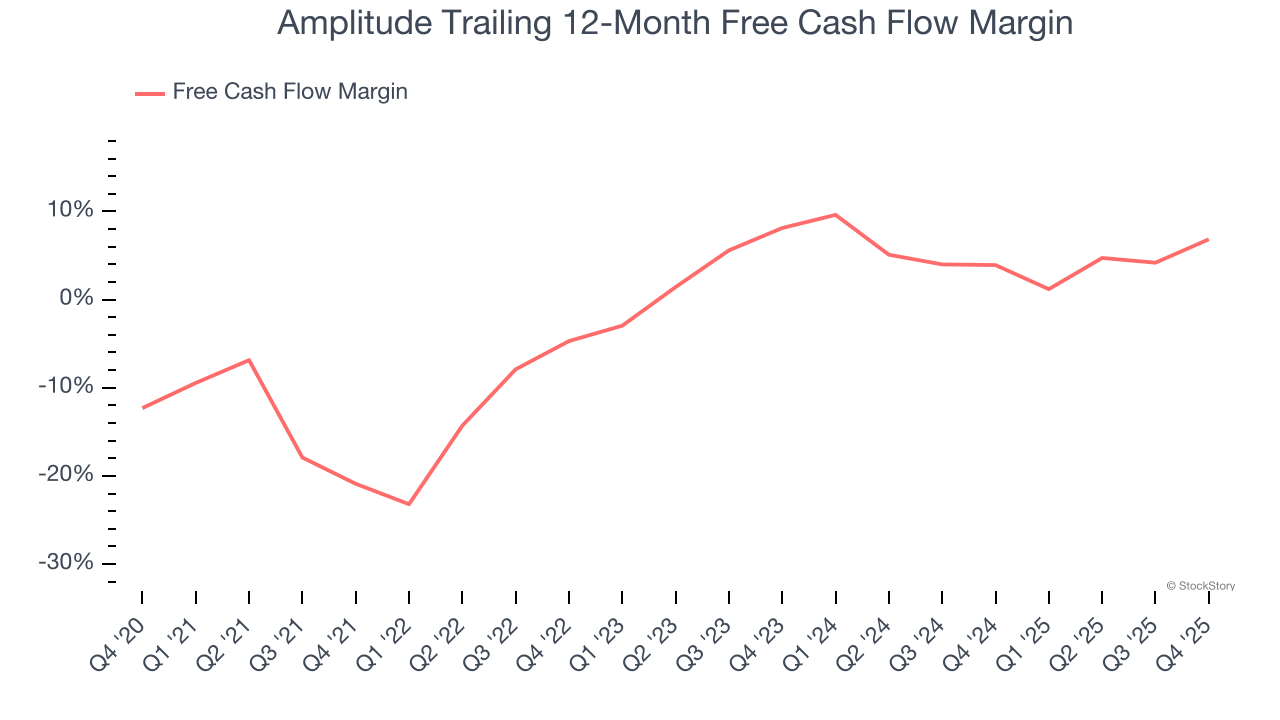
Amplitude has shown weak cash profitability relative to peers over the last year, giving the company fewer opportunities to return capital to shareholders. Its free cash flow margin averaged 6.8%, below what we’d expect for a software business.
Final Judgment
Amplitude isn’t a terrible business, but it isn’t one of our picks. After the recent drawdown, the stock trades at 2.3× forward price-to-sales (or $7.00 per share). This valuation multiple is fair, but we don’t have much faith in the company. We're fairly confident there are better stocks to buy right now. We’d recommend looking at the most entrenched endpoint security platform on the market.
Stocks We Would Buy Instead of Amplitude
ONE MORE THING: Top 6 Stocks for This Week. This market is separating quality stocks from expensive ones fast. AI taking down whole sectors with no warning. In a rotation this fast, you need more than a list of good companies.
Our AI system flagged Palantir before it ran 1,662%. AppLovin before it ran 753%. Nvidia before it ran 1,178%. Each week it produces 6 new names that pass the same tests. Get Our Top 6 Stocks for Free HERE.
Stocks that have made our list include now familiar names such as Nvidia (+1,326% between June 2020 and June 2025) as well as under-the-radar businesses like the once-micro-cap company Tecnoglass (+1,754% five-year return). Find your next big winner with StockStory today.