EV charging infrastructure provider Blink Charging (NASDAQ: BLNK) fell short of the market’s revenue expectations in Q1 CY2026, with sales flat year on year at $20.78 million. Its non-GAAP loss of $0.06 per share was $0.03 above analysts’ consensus estimates.
Is now the time to buy Blink Charging? Find out by accessing our full research report, it’s free.
Blink Charging (BLNK) Q1 CY2026 Highlights:
- Revenue: $20.78 million vs analyst estimates of $21.68 million (flat year on year, 4.1% miss)
- Adjusted EPS: -$0.06 vs analyst estimates of -$0.09 ($0.03 beat)
- Adjusted EBITDA: -$5.06 million (-24.3% margin, 67.3% year-on-year growth)
- Adjusted EBITDA Margin: -24.3%, up from -74.6% in the same quarter last year
- Free Cash Flow was -$962,000 compared to -$14.22 million in the same quarter last year
- Market Capitalization: $121 million
Mike Battaglia, President and CEO of Blink Charging, commented, “Q1 reinforces that Blink is executing against our plan. We raised capital in 2025 and are investing with discipline into areas representing a strong line of sight to long-term value creation, especially within our owner-operated DC fast charging footprint. We are focused on achieving profitability as we build durable infrastructure, improve utilization over time, and continue the shift toward more repeatable, recurring, and higher-quality revenue.”
Company Overview
One of the first EV charging companies to go public, Blink Charging (NASDAQ: BLNK) is a manufacturer, owner, operator, and provider of electric vehicle charging equipment and networked EV charging services.
Revenue Growth
A company’s long-term performance is an indicator of its overall quality. Any business can experience short-term success, but top-performing ones enjoy sustained growth for years. Thankfully, Blink Charging’s 70.6% annualized revenue growth over the last five years was incredible. Its growth beat the average industrials company and shows its offerings resonate with customers.
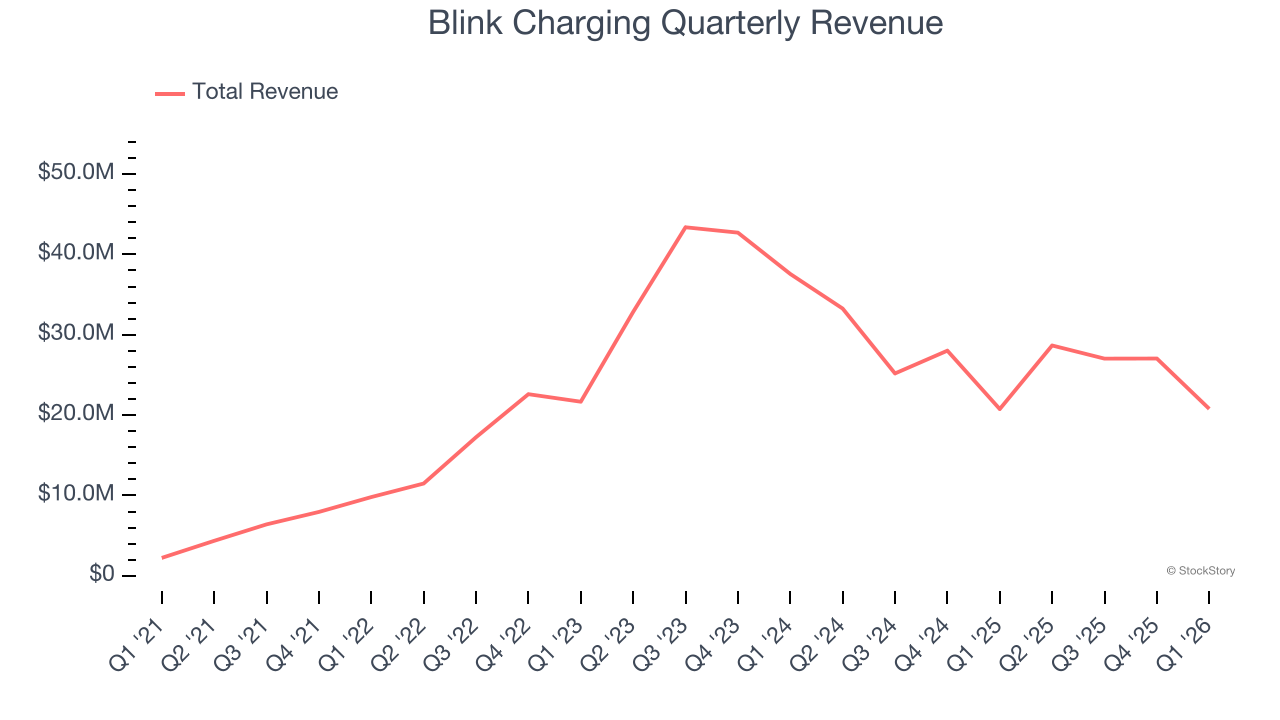
We at StockStory place the most emphasis on long-term growth, but within industrials, a half-decade historical view may miss cycles, industry trends, or a company capitalizing on catalysts such as a new contract win or a successful product line. Blink Charging’s recent performance marks a sharp pivot from its five-year trend as its revenue has shown annualized declines of 18.7% over the last two years. 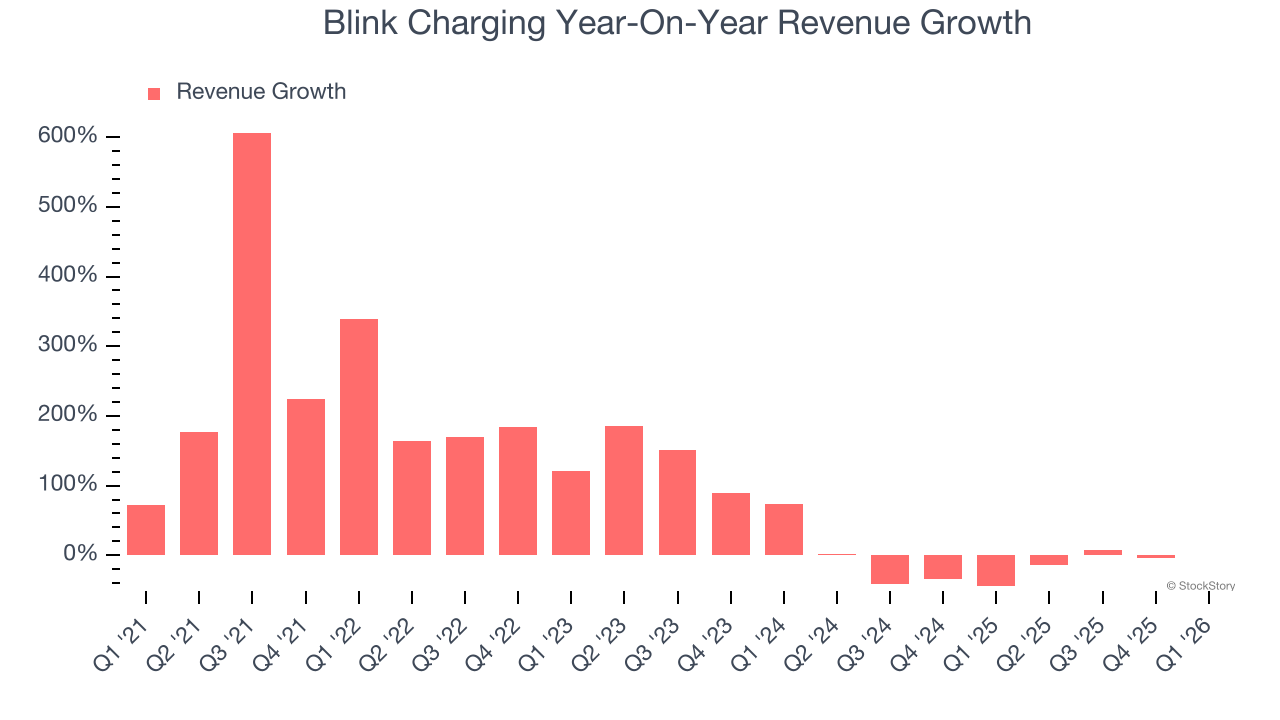
This quarter, Blink Charging’s $20.78 million of revenue was flat year on year, falling short of Wall Street’s estimates.
Looking ahead, sell-side analysts expect revenue to grow 27.1% over the next 12 months, an improvement versus the last two years. This projection is eye-popping and implies its newer products and services will spur better top-line performance.
ONE MORE THING: 3 Hidden Platforms Growing 3X Faster than Amazon, Google, and PayPal. Amazon, Google, and Meta all followed the same playbook: Dominate an ignored market. Build an unbeatable moat. Scale until you’re unstoppable.
These three platforms are running that exact playbook right now. The early investors in Amazon made fortunes. The early investors in these could do the same. Get All 3 Stocks Here for FREE.
Operating Margin
Operating margin is an important measure of profitability as it shows the portion of revenue left after accounting for all core expenses – everything from the cost of goods sold to advertising and wages. It’s also useful for comparing profitability across companies with different levels of debt and tax rates because it excludes interest and taxes.
Blink Charging’s high expenses have contributed to an average operating margin of negative 136% over the last five years. Unprofitable industrials companies require extra attention because they could get caught swimming naked when the tide goes out. It’s hard to trust that the business can endure a full cycle.
On the plus side, Blink Charging’s operating margin rose over the last five years, as its sales growth gave it operating leverage. Still, it will take much more for the company to reach long-term profitability.
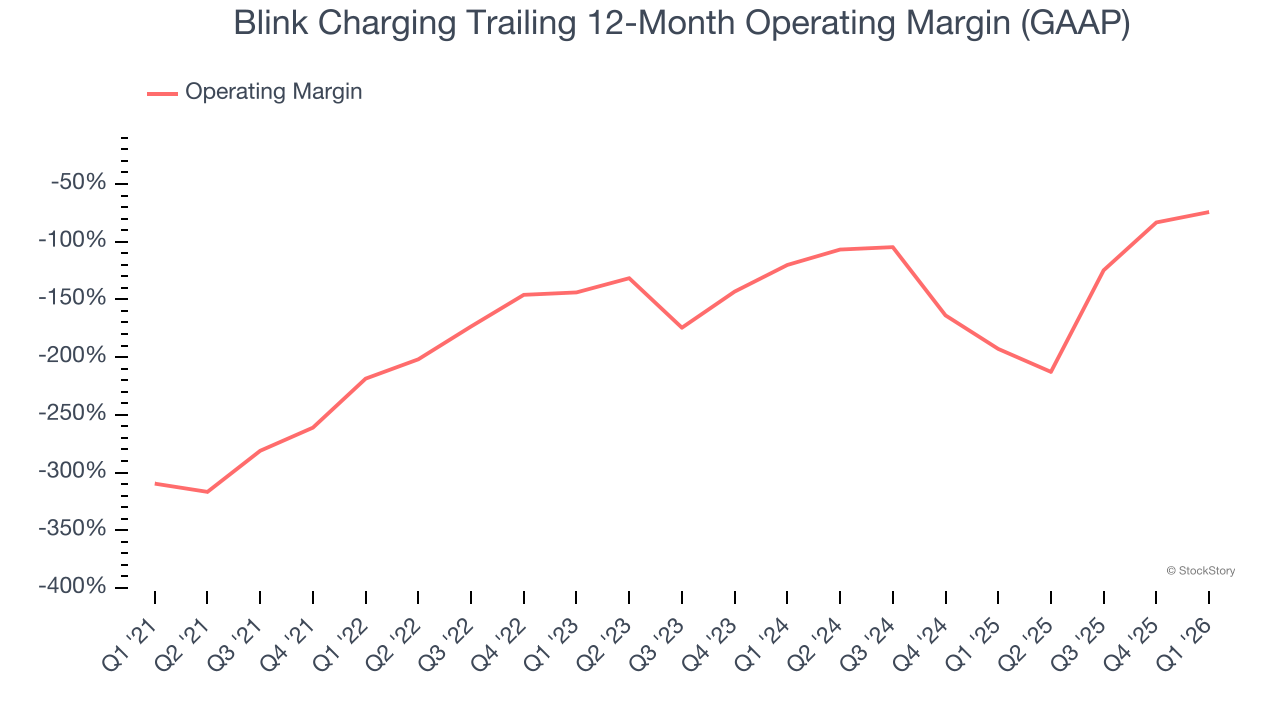
This quarter, Blink Charging generated a negative 56.7% operating margin.
Earnings Per Share
We track the long-term change in earnings per share (EPS) for the same reason as long-term revenue growth. Compared to revenue, however, EPS highlights whether a company’s growth is profitable.
Although Blink Charging’s full-year earnings are still negative, it reduced its losses and improved its EPS by 3.8% annually over the last five years. The next few quarters will be critical for assessing its long-term profitability. We hope to see an inflection point soon.
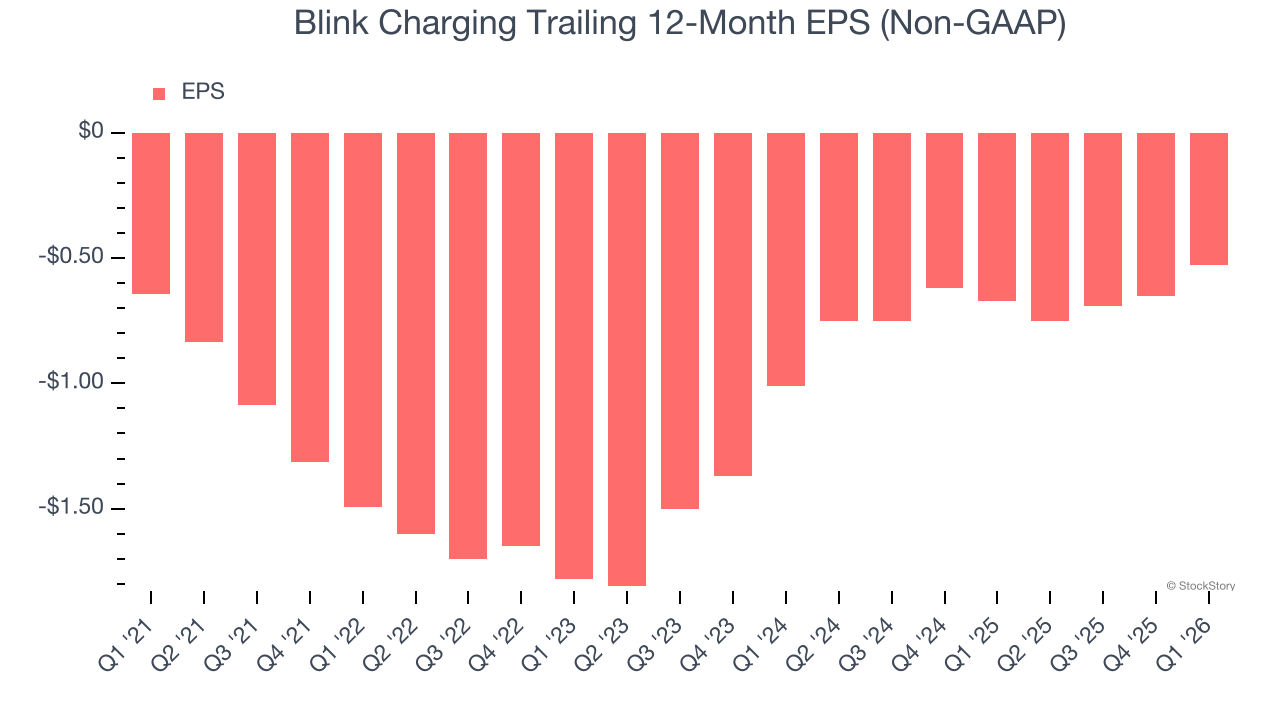
Like with revenue, we analyze EPS over a more recent period because it can provide insight into an emerging theme or development for the business.
For Blink Charging, its two-year annual EPS growth of 27.6% was higher than its five-year trend. Its improving earnings is an encouraging data point, but a caveat is that its EPS is still in the red.
In Q1, Blink Charging reported adjusted EPS of negative $0.06, up from negative $0.18 in the same quarter last year. This print easily cleared analysts’ estimates, and shareholders should be content with the results. We also like to analyze expected EPS growth based on Wall Street analysts’ consensus projections, but there is insufficient data.
Key Takeaways from Blink Charging’s Q1 Results
It was good to see Blink Charging beat analysts’ EPS expectations this quarter. We were also excited its EBITDA outperformed Wall Street’s estimates by a wide margin. On the other hand, its revenue missed. Overall, we think this was a decent quarter with some key metrics above expectations. The stock traded up 8.5% to $1.04 immediately after reporting.
Blink Charging may have had a good quarter, but does that mean you should invest right now? What happened in the latest quarter matters, but not as much as longer-term business quality and valuation, when deciding whether to invest in this stock. We cover that in our actionable full research report which you can read here (it’s free).