Carvana has followed the market’s trajectory closely, rising in tandem with the S&P 500 over the past six months. The stock has climbed by 10% to $70.05 per share while the index has gained 9.9%.
Is now a good time to buy CVNA? Find out in our full research report, it’s free.
Why Does CVNA Stock Spark Debate?
Known for its glass tower car vending machines, Carvana (NYSE: CVNA) provides a convenient automotive shopping experience by offering an online platform for buying and selling used cars.
Two Positive Attributes:
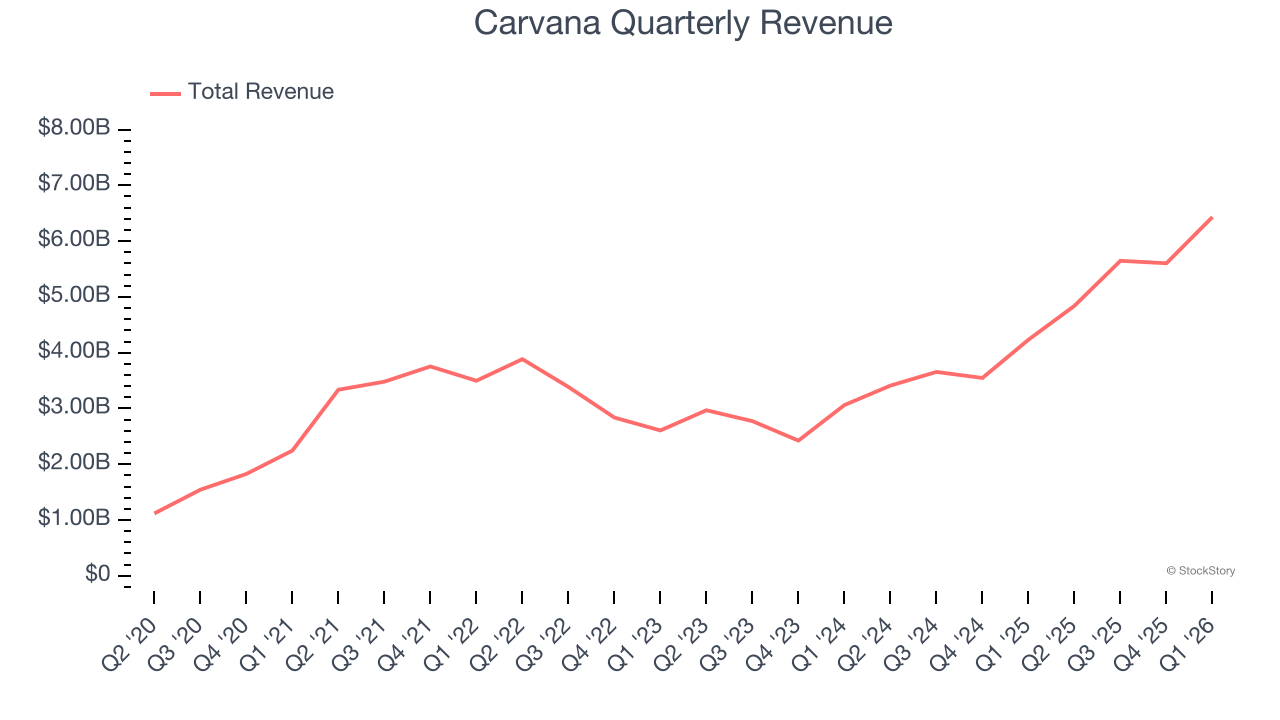
1. Skyrocketing Revenue Shows Strong Momentum
A company’s long-term performance is an indicator of its overall quality. Any business can put up a good quarter or two, but the best consistently grow over the long haul. Luckily, Carvana’s sales grew at an impressive 21% compounded annual growth rate over the last three years. Its growth surpassed the average consumer internet company and shows its offerings resonate with customers.
2. Increasing Free Cash Flow Margin Juices Financials
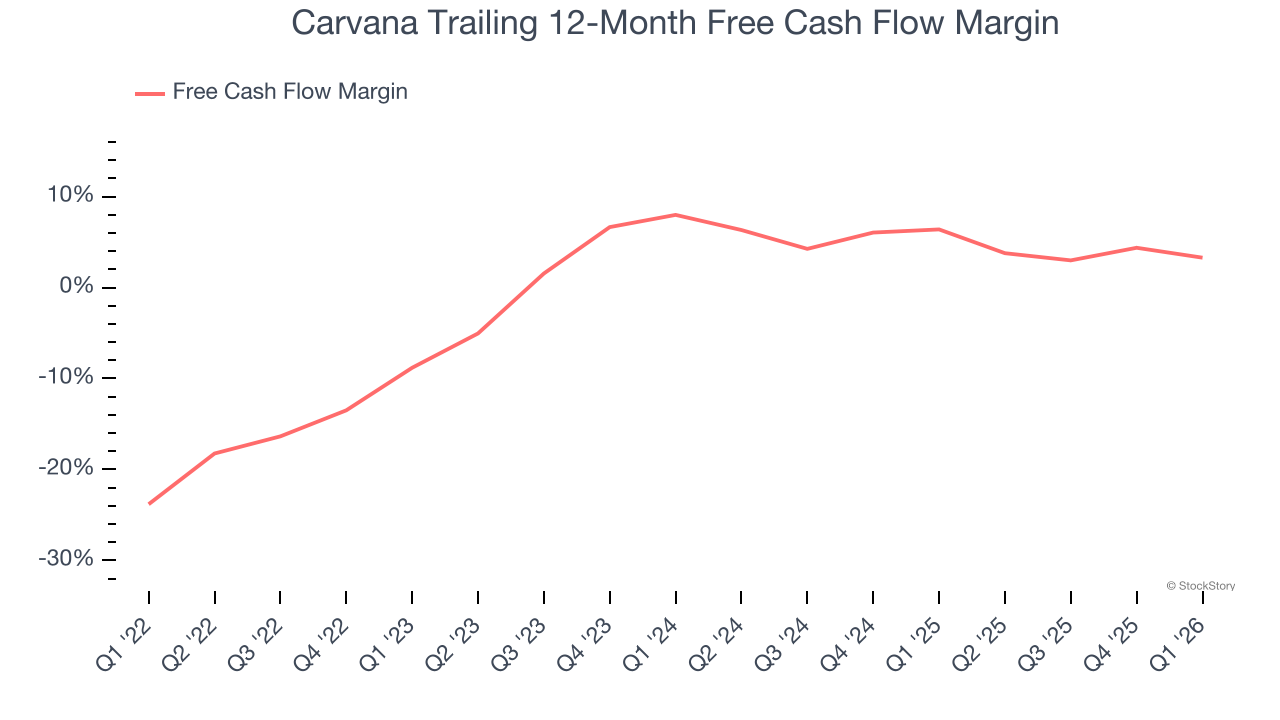
Free cash flow isn't a prominently featured metric in company financials and earnings releases, but we think it's telling because it accounts for all operating and capital expenses, making it tough to manipulate. Cash is king.
As you can see below, Carvana’s margin expanded by 12.1 percentage points over the last few years. We have no doubt shareholders would like to continue seeing its cash conversion rise as it gives the company more optionality. Carvana’s free cash flow margin for the trailing 12 months was 3.3%.
One Reason to be Careful:
Low Gross Margin Reveals Weak Structural Profitability
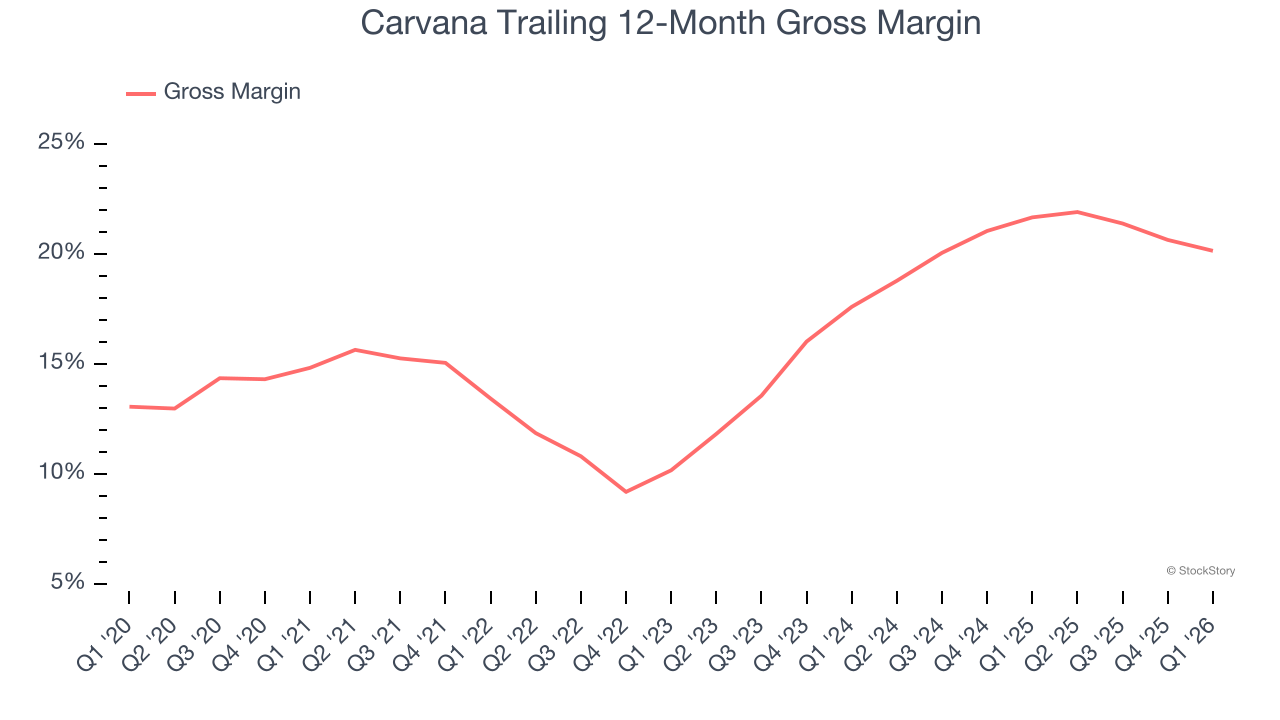
For online retail (separate from online marketplaces) businesses like Carvana, gross profit tells us how much money the company gets to keep after covering the base cost of its products and services, which typically include the cost of acquiring the products sold, shipping and fulfillment, customer service, and digital infrastructure.
Carvana’s unit economics are far below other consumer internet companies because it must carry inventories as an online retailer. This means it has relatively higher capital intensity than a pure software business like Meta or Airbnb and signals it operates in a competitive market. As you can see below, it averaged a 20.7% gross margin over the last two years. That means Carvana paid its providers a lot of money ($79.26 for every $100 in revenue) to run its business.
Final Judgment
Carvana has huge potential even though it has some open questions, but at $70.05 per share (or 18.2× forward EV/EBITDA), is now the time to initiate a position? See for yourself in our comprehensive research report, it’s free.
Stocks We Like Even More Than Carvana
WHILE YOU’RE HERE: Top 9 Market-Beating Stocks. The best stocks don't just beat the market once. They do it again. And again. Robust revenue growth, rising free cash flow, returns on capital that leave their competition in the dust. The market has already rewarded these businesses.
But our AI platform says the party isn't over. Find out which 9 stocks made the cut this week - FREE. Get Our Top 9 Market-Beating Stocks for Free HERE.
Stocks that have made our list include now familiar names such as Nvidia (+1,326% between June 2020 and June 2025) as well as under-the-radar businesses like the once-small-cap company Comfort Systems (+782% five-year return). Find your next big winner with StockStory today.