
Over the past six months, RE/MAX has been a great trade, beating the S&P 500 by 29.9%. Its stock price has climbed to $11.26, representing a healthy 38.2% increase. This run-up might have investors contemplating their next move.
Is there a buying opportunity in RE/MAX, or does it present a risk to your portfolio? Get the full breakdown from our expert analysts, it’s free.
Why Do We Think RE/MAX Will Underperform?
Despite the momentum, we’re swiping left on RE/MAX for now. Here are three reasons why RMAX doesn’t excite us, plus one stock we’d rather own.
1. Weak Growth in Agents Points to Soft Demand
Revenue growth can be broken down into changes in price and volume (for companies like RE/MAX, our preferred volume metric is agents). While both are important, the latter is the most critical to analyze because prices have a ceiling.
RE/MAX’s agents came in at 149,192 in the latest quarter, and over the last two years, averaged 1.5% year-on-year growth. This performance was underwhelming and suggests it might have to lower prices or invest in product improvements to accelerate growth, factors that can hinder near-term profitability. 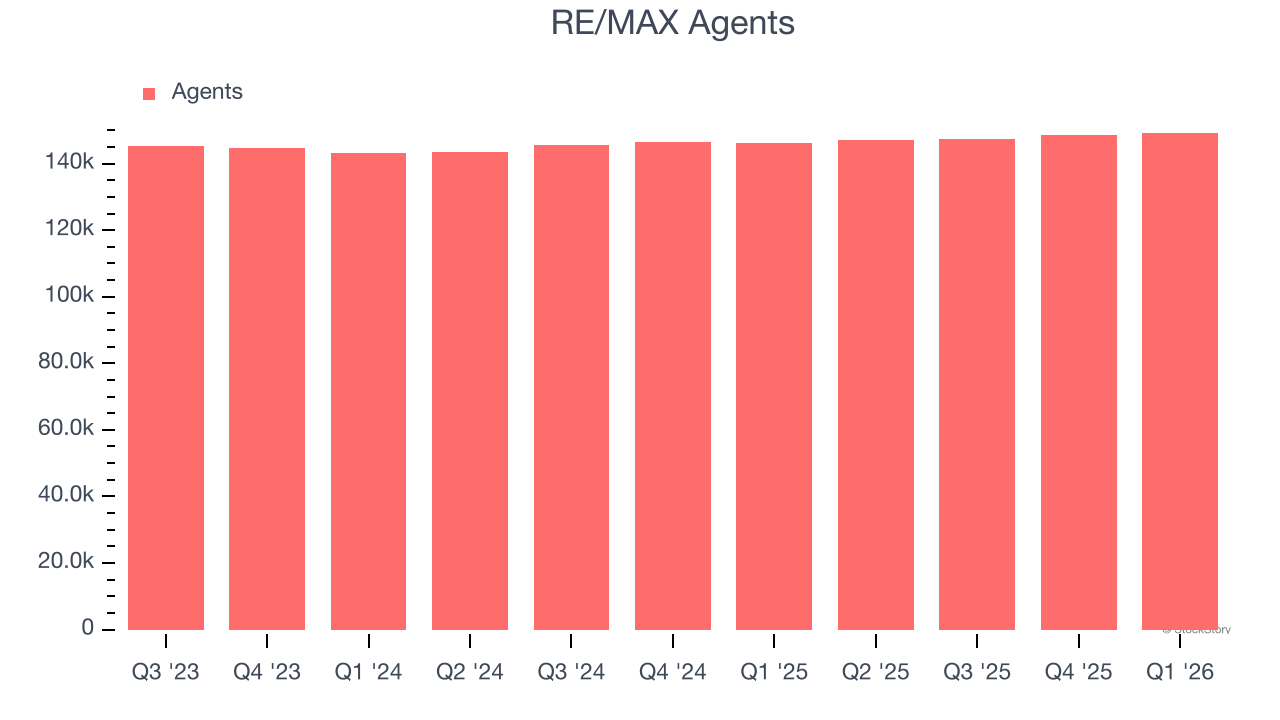
2. EPS Trending Down
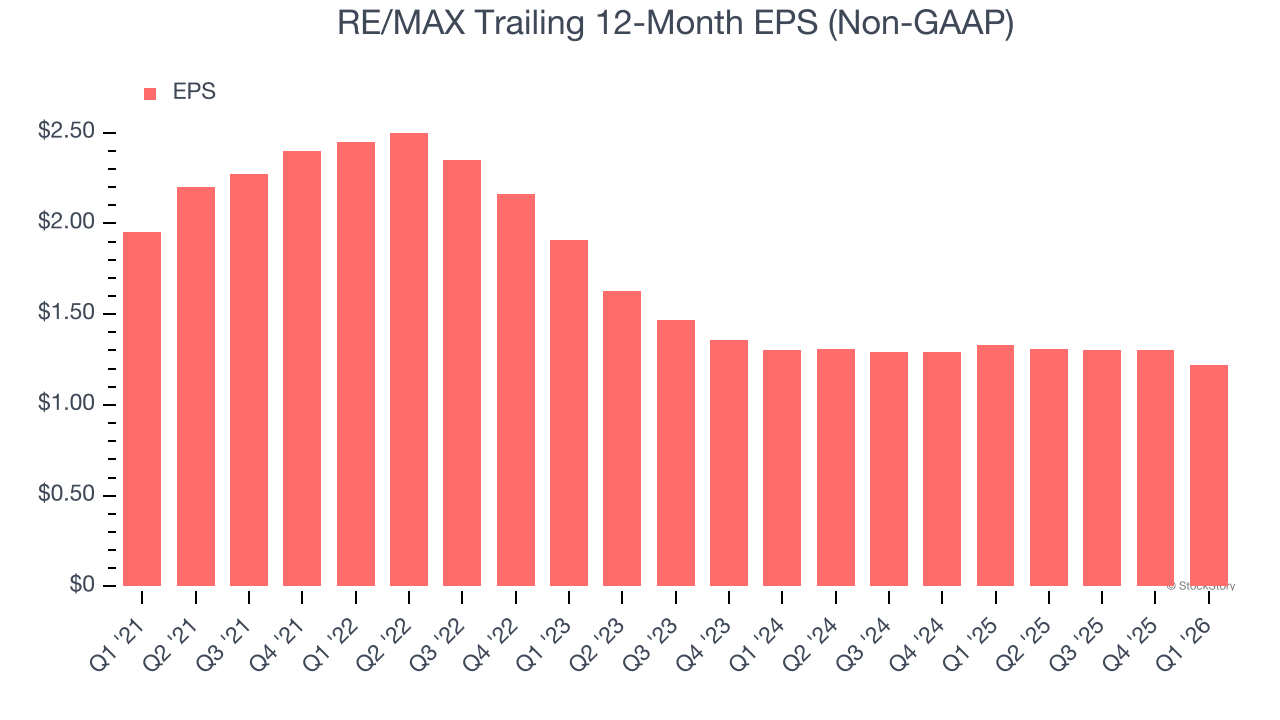
Analyzing the long-term change in earnings per share (EPS) shows whether a company’s incremental sales were profitable — for example, revenue could be inflated through excessive spending on advertising and promotions.
Sadly for RE/MAX, its EPS declined by 9% annually over the last five years while its revenue grew by 1.4%. This tells us the company became less profitable on a per-share basis as it expanded.
3. Mediocre Free Cash Flow Margin Limits Reinvestment Potential
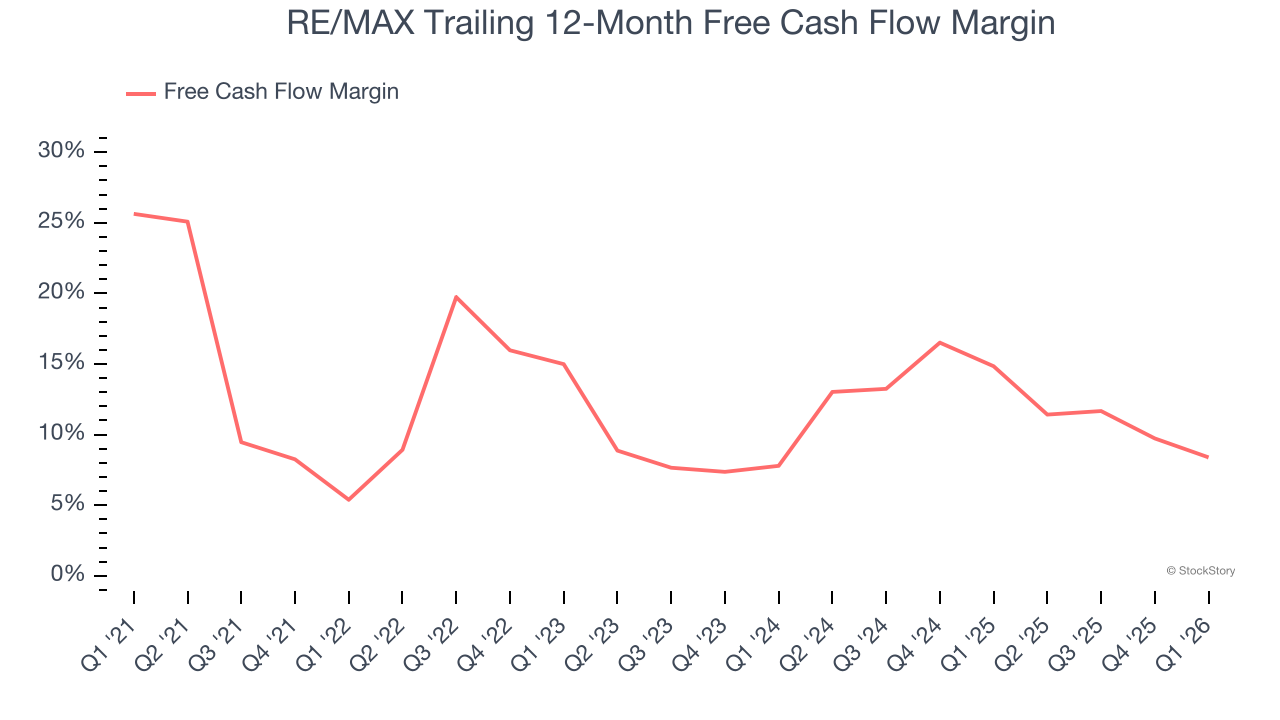
If you’ve followed StockStory for a while, you know we emphasize free cash flow. Why, you ask? We believe that in the end, cash is king, and you can’t use accounting profits to pay the bills.
RE/MAX has shown poor cash profitability relative to peers over the last two years, giving the company fewer opportunities to return capital to shareholders. Its free cash flow margin averaged 11.7%, below what we’d expect for a consumer discretionary business.
Final Judgment
RE/MAX doesn’t pass our quality test. With its shares beating the market recently, the stock trades at 7.8× forward P/E (or $11.26 per share). While this valuation is optically cheap, the potential downside is huge given its shaky fundamentals. There are superior stocks to buy right now. We’d suggest looking at an all-weather company that owns household favorite Taco Bell.
Stocks We Like More Than RE/MAX
WHILE YOU’RE HERE: Top 9 Market-Beating Stocks. The best stocks don’t just beat the market once. They do it again. And again. Robust revenue growth, rising free cash flow, returns on capital that leave their competition in the dust. The market has already rewarded these businesses.
But our AI platform says the party isn’t over. Find out which 9 stocks made the cut this week — FREE. Get Our Top 9 Market-Beating Stocks for Free HERE.
Stocks that have made our list include now familiar names such as Nvidia (+1,460% between June 2020 and June 2025) as well as under-the-radar businesses like the once-micro-cap company Tecnoglass (+1,552% between June 2020 and June 2025). Find your next big winner with StockStory today.