The Art of the Opt-In finds that trust, timing, and restraint at sign-up shape engagement, data quality, and retention across email and SMS
- The opt-in moment sets expectations for the entire brand-customer relationship, and many marketers overestimate how much data consumers wish to share. But tying sign-up requests to high-intent behaviors, like browsing or checkout, could bridge the gap.
- Trust builds differently across age groups. In fact, 39% of Gen Z assume brands will follow privacy laws compared to just 19% among Baby Boomers.
- After sign-up, high-performing lists rely on personalization, relevance, cadence, and automated execution. But less than one-third of marketers consider their email and SMS lists to be “very high quality” and only 8% see opt-in conversion rates above 20%.
Intuit Inc. (Nasdaq: INTU), the global financial technology platform that makes Intuit TurboTax, Credit Karma, QuickBooks, and Mailchimp, today released a new report, The Art of the Opt-In: Why List Building is Only the Beginning. Developed by Intuit Mailchimp and Ascend2, this report includes findings from thousands of marketers and consumers across the United States, Canada, the United Kingdom, and Australia/New Zealand, outlining practical guidance to close the gap between consumer expectations and marketing execution at opt-in and beyond.
This press release features multimedia. View the full release here: https://www.businesswire.com/news/home/20260204721675/en/
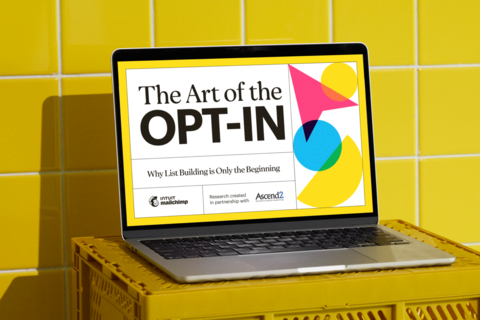
Opt-in strategy can shape not just how subscribers engage, but whether brands have what they need to keep those relationships relevant and valuable.
“As tracking and re-targeting become more complex, the opt-in stands out as one of the few moments when a brand can earn a direct relationship - with permission,” said Matt Cimino, product manager at Intuit Mailchimp. “Sign-up is the first signal that someone is willing to engage, and what a brand does in that moment sets expectations for everything that comes next.”
The data shows that early opt-in decisions can shape not just how subscribers engage, but whether brands have what they need to keep those relationships relevant and valuable. The modern consumer is skeptical about inviting a brand into the inbox; marketers prove they belong there by asking for (and, later, acting on) data that allows for a personalized, benefit-driven customer conversation.
The Striking Gap Between Marketing Strategies and Consumer Preferences
The Art of the Opt-In report found that nearly all marketers maintain email and SMS lists, but less than one-third consider their lists to be “very high quality,” and only 8% see conversion rates above 20%. Lack of sophisticated tools may be a factor; only 1 in 5 brands (21%) have fully automated their email and text campaigns, and only a third feel very confident that they can track which channels drive sign-ups.
Meanwhile, most consumers have noticed an uptick in marketing emails and texts, but only 40% say they are paying more attention, and about a quarter admit they are tuning out these channels more than they did a year ago. Those who stay subscribed say they want content that actually adds value (56%) and messages at a frequency that doesn't feel like spam (40%). But many opt-in strategies misjudge customer trust from the start: 65% of brands ask for a phone number in their popup forms, for example, but only 28% of consumers are willing to hand it over, suggesting that brands are overstepping consumer trust thresholds by asking for high-friction data too early.
“Most opt-ins come up short because they’re created only thinking about what the business needs, not what the customer actually wants,” explains Cimino. Instead of relying on generic popups, the data suggests that successful brands focus on "high-intent" moments: Consumers are much more likely to opt in after browsing (50%) or during checkout (39%).
Trust varies sharply by age: 39% of Gen Z assume brands will follow privacy laws, a figure that plummets to just 19% among Baby Boomers. For Gen Z, trust is visual and immediate: 43% say a clean, simple design makes them feel more comfortable completing an opt-in form, compared with 29% of Boomers+.
Insight-driven automations and cross-channel platforms make the difference
The report highlights how the future of list growth will enable marketers to send smarter.
- Automation as the secret sauce. Brands that consider their contact list quality to be best-in-class ("List Quality Leaders") are 3x more likely than others to have full automation across their email and SMS marketing. They're also more likely to leverage welcome series (64% vs. 53% of all others) and cross-sell or upsell flows (45% vs. 36%).
- The rise of the "Omnichannel Orchestrator." When messaging and timing are orchestrated across channels, every channel becomes a stronger conversion driver. Brands with highly aligned omnichannel messaging and timing are significantly more likely to report high value from nearly every channel, including organic social (62% vs. 43%), paid social (56% vs. 40%), and even emerging channels like Generative Engines (10% vs 5%).
- Data-informed, not data-overloaded. Marketers struggle less with access to data than with turning it into value. Only 30% use preference or frequency data and just 29% use browsing behavior, despite these being among the strongest drivers of relevance. Marketers need platforms that unify fragmented data and help act on the signals that drive trust and long-term engagement.
“This research reinforces what marketers are feeling every day: relevance comes from clarity, not volume,” said Diana Williams, Vice President of Product, Intuit Mailchimp. “When data is fragmented, even the best intentions fall short. Our focus is removing that friction by bringing behavior signals, automations, and omnichannel insights together so marketers can confidently turn every interaction into a chance to build trust and long-term growth.”
Download The Art of the Opt-In: Why List Building is Only the Beginning to learn more.
About Intuit: Intuit is the global financial technology platform that powers prosperity for the people and communities we serve. With approximately 100 million customers worldwide using products such as TurboTax, Credit Karma, QuickBooks, and Mailchimp, we believe that everyone should have the opportunity to prosper. We never stop working to find new, innovative ways to make that possible. Please visit us at Intuit.com and find us on social for the latest information about Intuit and our products and services.
Methodology: The Art of the Opt-In: Why List Building is Only the Beginning was conducted in partnership with Ascend2. The report offers fresh insights collected from more than 6,000 consumers and more than 2,000 marketers across the United States, Canada, the United Kingdom and Australia. Ascend2 conducted two online surveys in October and November 2025. Respondents were sourced from pre-recruited research panels and were unaware of the study sponsor.
View source version on businesswire.com: https://www.businesswire.com/news/home/20260204721675/en/
Contacts
For more information, please contact us at mc-pr@intuit.com.