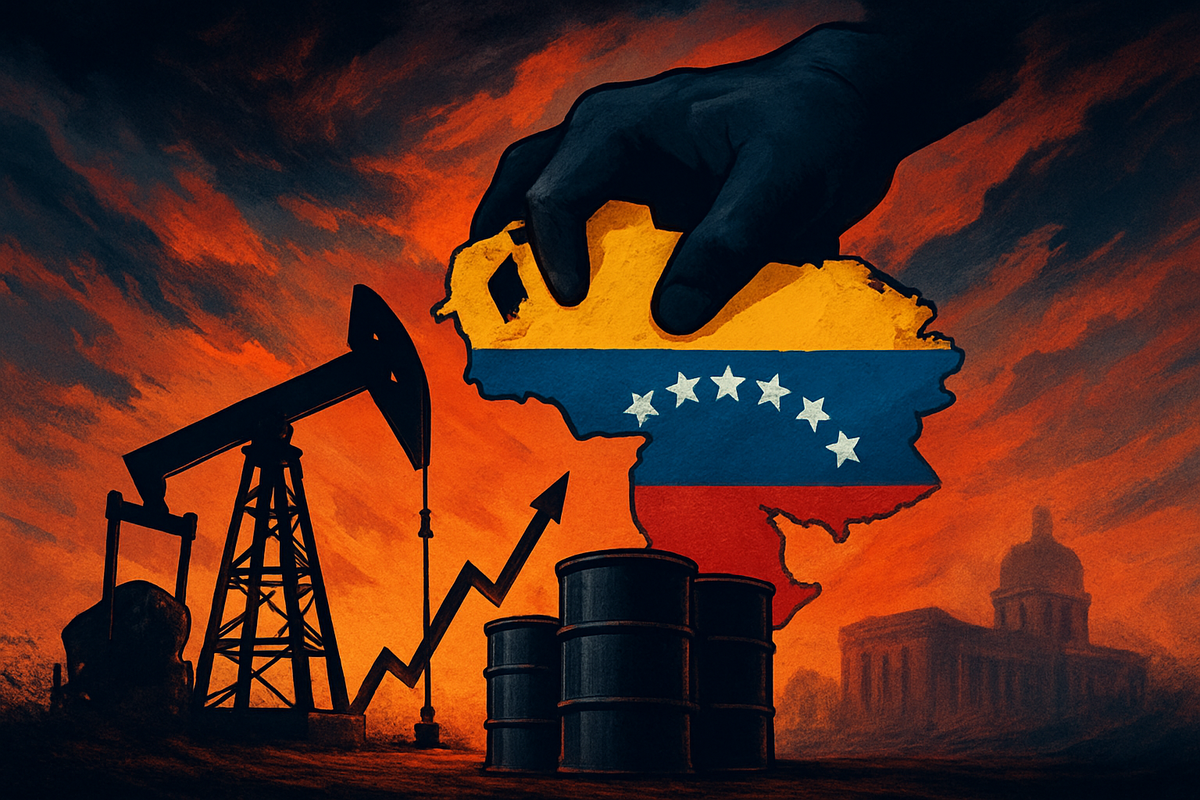
Global oil markets are once again grappling with heightened volatility as former President Donald Trump, in a dramatic escalation of his long-standing pressure campaign against Venezuela, has reportedly ordered a "total and complete blockade" of all sanctioned oil tankers entering and leaving the South American nation. This aggressive move, coming in December 2025, has immediately sent crude oil prices soaring, with Brent Crude Futures (ICE: B) climbing to $60.29 per barrel and the U.S. West Texas Intermediate (NYMEX: CL) benchmark reaching $56.59 per barrel, reflecting a more than 2% surge. The renewed hardline stance underscores the enduring link between geopolitical maneuvering and the stability of global energy supplies, leaving investors and analysts scrambling to assess the potential ripple effects on an already delicate market.
Detailed Coverage: A Decade of Pressure Culminates in Blockade
The latest directive marks a significant intensification of a pressure campaign that began in earnest during Trump's previous presidential term. The initial salvo in August 2017 saw financial sanctions aimed at limiting Venezuela's access to U.S. financial markets. However, the most impactful measures arrived in January 2019, when the U.S. imposed comprehensive oil sanctions on Petróleos de Venezuela, S.A. (PDVSA), the state-owned oil company. These sanctions effectively blocked PDVSA from receiving payments for oil exports to the U.S., prohibited American companies from exporting crucial diluents like naphtha, and froze approximately $7 billion of PDVSA's U.S.-based assets. The rationale was clear: to compel Nicolás Maduro to step down amidst accusations of human rights abuses, democratic erosion, and widespread corruption.
Over the subsequent years, the pressure incrementally mounted, with secondary sanctions introduced in 2020 targeting entities doing business with Venezuela. While these measures severely crippled Venezuela's oil production, causing it to plummet to historical lows of around 400,000 barrels per day in 2020, their immediate impact on global crude oil prices was initially muted. This was largely attributed to Venezuela's pre-existing production declines and a well-supplied international market. However, the current escalation in December 2025 signals a new, more forceful chapter. Beyond the blockade order, the Trump administration has also reportedly designated the Venezuelan regime as a foreign terrorist organization, seized a tanker carrying Venezuelan crude, and, notably, revoked Chevron's (NYSE: CVX) license to operate in Venezuela on March 12, 2025.
The motivations behind this renewed offensive appear multifaceted. While the stated goal remains democratic change and combating alleged drug trafficking and human trafficking, a new demand has emerged: the return of "Oil, Land, and other Assets that they previously stole from us," likely referencing nationalized assets from the Hugo Chávez era. Analysts also point to underlying strategic interests, including access to Venezuela's colossal oil reserves—the largest proven reserves globally—and concerns over Venezuela's growing alliances with U.S. rivals like China and Russia in the Western Hemisphere. The recent market reaction, with a sharp increase in oil prices, demonstrates that even in a globally supplied market, direct intervention and blockades targeting a major oil producer can still trigger immediate price volatility, signaling the market's sensitivity to disruptions in supply, however localized.
Market Movers: Winners and Losers in the Venezuelan Oil Squeeze
The renewed U.S. pressure on Venezuela and the ensuing blockade of its oil exports are set to create a distinct divide between winners and losers within the global energy sector. Companies with direct exposure to Venezuela face immediate and substantial headwinds, while those with diversified portfolios and robust production outside the sanctioned nation stand to benefit from the upward trajectory of crude oil prices.
At the forefront of the companies facing significant losses is Petróleos de Venezuela, S.A. (PDVSA), the state-owned oil company. As the direct target of U.S. sanctions and blockades, PDVSA's ability to export oil, access international credit, and maintain its already dilapidated infrastructure will be further crippled. Historically, sanctions have led to a drastic reduction in Venezuela's oil production and forced PDVSA to offer substantial discounts to buyers, primarily in Asia, severely impacting its revenue streams. The latest blockade will only exacerbate these challenges, pushing its operational and financial stability further into jeopardy.
Another major player directly impacted is Chevron Corporation (NYSE: CVX). The revocation of Chevron's license to operate in Venezuela on March 12, 2025, represents a direct and tangible loss for the American energy giant. While Chevron had previously navigated a complex landscape, operating joint ventures with PDVSA under specific U.S. Treasury Department licenses, this avenue has now been decisively closed. The company will be forced to find alternative, potentially more expensive, heavy crude feedstocks for its U.S. Gulf Coast refineries, which were historically optimized to process Venezuelan crude. This strategic pivot will likely incur additional costs and logistical complexities.
Beyond PDVSA and Chevron, other international oil companies with current or recent operations in Venezuela, such as Repsol SA (BME: REP) (Spain), Eni SpA (BIT: ENI) (Italy), and TotalEnergies SE (EPA: TTE) (France), are also likely to face renewed disruptions. These companies, which have often maintained operations through joint ventures or oil-for-debt arrangements, will see increased operational risks, potential impacts on production volumes, and jeopardized investments as the blockade tightens. Furthermore, oilfield services companies like Halliburton (NYSE: HAL), Baker Hughes (NASDAQ: BKR), and Schlumberger (NYSE: SLB), which had cautiously re-entered Venezuelan fields following earlier, brief periods of eased sanctions, are likely to experience reduced demand for their services as international oil companies scale back or cease activities.
Conversely, major integrated oil companies (IOCs) with diverse global exploration and production portfolios, such as ExxonMobil (NYSE: XOM), Shell Plc (NYSE: SHEL), and BP Plc (NYSE: BP), are well-positioned to capitalize on rising global crude oil prices. A reduction in Venezuelan oil supply due to blockades, even if partially absorbed by other producers, acts as a significant geopolitical risk that tends to tighten the global market and drive up benchmark prices like Brent and WTI. These companies, with their extensive assets in stable producing regions, can sell their output at elevated market rates, boosting their profitability. Similarly, U.S. shale producers and other non-OPEC+ producers operating in regions unaffected by Venezuelan sanctions will also see increased margins from higher crude prices, as they can ramp up production or simply benefit from the improved pricing environment.
Broader Implications: Geopolitics, Sanctions, and the Global Energy Chessboard
The escalating U.S. pressure on Venezuela transcends immediate oil price fluctuations, fitting into broader geopolitical energy trends and raising critical questions about the efficacy and ethics of economic sanctions. This latest move, marked by a naval blockade and intensified enforcement, underscores the enduring use of energy as a tool of foreign policy and its complex ripple effects across the global stage.
This event vividly illustrates the increasing role of geopolitical risk in shaping energy markets. The U.S. strategy, moving from financial sanctions to aggressive maritime enforcement, has created a fragmented trading environment. While Venezuela's oil exports had shown some resilience, reaching 1.09 million barrels per day (bpd) in September 2025, the current enforcement actions have dramatically slashed flows to approximately 258,000 bpd in December 2025. This disruption, though significant for Venezuela, is generally predicted by analysts to have a limited long-term impact on overall global oil prices due to a prevailing global oversupply, with forecasts indicating a 2 million bpd surplus in 2026. However, the short-term volatility, as seen with the recent price surge, highlights the market's sensitivity to any perceived threat to supply, even if the overall volume is a small fraction of the 106 million bpd global market.
The ripple effects extend to Venezuela's trading partners and global competitors. Nations like China, Venezuela's largest crude buyer, are forced to navigate increased trading risks, often relying on "shadow fleets" and securing deeper discounts. The elimination of Venezuelan crude flows to Cuba, which previously received over 200,000 bpd, has plunged the island nation into an immediate energy crisis. Conversely, the crackdown on Venezuela's shadow fleet could have implications for other sanctioned oil producers like Iran and Russia, who also utilize similar methods to circumvent restrictions. A shift in these tankers away from Venezuela might, in the short term, free up transportation capacity for other sanctioned oil trades. For U.S. Gulf Coast refineries, historically reliant on heavy Venezuelan crude, the sustained absence necessitates sourcing alternative heavy crude supplies from Canada and the U.S. Gulf of Mexico, potentially impacting regional refining economics.
From a regulatory and policy standpoint, the renewed pressure reignites debates about the effectiveness and legality of sanctions. Despite years of "maximum pressure" campaigns, the U.S. has yet to achieve its stated goal of democratic reform and regime change in Venezuela. Critics argue that sanctions rarely succeed in altering the conduct of autocratic regimes and can be perceived as acts of "imperialism." The Venezuelan government has vehemently denounced the naval blockade as a "grotesque threat" and an act of "state piracy," vowing to report violations of international law to the United Nations. Furthermore, the humanitarian impact of these sanctions has been devastating, with reports detailing a significant decrease in food availability, rising mortality rates, and critical shortages of essential goods, exacerbating a profound humanitarian crisis within the country.
Historically, the U.S. has employed similar sanction regimes against oil-producing nations like Iran, Iraq, and Russia. While sanctions on Iran's oil sector led to an 80% decline in crude exports between 2018 and 2019, Iran, much like Venezuela, adapted by relying on shadow fleets. The sanctions against Iraq in the 1990s are remembered for their severe humanitarian consequences. These historical precedents suggest that while sanctions can inflict immense economic and human suffering, their ability to achieve desired political outcomes is often limited, frequently leading sanctioned states to forge alliances with adversarial nations to mitigate the impact. The current situation in Venezuela thus serves as another complex case study in the long-standing, often controversial, use of economic coercion in international relations.
The Road Ahead: Scenarios for Venezuela and Global Oil Markets
The dramatic escalation of U.S. pressure on Venezuela, culminating in a reported "total and complete blockade" in December 2025, sets the stage for a highly uncertain future for both the South American nation's beleaguered oil sector and the broader global energy landscape. Short-term volatility is guaranteed, but the long-term trajectory hinges on a complex interplay of political will, international responses, and Venezuela's capacity for resilience.
In the immediate term, Venezuela's oil sector faces a profound crisis. With exports already plummeting to approximately 258,000 barrels per day (b/d) in December 2025 from previous levels, the blockade is expected to deliver a "massive impact" on government revenue, which is heavily reliant on oil sales, particularly to the black market in China. This will inevitably lead to further economic contraction, hyperinflation, and a deepening humanitarian crisis, potentially undermining the country's ability to even maintain its existing, dilapidated production infrastructure. For global oil markets, the short-term outlook suggests continued price spikes driven by increased risk premiums and reduced supply visibility, especially for heavy/sour crude and middle distillates. Brent crude and WTI benchmarks have already reacted sharply, signaling the market's immediate concern over supply disruptions, even if the overall global market remains in oversupply.
Looking further ahead, the path to rebuilding Venezuela's oil output appears "hard and drawn-out." A return to its mid-2010s production levels of around 2 million b/d would require an estimated $15-20 billion in fresh investment over 5-10 years, primarily for rehabilitating heavy-oil upgraders in the Orinoco Belt and extensive infrastructure repairs. However, if a stable political transition were to occur, accompanied by comprehensive sanctions relief and renewed foreign investment, production could potentially rebound to 1.2-1.5 million b/d, or even 2 million b/d, within one to two years through operational improvements and well workovers. This long-term potential contrasts sharply with the immediate reality of declining output.
Various stakeholders are already adapting or planning strategic pivots. Venezuela is expected to intensify its reliance on "shadow fleets" and increasingly utilize cryptocurrencies like USDT to facilitate illicit oil transactions with Chinese buyers, further circumventing traditional financial systems. It is also forging deeper alliances with non-Western partners, particularly Russia and China, signing contracts with foreign firms to control drilling and sales operations. For global oil producers, Canada and Iraq are well-positioned to benefit as alternative suppliers of heavy crude, while U.S. domestic exploration and production companies could see boosted profitability from inflated crude prices. Refiners, especially those on the U.S. Gulf Coast, will need to accelerate their adaptation to non-Venezuelan heavy crudes. Meanwhile, international oil companies like Chevron (NYSE: CVX), despite current setbacks, maintain a long-term interest, with the potential to re-enter and play a significant role if a stable regime change leads to the privatization and opening of PDVSA.
Several potential scenarios could unfold. A prolonged and highly effective blockade could lead to a complete collapse of Venezuela's oil infrastructure, permanently removing it as a meaningful global crude supplier and forcing a lasting rebalancing towards alternative sources. Conversely, a dramatic regime change towards a pro-U.S. government could, after initial chaos, lead to the lifting of sanctions and a rapid influx of investment, potentially bringing production back to 2 million b/d within a couple of years, but also causing a subsequent price slump as new supply floods the market. A negotiated transition or partial sanctions relief could see a gradual rebound in exports to over 900,000 b/d and possibly 1.2 million b/d within months. Lastly, a scenario of continued circumvention and adaptation, where Venezuela, with allied support, finds ways to partially bypass the blockade, would result in volatile but not entirely collapsed exports, maintaining geopolitical risk premiums and a "cat-and-mouse" game with U.S. enforcement. The coming months will be crucial in determining which of these paths Venezuela and the global oil market will ultimately take.
Comprehensive Wrap-up: Navigating a Politicized Oil Market
The recent escalation of U.S. pressure on Venezuela, culminating in a dramatic blockade order in December 2025, serves as a stark reminder of the enduring and often unpredictable link between geopolitics and global oil prices. While the immediate market reaction saw crude benchmarks surge, the event's true significance lies in its contribution to a more fragmented, politicized, and volatile energy landscape.
Key Takeaways: The Trump administration's prolonged pressure campaign has irrevocably altered Venezuela's oil sector, crippling its production from nearly 2 million bpd to a fraction of that. This has forced Venezuela to rely on a "shadow fleet" and deep discounts to buyers like China, fundamentally reshaping its trade flows. The latest "total and complete blockade" marks a new aggressive phase, immediately disrupting oil flows to allies like Cuba and sending an unequivocal signal to the market. While the initial oil price rally was sharp, reflecting increased risk premiums, the overall global market remains characterized by a projected supply surplus in 2026, suggesting that the long-term impact on global prices might be more muted than the short-term volatility.
Assessment of the Market Moving Forward: As of late 2025, the global oil market is a tapestry of conflicting signals. The bullish jolt from the Venezuelan blockade contends with a prevailing outlook of oversupply from major energy agencies for 2026. WTI is projected to hover between $54-$57 in Q1 2026, with Brent around $60/bbl for the year. However, this stability is fragile. Geopolitical risks, from the ongoing Russia-Ukraine conflict (despite recent peace talks) to persistent Middle East tensions, remain potent catalysts for sudden price adjustments. Venezuela's further reduced output, while significant for its economy, constitutes a small enough fraction of global supply (around 1%) that a total halt is unlikely to cause a sustained, massive global price spike, though it will particularly tighten the market for heavy crude.
Final Thoughts on Significance and Lasting Impact: The U.S. pressure on Venezuela has left a lasting legacy: a severely degraded Venezuelan oil infrastructure that will require years and billions in investment to recover, and the solidification of a parallel "shadow market" for sanctioned oil. This has fundamentally altered energy geographies, increasing the cost and complexity of moving certain crude grades. The enduring impact is a global oil market where supply security is inextricably intertwined with geopolitical maneuvering, where unilateral sanctions can permanently reshape trade dynamics, and where even relatively smaller producers can trigger significant short-term market reactions. It underscores the limitations of "maximum pressure" campaigns in achieving political objectives while highlighting their profound humanitarian and economic consequences.
What Investors Should Watch For in Coming Months: Investors must remain vigilant. The effectiveness and enforcement of the Venezuelan blockade will be paramount, as any further seizures or expanded sanctions could further tighten heavy crude supply. Broader U.S.-Venezuela geopolitical developments, including any additional military actions or diplomatic shifts, will also profoundly impact regional stability and market sentiment. Beyond Venezuela, the progress of Russia-Ukraine peace negotiations and the potential easing of Russian oil sanctions could inject significant new supply into the market. OPEC+ production policy will be crucial, as any hawkish stance or deeper cuts could provide a price floor. Finally, the trajectory of global economic health and oil demand, particularly in non-OECD Asia, will remain a fundamental driver of overall market direction. In this environment, adaptability and a keen eye on geopolitical shifts will be key to navigating the uncertain waters of the global oil market.
This content is intended for informational purposes only and is not financial advice